
How Confidence Is Built Through Action and Experience
Confidence is one of the most admired qualities in life. Confident people seem more willing to take risks. They speak their minds, pursue opportunities, and overcome challenges. Because of this, many people believe confidence is something you are either born with or without.
But psychology tells a different story.
The truth is:
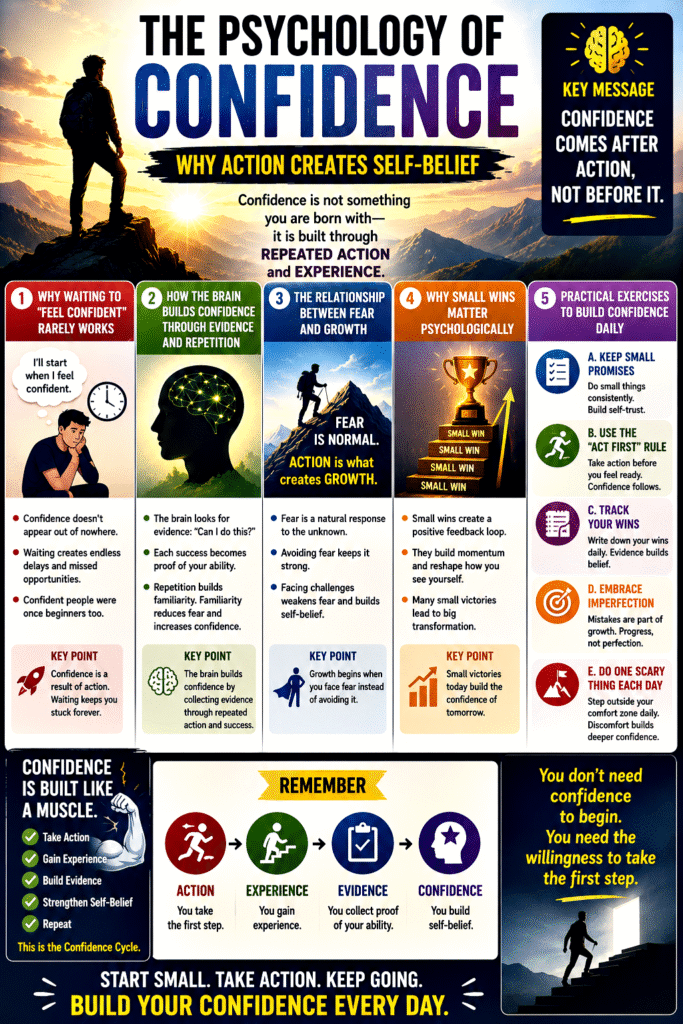
Confidence is not a personality trait that some people naturally possess. It is a skill that develops through repeated action and experience.
This article explores why waiting for confidence does not work, how the brain builds self-belief, the relationship between fear and growth, the power of small wins, and practical exercises to develop confidence every day.
1. Why Waiting to “Feel Confident” Rarely Works
1. Why Waiting to “Feel Confident” Rarely Works
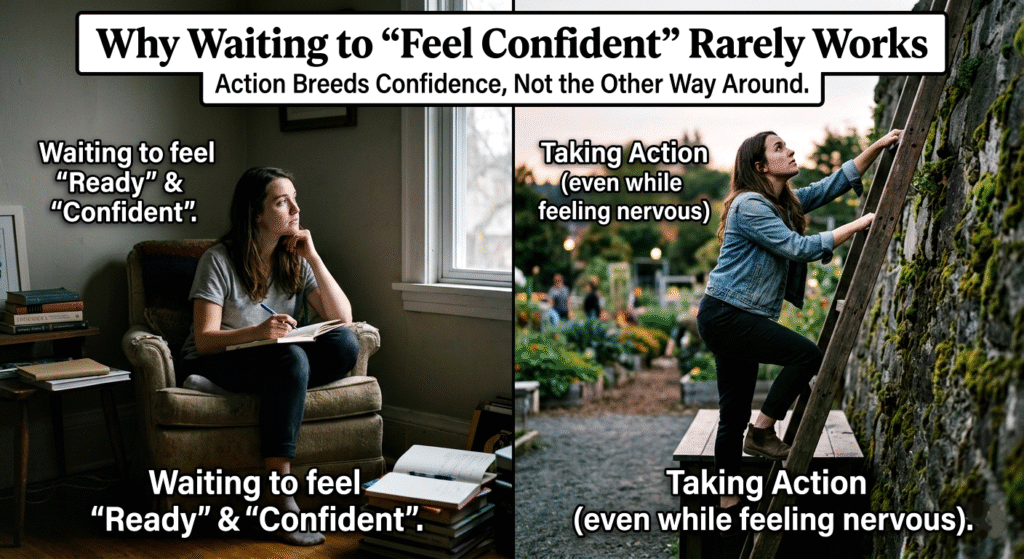
One of the biggest misconceptions about confidence is the belief that people must feel confident before they act.
Many people tell themselves:
- “I’ll speak up when I’m more confident.”
- “I’ll start my business when I feel ready.”
- “I’ll apply for that opportunity when I believe in myself more.”
The problem is that confidence does not magically appear while sitting still.
Imagine learning to swim. No amount of thinking, planning, or waiting will create confidence in the water. Confidence only develops by entering the pool, practising, making mistakes, and gradually improving.
The same principle applies to:
- Public speaking
- Leadership
- Relationships
- Career growth
- Personal development
People often confuse confidence with certainty.
They want guarantees that everything will work out before they begin. But life rarely offers such guarantees.
Those who appear confident today were often nervous beginners at one point. Their confidence was built through experience, not gifted from birth.
Key Point:
Confidence is a result of action. Waiting to feel confident before starting often keeps people stuck forever.
2. How the Brain Builds Confidence Through Evidence and Repetition
Confidence is closely connected to how the brain processes experiences.
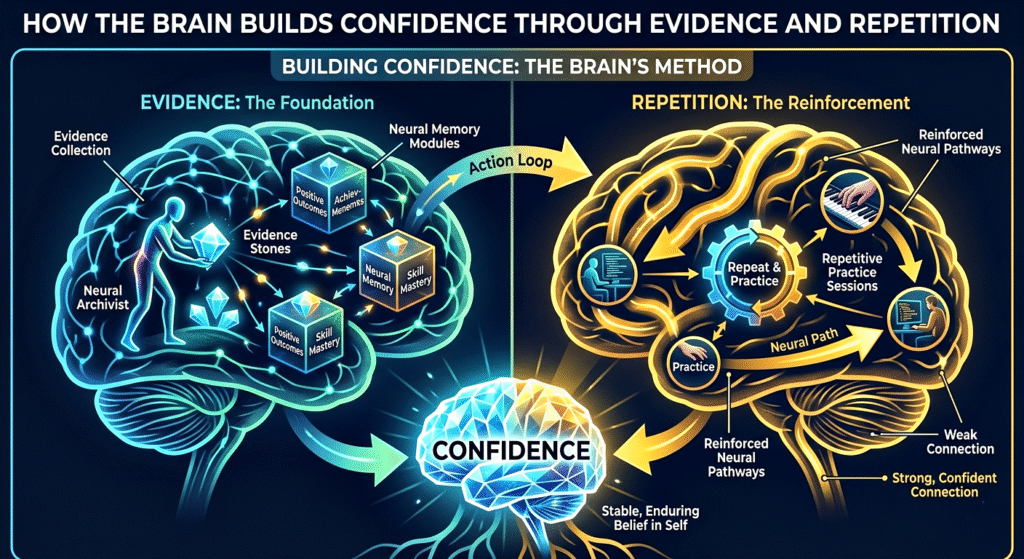
The brain builds beliefs based on evidence.
When you repeatedly accomplish something, your brain begins collecting proof that you are capable.
For example:
- You complete a presentation successfully.
- You solve a difficult problem.
- You learn a new skill.
- You handle a challenging situation.
Each experience becomes evidence that strengthens self-belief.
Psychologists often describe confidence as a form of self-trust.
The brain asks:
- “Can I handle this?”
- “Have I done something similar before?”
- “Do I have evidence that I can succeed?”
When the answer is yes, confidence grows.
Repetition is equally important.
The more often you perform a task, the more familiar it becomes. Familiarity reduces fear and uncertainty.
This is why:
- Experienced athletes appear confident.
- Skilled musicians perform calmly.
- Seasoned speakers seem comfortable on stage.
Their confidence comes from repetition and experience.
Key Point:
The brain builds confidence by collecting evidence through repeated action and successful experiences.
3. The Relationship Between Fear and Growth

Many people assume confident individuals do not feel fear.
In reality, everyone experiences fear.
The difference is that confident people learn how to act despite it.
Fear is a natural survival mechanism. It exists to protect us from potential threats.
However, the brain often treats growth opportunities as threats.
Examples include:
- Speaking in front of a crowd
- Starting a business
- Changing careers
- Asking for a promotion
- Meeting new people
The brain interprets these situations as uncertain, which creates discomfort.
As a result, many people avoid them.
But avoiding fear creates a problem:
- Avoidance strengthens fear.
- Action weakens fear.
Each time someone faces a challenge and survives, the brain learns:
“This wasn’t as dangerous as I expected.”
Over time, fear loses its power.
This is why confidence and courage are closely related.
Confidence is not the absence of fear.
It is the willingness to move forward despite fear.
Key Point:
Growth begins when people face fear instead of avoiding it. Every challenge overcome becomes evidence of capability.
4. Why Small Wins Matter Psychologically
Many people underestimate the power of small victories.
They believe confidence only comes from major achievements.
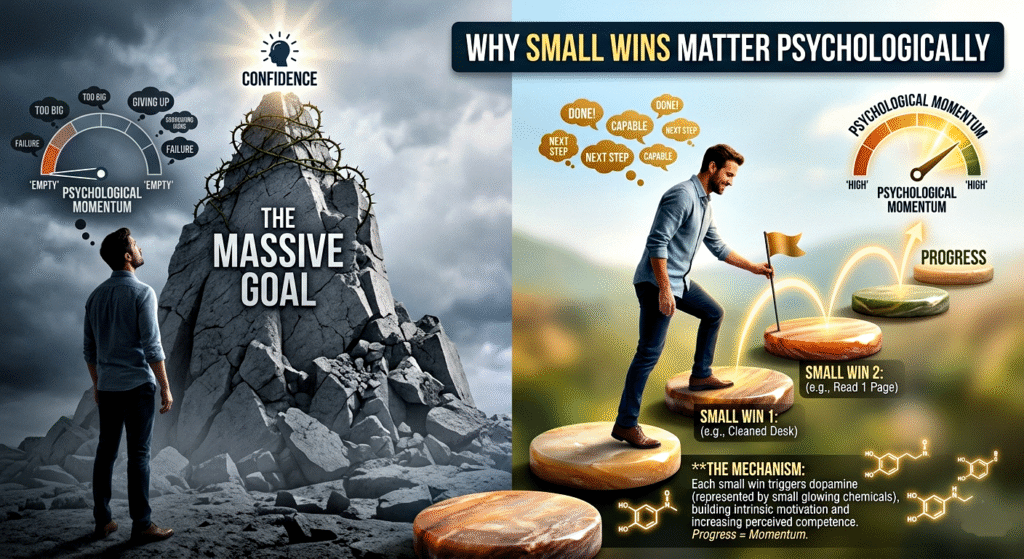
In reality, the brain responds strongly to small successes.
Every completed task creates a positive feedback loop:
- You take action.
- You succeed.
- Your brain records the success.
- Confidence increases.
- Future action becomes easier.
For example:
- Finishing a workout
- Reading a chapter of a book
- Having a difficult conversation
- Completing a project
- Learning a new skill
These small accomplishments may seem insignificant, but they gradually reshape self-perception.
Over time, people begin to think:
- “I can do difficult things.”
- “I keep my promises to myself.”
- “I am capable of improvement.”
This is how genuine confidence develops.
Not through one huge achievement, but through hundreds of small wins accumulated over time.
Key Point:
Small victories build momentum, and momentum gradually transforms self-doubt into self-belief.
5. Practical Exercises to Build Confidence Daily

Confidence can be strengthened like a muscle. The key is consistent practice.
Here are practical exercises that can help build confidence every day.
A. Keep Small Promises to Yourself
Set tiny goals that are easy to complete:
- Make your bed
- Read for ten minutes
- Exercise briefly
- Complete one important task
Each completed promise strengthens self-trust.
Key Point:
Confidence grows when you prove to yourself that your actions match your intentions.
B. Use the “Act First” Rule
Instead of waiting to feel ready, take action immediately.
For example:
- Speak up during a meeting
- Start the project
- Make the phone call
- Submit the application
Action often creates the confidence people are waiting for.
Key Point:
Confidence follows action more often than action follows confidence.
C. Track Your Wins
Keep a journal of daily accomplishments.
Write down:
- Challenges you faced
- Tasks you completed
- Situations you handled well
Reviewing these victories provides evidence of growth.
Key Point:
Remembering past successes helps the brain build a stronger belief in future success.
D. Embrace Imperfection
Stop expecting perfection before taking action.
Mistakes are part of learning.
Every expert was once a beginner.
Instead of asking:
- “What if I fail?”
Ask:
- “What can I learn?”
Key Point:
Perfection is not required for confidence; progress is.
E. Do One Scary Thing Each Day
Choose one small action that pushes you outside your comfort zone.
Examples include:
- Starting a conversation
- Sharing an idea
- Trying a new skill
- Taking responsibility
These experiences gradually expand your comfort zone.
Key Point:
Confidence grows when you repeatedly prove that discomfort is survivable.
Conclusion: Self-Belief Is Built, Not Born
Many people spend years waiting for confidence to arrive before pursuing their goals. Unfortunately, confidence rarely appears through waiting.
The psychology of confidence shows that self-belief is built through action, repetition, experience, and growth.
The brain gains confidence by collecting evidence that you can handle challenges, learn from mistakes, and adapt to uncertainty.
Remember:
- Action creates experience.
- Experience creates evidence.
- Evidence creates confidence.
The next time you feel unprepared, remind yourself:
You do not need confidence to begin. You need the willingness to take the first step.
Because confidence is not something you find before the journey—it is something you build along the way.