
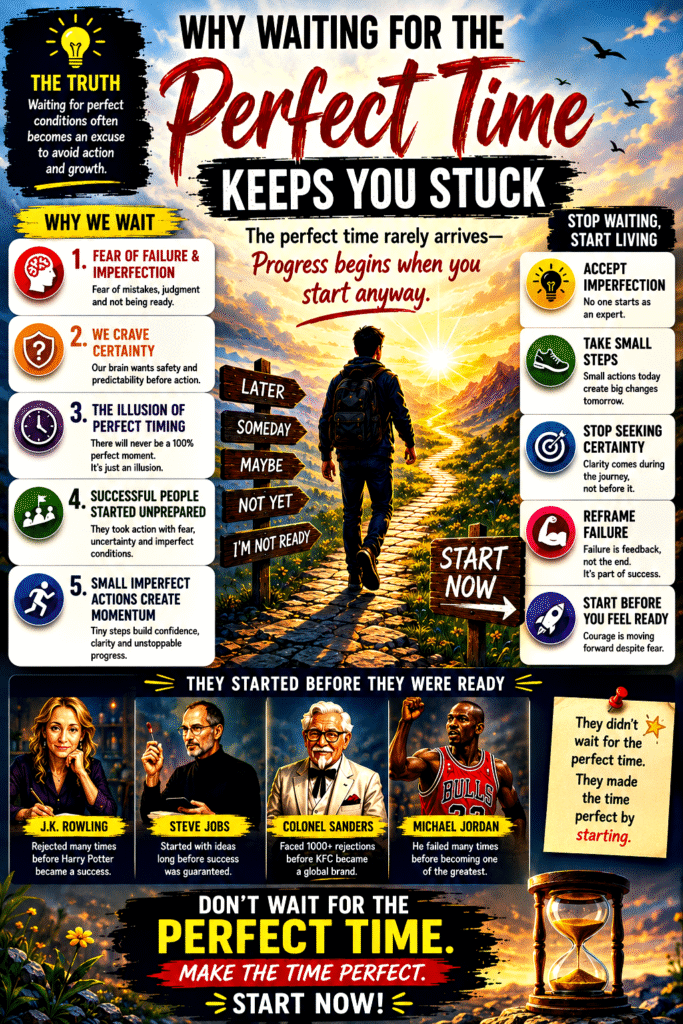
Stop Waiting for the Right Time to Change Your Life
Many people spend years waiting for the “right time” to begin. They delay starting a business, learning a skill, improving their health, pursuing a dream, or making an important life change. It happens because they believe they need perfect conditions before taking action.
They tell themselves:
- “I’ll start when I feel more confident.”
- “I’ll begin when life becomes less stressful.”
- “I need more time, money, knowledge, or certainty first.”
But the truth is:
The perfect time rarely arrives—progress begins when you start anyway.
Waiting for perfect timing often becomes a hidden form of procrastination driven by fear, self-doubt, and the desire for certainty. While planning is important, endless waiting keeps people trapped in the same place.
This article explores why humans wait for perfect conditions, how fear and perfectionism hold people back, and why small imperfect actions are often the real beginning of success.
1. Fear of Failure and Fear of Imperfection
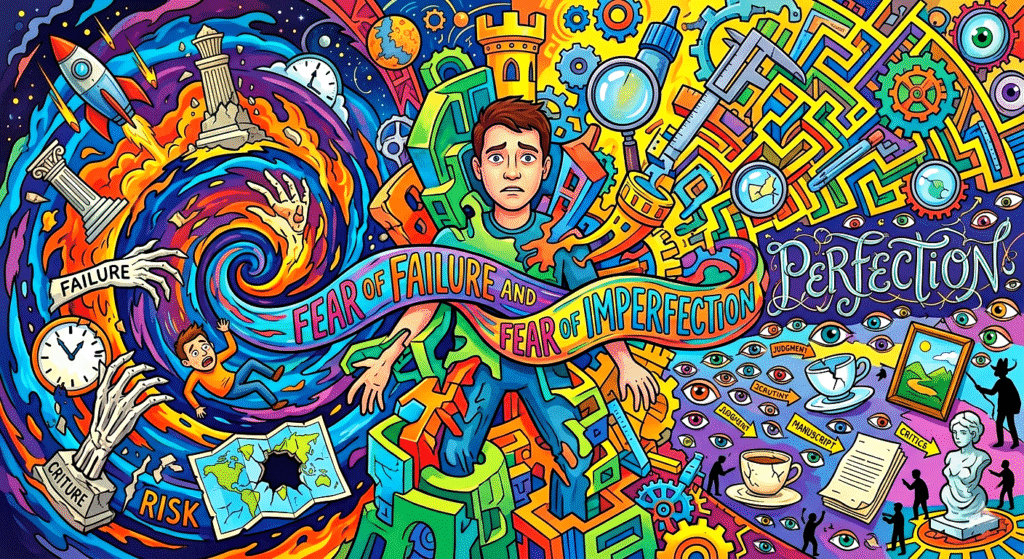
One of the biggest reasons people wait for the “perfect time” is fear.
People fear:
- Failing publicly
- Making mistakes
- Looking unprepared
- Being judged by others
- Not succeeding immediately
Because of these fears, many individuals convince themselves they need:
- More preparation
- More confidence
- More certainty
- More skills
before they can begin.
In reality, what they are often seeking is emotional safety.
For example:
- Someone delays starting a fitness journey because they fear embarrassment
- A writer postpones publishing work because they fear criticism
- A person avoids launching a business because they fear failure
Perfectionism also plays a major role.
Perfectionists often believe:
- Their first attempt must be impressive
- Mistakes mean they are not capable
- Imperfect work should not be shared
This creates pressure so intense that people avoid starting entirely.
Key Point:
Many people are not waiting for the perfect time—they are waiting to feel emotionally safe from failure and imperfection.
The problem is that growth always involves mistakes, discomfort, and learning.
2. Why Humans Crave Certainty Before Action
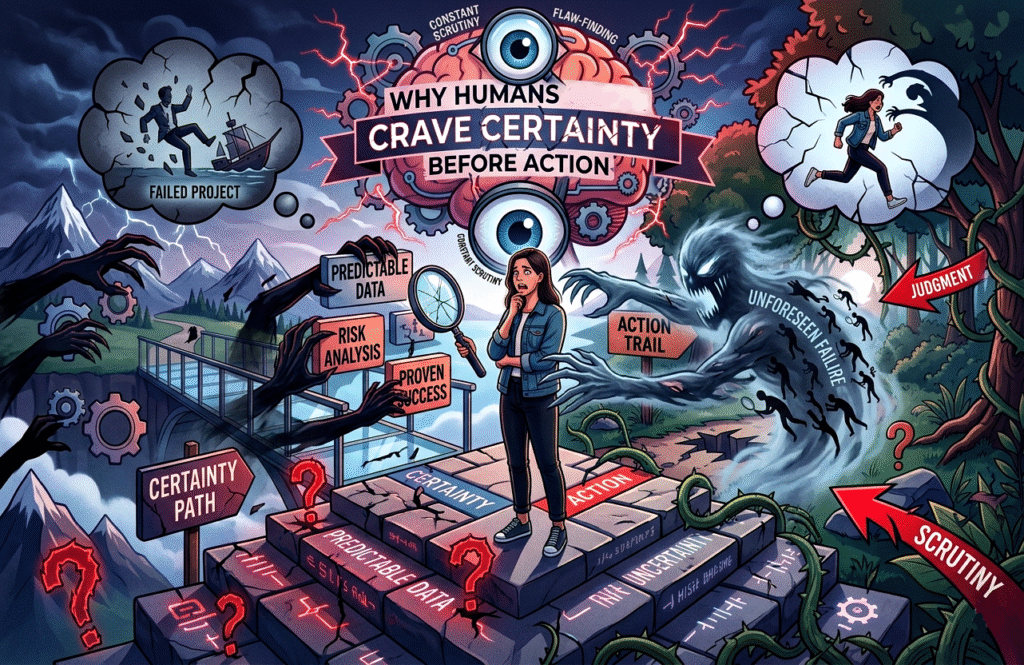
The human brain naturally seeks certainty and predictability.
From an evolutionary perspective, uncertainty was often connected to danger. As a result, the brain still prefers situations that feel:
- Familiar
- Predictable
- Safe
Starting something new introduces uncertainty:
- “What if it doesn’t work?”
- “What if I regret it?”
- “What if I fail?”
Because uncertainty feels uncomfortable, people delay action while trying to gather complete certainty.
They believe:
- “Once I know everything, I’ll start.”
- “Once I feel ready, I’ll act.”
But certainty is rarely possible in life.
No one can fully predict:
- Outcomes
- Opportunities
- Failures
- Timing
Waiting for complete certainty often becomes an excuse to avoid discomfort.
Key Point:
Humans crave certainty because the brain associates predictability with safety, but growth always requires stepping into uncertainty.
Most meaningful achievements begin before people feel fully ready.
3. The Illusion of “Perfect Timing”
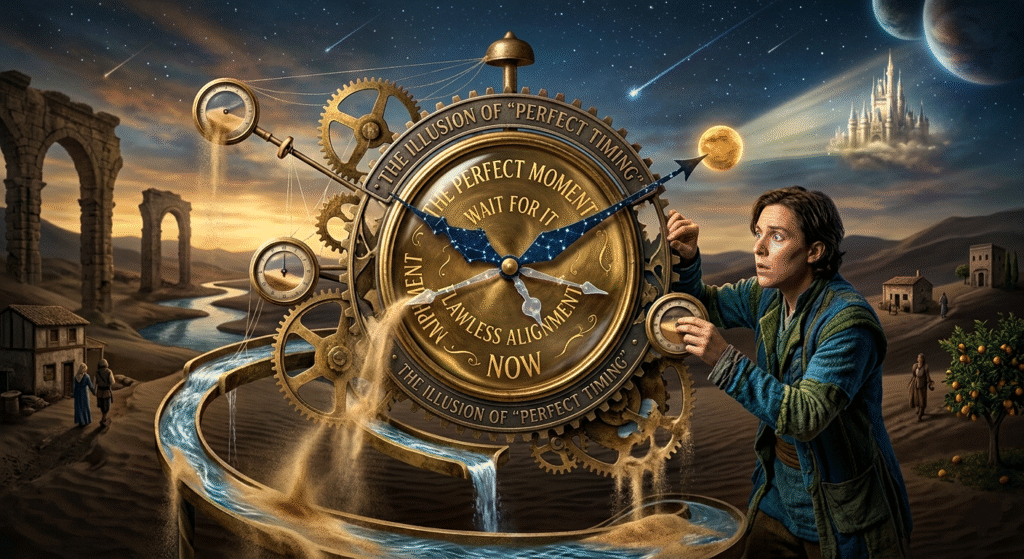
Many people believe there is a magical future moment when:
- Fear disappears
- Confidence suddenly appears
- Circumstances become ideal
- Motivation becomes effortless
But this “perfect moment” is often an illusion.
Life is rarely free from:
- Problems
- Stress
- Uncertainty
- Imperfection
If people wait for ideal conditions, they may wait forever.
For example:
- Someone waiting for more free time may never feel less busy
- Someone waiting to feel confident may never feel fully prepared
- Someone waiting for zero risk may never take action at all
Ironically, confidence and clarity often come after starting, not before.
Action creates:
- Experience
- Knowledge
- Adaptability
- Self-belief
Without action, people stay trapped in endless preparation.
Key Point:
Perfect timing is often a mental illusion that keeps people comfortable but stuck.
The people who make progress are usually not the most prepared—they are the ones willing to begin despite uncertainty.
4. Successful People Often Started Unprepared
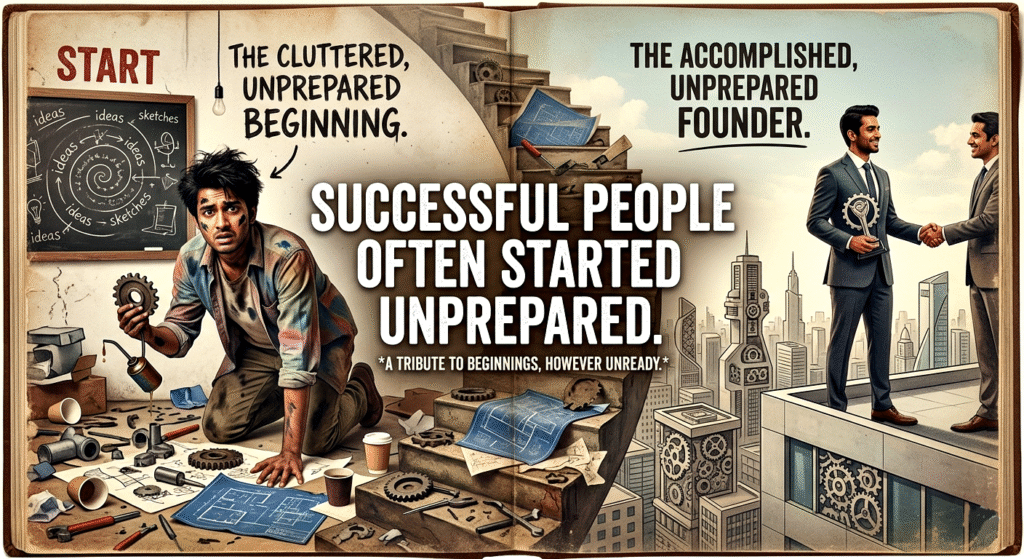
Many successful people did not begin with perfect conditions, complete knowledge, or confidence.
They started:
- Nervous
- Inexperienced
- Imperfect
- Uncertain
What separated them from others was not perfect preparation—it was willingness to act anyway.
J.K. Rowling
Before becoming successful, she faced rejection from multiple publishers while struggling financially. She did not wait for perfect certainty before continuing her work.
Steve Jobs
He started building ideas long before success was guaranteed. Many early projects involved risks and uncertainty.
Colonel Sanders
He faced repeated rejection before finding success later in life. He did not begin under ideal circumstances.
Michael Jordan
He experienced failures and setbacks before becoming one of the greatest athletes in history.
These examples show an important truth:
Success is rarely built by people who waited for perfect timing.
It is built by people willing to begin before they feel completely ready.
Key Point:
Most successful people started with uncertainty, mistakes, and imperfect conditions—but they started anyway.
5. How Small Imperfect Actions Create Momentum
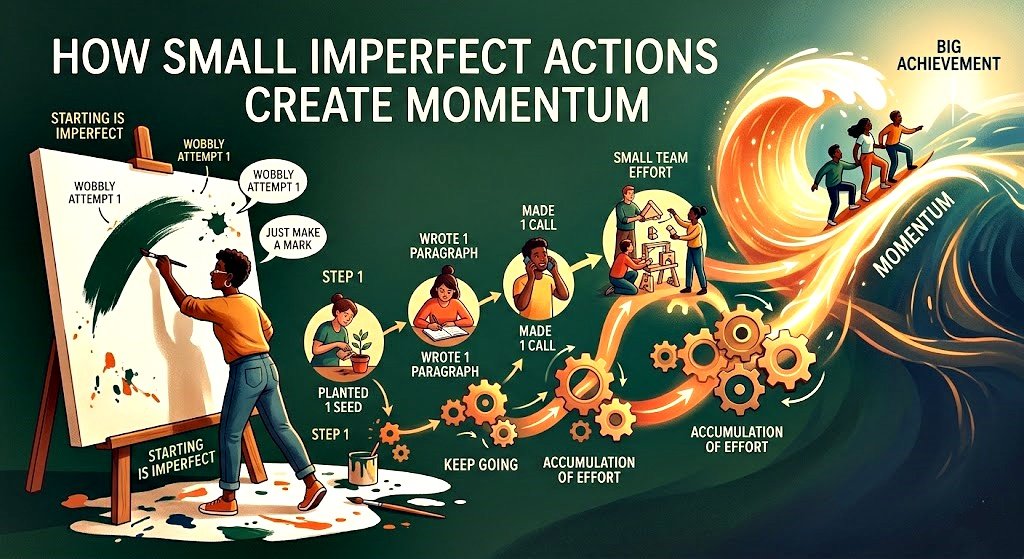
One small action is often more powerful than endless planning.
Why?
Because action creates momentum.
When people take even tiny steps:
- Fear decreases
- Confidence increases
- Clarity improves
- Motivation grows
For example:
- Writing one paragraph leads to writing more
- Exercising for ten minutes creates consistency
- Applying for one opportunity builds courage
The hardest part is usually starting.
Once movement begins, progress becomes easier.
Psychologists call this the progress principle—small wins improve motivation and emotional momentum.
Many people believe:
- “I need motivation to act.”
But in reality:
- Action often creates motivation.
Key Point:
Small imperfect actions matter because momentum grows through movement, not waiting.
Even imperfect progress is still progress.
6. Why Waiting Often Creates Regret
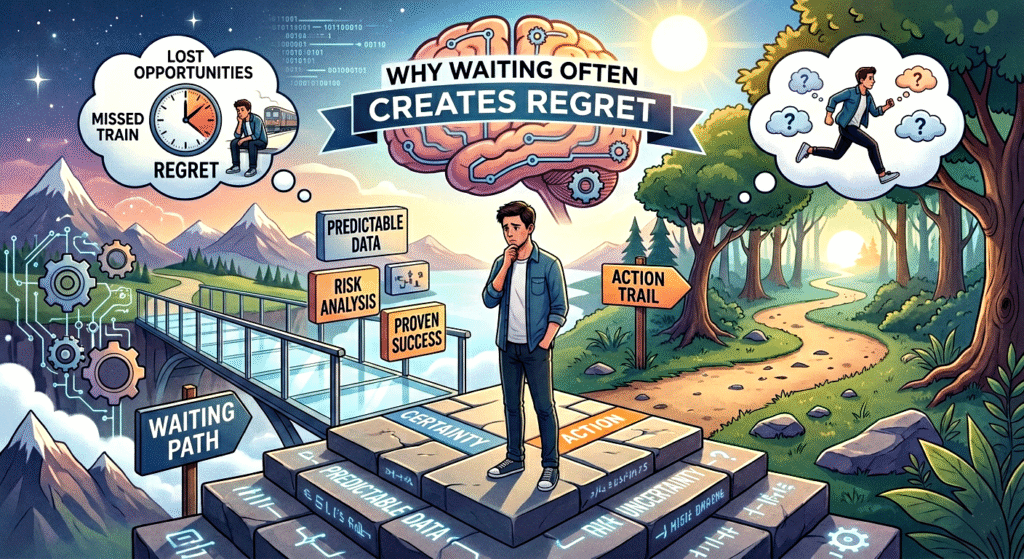
One hidden danger of waiting too long is regret.
People often regret:
- Opportunities they never pursued
- Risks they never took
- Dreams they delayed for years
Over time, waiting can create:
- Frustration
- Self-doubt
- Loss of confidence
- Emotional stagnation
The longer people delay action, the more intimidating change becomes.
Meanwhile, others who start imperfectly continue improving through experience.
Key Point:
Waiting protects temporary comfort but often creates long-term regret.
7. How to Stop Waiting and Start Taking Action
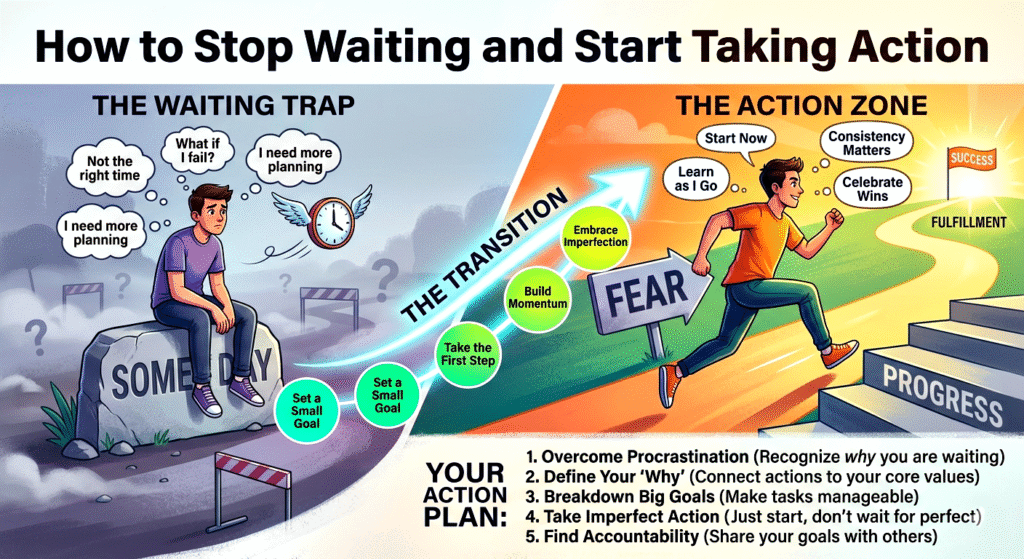
Breaking free from the “perfect time” mindset requires practical changes in thinking and behaviour.
i. Accept That Imperfection Is Normal
No one begins as an expert.
Mistakes are part of learning.
Key Point:
Progress comes from practice, not perfection.
ii. Focus on Small Steps
Large goals feel overwhelming. Small actions feel manageable.
Examples:
- Read one page
- Exercise for ten minutes
- Write one paragraph
- Make one phone call
Key Point:
Small consistent actions are more powerful than waiting for massive motivation.
iii. Stop Seeking Complete Certainty
You do not need to know everything before beginning.
Clarity often appears during the process.
Key Point:
Confidence grows through action, not endless preparation.
iv. Reframe Failure
Failure is not proof of weakness—it is feedback and experience.
Every successful person has failed repeatedly.
Key Point:
Failure is often part of progress, not the opposite of it.
v. Start Before You Feel Ready
Most people never feel fully ready.
The goal is not to eliminate fear—it is to move despite it.
Key Point:
Courage is action in the presence of fear, not the absence of it.
Conclusion: Progress Begins When You Start
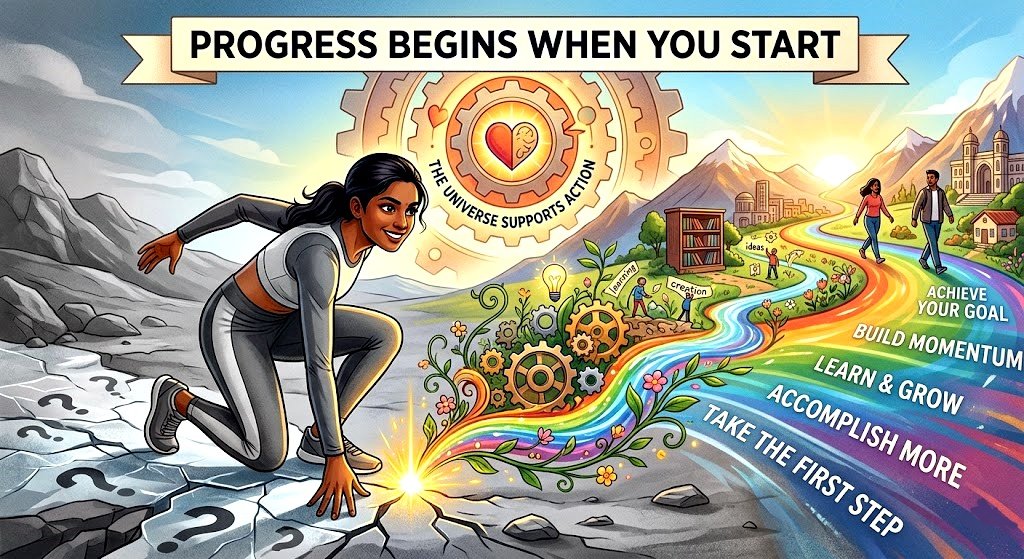
Waiting for the perfect time keeps many people trapped in fear, hesitation, and endless preparation.
The brain naturally seeks certainty, safety, and emotional comfort. But growth requires stepping into uncertainty and accepting imperfection.
The perfect time rarely appears because life will always contain:
- Challenges
- Fear
- Uncertainty
- Imperfect conditions
The people who grow are not necessarily the smartest, most talented, or most prepared. They are often the ones willing to begin before they feel ready.
Remember:
You do not need perfect timing to make progress.
You only need the courage to take the first imperfect step.
Because sometimes the biggest difference between success and regret is simply deciding to start anyway.