
How Overthinking Creates Self-Doubt and Holds You Back
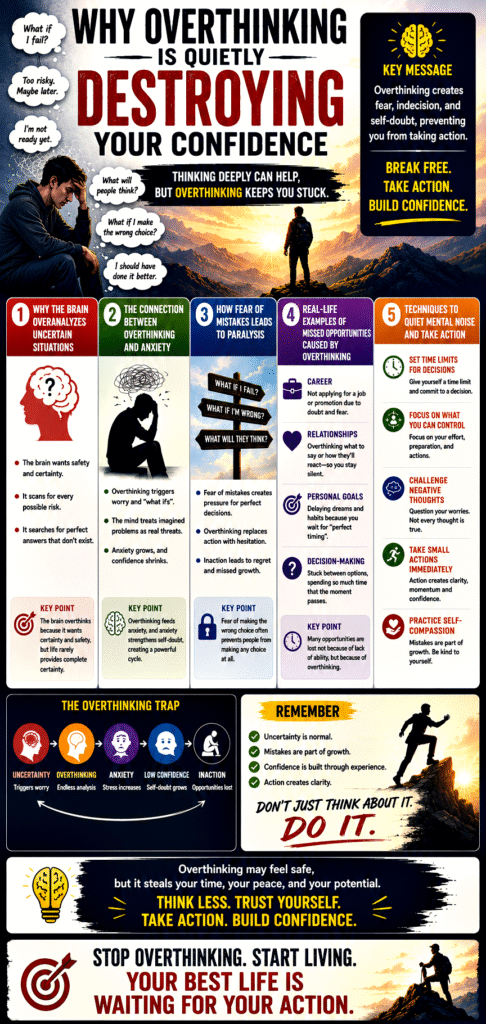
In today’s fast-paced world, many people believe that thinking carefully about decisions is a sign of intelligence. While thoughtful reflection can certainly be helpful. There is a point where healthy thinking turns into overthinking. When that happens, the mind becomes trapped in endless analysis, fear, and self-doubt.
Overthinking often feels productive because you are mentally busy. However, instead of helping you move forward, it can quietly destroy your confidence, increase anxiety, and prevent you from taking action.
The truth is:
Thinking deeply can help, but overthinking keeps you stuck.
People who constantly overanalyse situations often struggle to trust themselves. They replay conversations, imagine worst-case scenarios, and spend so much time thinking that they never take meaningful action.
This article explores why the brain overthinks, how it affects confidence, and practical ways to break free from the cycle.
1. Why the Brain Overanalyses Uncertain Situations
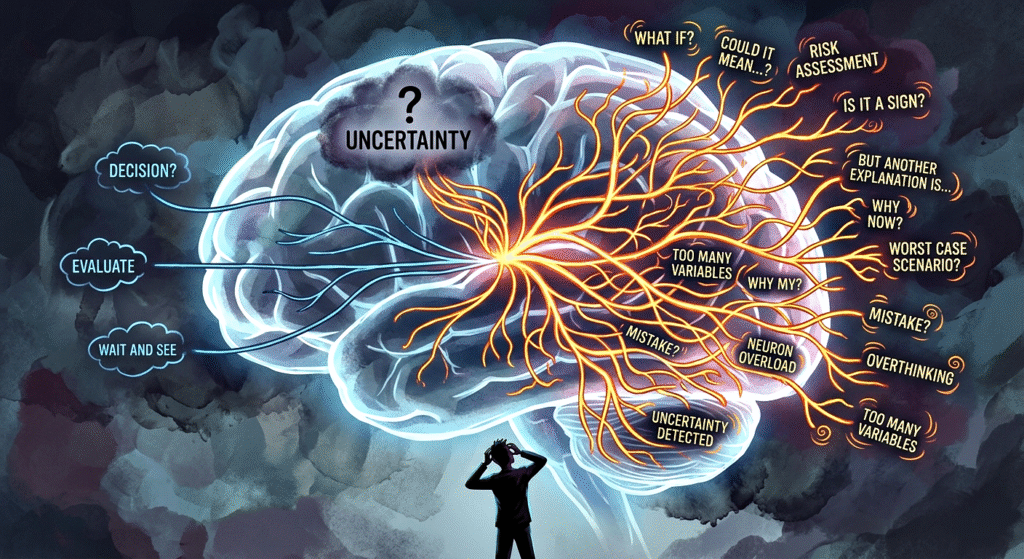
The human brain is designed to protect us from danger. Throughout history, survival depended on anticipating threats and preparing for uncertainty.
As a result, the brain naturally dislikes situations where outcomes are unknown.
Examples include:
- Starting a new job
- Asking someone out
- Launching a business
- Making a major life decision
- Speaking in public
When faced with uncertainty, the brain tries to reduce risk by analysing every possible outcome.
It asks questions such as:
- “What if I fail?”
- “What if people judge me?”
- “What if I make the wrong choice?”
- “What if things go badly?”
At first, this seems helpful. However, overthinking often creates more problems than it solves.
Instead of finding answers, people become trapped in endless mental loops.
They keep searching for certainty that simply does not exist.
Key Point:
The brain overthinks because it wants certainty and safety, but life rarely provides complete certainty.
The more someone seeks perfect answers, the more difficult decisions become.
2. The Connection Between Overthinking and Anxiety
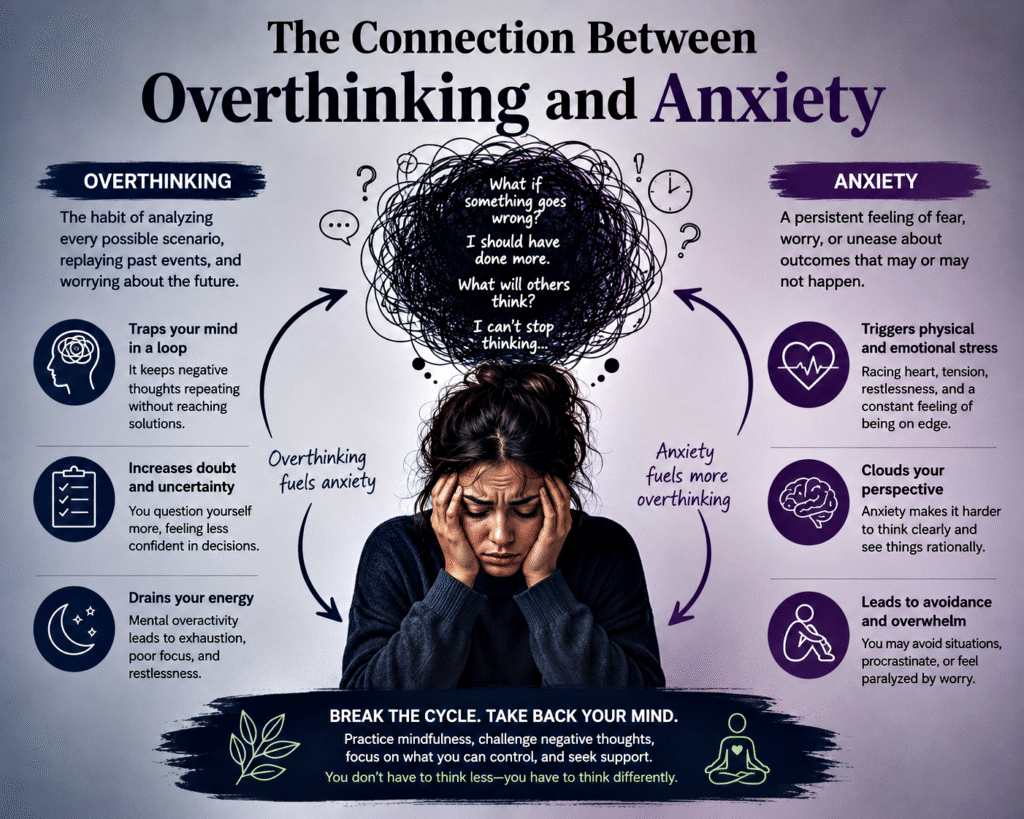
Overthinking and anxiety are closely connected.
The more people analyze negative possibilities, the more anxious they become.
Imagine someone preparing for a presentation.
Instead of focusing on preparation, they start imagining:
- Forgetting their words
- Being embarrassed
- Looking incompetent
- Receiving criticism
Although none of these events have happened, the brain reacts as if the threat is real.
This creates physical symptoms such as:
- Increased heart rate
- Muscle tension
- Difficulty sleeping
- Mental exhaustion
The mind begins treating imagined problems as actual dangers.
As anxiety grows, confidence shrinks.
People start doubting their abilities because they become focused on what could go wrong rather than what could go right.
Over time, this creates a cycle:
- Uncertainty appears.
- Overthinking begins.
- Anxiety increases.
- Confidence decreases.
- Moreover, overthinking follows.
The cycle repeats itself.
Key Point:
Overthinking feeds anxiety, and anxiety strengthens self-doubt, creating a powerful cycle that undermines confidence.
3. How Fear of Mistakes Leads to Paralysis
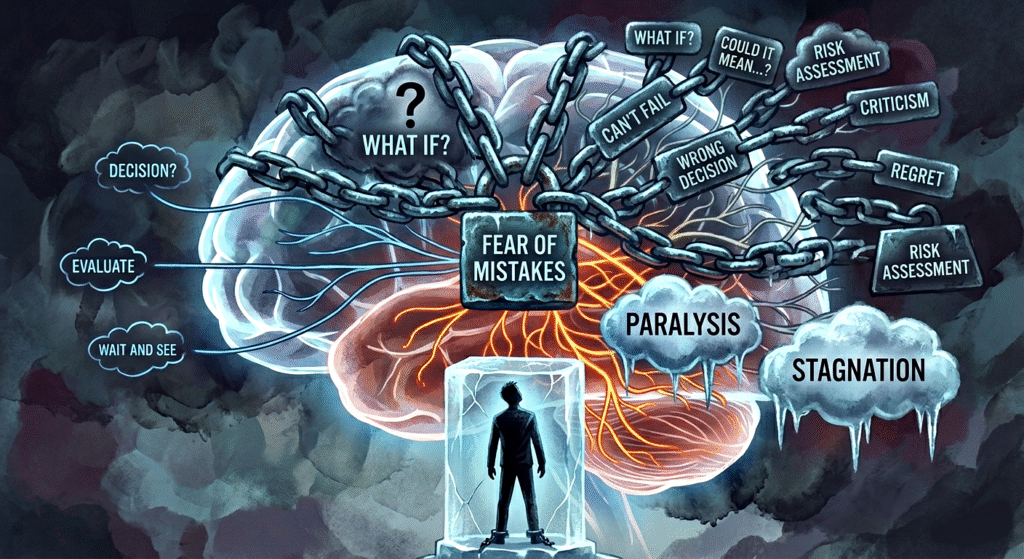
One of the biggest causes of overthinking is the fear of making mistakes.
Many people believe:
- Every decision must be perfect.
- Mistakes should be avoided.
- Failure means they are not capable.
These beliefs create enormous pressure.
As a result, people spend excessive time evaluating options and possibilities.
Instead of choosing a direction, they become stuck.
This is often called analysis paralysis.
For example:
- A student delays applying for a scholarship because they fear rejection.
- An entrepreneur postpones launching a business because they fear failure.
- A talented employee avoids applying for a promotion because they doubt themselves.
Ironically, trying to avoid mistakes often creates a bigger mistake: doing nothing.
Growth requires experimentation.
Every successful person has made poor decisions, experienced setbacks, and learned through failure.
Confidence grows when people realise mistakes are not proof of inadequacy—they are part of learning.
Key Point:
Fear of making the wrong choice often prevents people from making any choice at all.
Action creates progress, while endless analysis creates stagnation.
4. Real-Life Examples of Missed Opportunities Caused by Overthinking
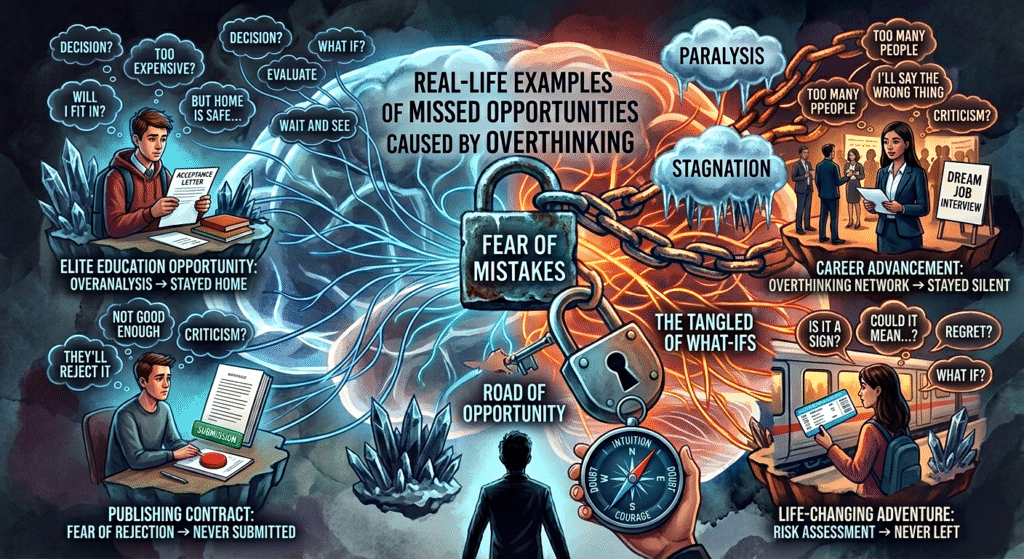
Overthinking affects nearly every area of life.
Career Opportunities
Many people miss promotions, business opportunities, or dream jobs because they spend too much time questioning themselves.
They think:
- “Maybe I’m not qualified enough.”
- “What if I fail?”
- “What if someone better applies?”
As a result, they never take the chance.
Relationships
Overthinking can damage relationships before they even begin.
Someone may want to express their feelings but spends weeks analysing:
- What to say
- How the other person might react
- Whether rejection is possible
Eventually, the opportunity passes.
Personal Goals
People often delay:
- Learning new skills
- Starting fitness programs
- Creating content
- Pursuing hobbies
because they worry about not being good enough initially.
Decision-Making
Some individuals become trapped between options.
They spend so much time evaluating possibilities that they never move forward.
Meanwhile, others gain experience by taking imperfect action.
Key Point:
Many opportunities are lost not because people lack ability, but because overthinking prevents them from acting.
Success often belongs to those who are willing to move before they feel completely certain.
5. Techniques to Quiet Mental Noise and Take Action
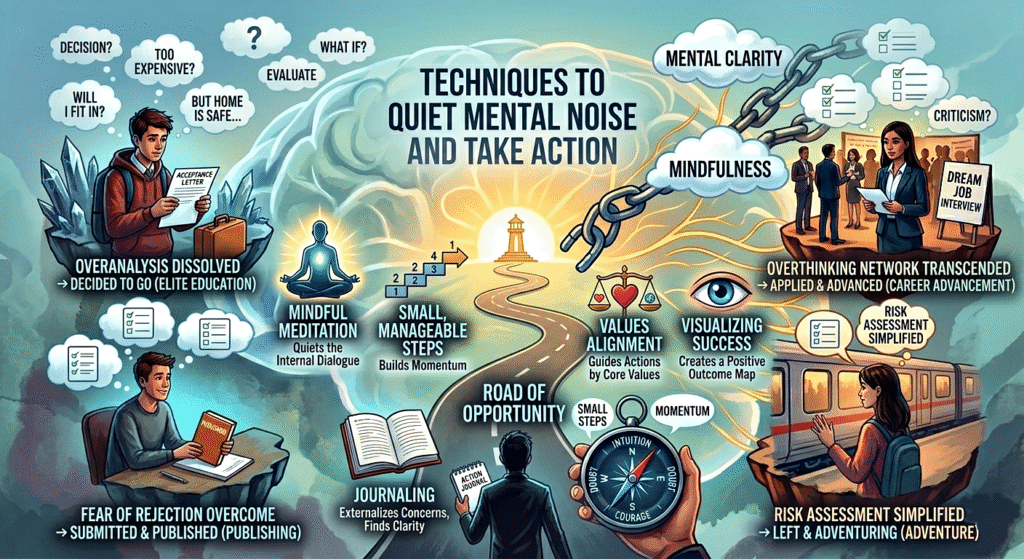
The good news is that overthinking can be managed.
The goal is not to stop thinking entirely—it is to stop thinking excessively and start acting more consistently.
A. Set Time Limits for Decisions
Give yourself a reasonable amount of time to think.
For example:
- Small decisions: 5–10 minutes
- Larger decisions: 1–2 days
Avoid endless deliberation.
Key Point:
Most decisions improve through action and adjustment, not endless analysis.
B. Focus on What You Can Control
Many worries involve things outside your control.
Instead of obsessing over outcomes, focus on:
- Effort
- Preparation
- Learning
- Consistency
This reduces unnecessary anxiety.
Key Point:
Confidence grows when attention shifts from outcomes to actions.
C. Challenge Negative Thoughts
When you catch yourself imagining worst-case scenarios, ask:
- Is this thought realistic?
- What evidence supports it?
- What evidence contradicts it?
Often, fears are exaggerated.
Key Point:
Not every thought deserves to be believed.
D. Take Small Actions Immediately
Action is one of the most effective cures for overthinking.
Examples:
- Send the email.
- Make the phone call.
- Submit the application.
- Start the project.
Small actions create momentum and reduce uncertainty.
Key Point:
Action provides clarity that thinking alone never can.
E. Practice Self-Compassion
Accept that mistakes are part of growth.
No one makes perfect decisions all the time.
Treat yourself with the same understanding you would offer a friend.
Key Point:
Confidence grows when you stop demanding perfection from yourself.
Conclusion: Confidence Grows Through Action, Not Endless Thinking

Overthinking often disguises itself as preparation, caution, or intelligence. In reality, excessive analysis frequently creates fear, anxiety, indecision, and self-doubt.
The brain wants certainty, but certainty is impossible in many situations.
People who build confidence are not those who eliminate uncertainty. They are those who learn to act despite it.
Remember:
- Uncertainty is normal.
- Mistakes are part of growth.
- Confidence is built through experience.
- Action creates clarity.
Most importantly:
Thinking deeply can help, but overthinking keeps you stuck.
The next time you find yourself trapped in endless analysis, remind yourself that progress rarely comes from finding perfect answers—it comes from taking the next step forward.