

Why Ignoring Messages Can Damage Relationships
In today’s fast-paced world, everyone has responsibilities, professional commitments, personal challenges, and countless things demanding their attention. However, amid all these activities, one simple habit often reveals how much we value others: the way we respond to their messages, calls, and attempts to communicate.
Responding quickly does not mean being available every second or abandoning important work. It simply means acknowledging people and making them feel that their time, feelings, and presence matter. Being busy is a part of life, but making someone feel unimportant through continuous ignorance is often a matter of priorities rather than circumstances.
1. A Quick Response Shows That You Value Others

When someone sends you a message or calls you, they are making an effort to connect with you. A timely response communicates that you appreciate that effort.
- Acknowledgement is a form of respect: Even a short reply tells the other person that you have noticed their attempt to communicate.
- It makes people feel valued: People naturally appreciate those who give importance to their presence.
- It strengthens relationships: Small gestures of consideration build trust and emotional connections over time.
- It reflects your attitude: The way you respond to others often reveals how seriously you take your relationships.
Remember, you do not always need to have a long conversation. Sometimes, a simple acknowledgement is enough to make someone feel respected.
2. Being Busy Does Not Mean You Cannot Respond
Everyone has a busy schedule. Some people manage businesses, some work in offices, while others handle family responsibilities. However, being busy and ignoring people are two different things.
- A busy person can still communicate: A short message such as “I am occupied right now; I will call you later” takes very little time.
- Communication does not always require lengthy conversations: Acknowledging a message can take just a few seconds.
- Responsibilities should not eliminate basic courtesy: Professional success should never become an excuse for disrespecting others.
- A little consideration makes a big difference: Even when you cannot respond immediately, letting someone know prevents unnecessary confusion.
The point is not to respond instantly but to avoid making people feel that they do not deserve even a moment of your attention.
3. Your Business or Professional Success Does Not Make You More Important Than Others

Some people become so occupied with their businesses, careers, and professional achievements that they gradually forget the importance of personal relationships.
They may believe that because they are successful or have many responsibilities, others should always wait for their convenience.
- Professional success does not determine human worth: Having a successful business does not make someone more important than the people around them.
- Respect should be mutual: Whether someone is a business owner, employee, friend, or family member, everyone deserves basic consideration.
- Status should not create arrogance: Success should make a person more responsible, not less considerate.
- Small gestures reveal true character: How you treat people when you are busy often says more about you than how you treat them when you have free time.
Never allow your professional identity to become so important that you forget your human responsibilities.
4. Delayed Responses Can Make People Feel Unimportant

Imagine sending someone a message and waiting for hours or even days without receiving a response, while you can see that they are actively communicating elsewhere.
Over time, such behaviour can make people question their importance in your life.
- Silence creates uncertainty: People may wonder whether they have said something wrong or whether you are deliberately avoiding them.
- Repeated ignorance hurts relationships: Occasional delays are understandable, but constantly ignoring someone can create emotional distance.
- It damages self-esteem: A person who repeatedly feels ignored may begin to question whether their presence matters.
- It creates unnecessary misunderstandings: A simple response could prevent many negative assumptions.
Remember, you may consider your silence insignificant, but someone else may experience it as rejection.
5. Respecting Someone’s Time Is Also Respecting Their Effort
When someone contacts you, they are investing their time and attention in maintaining communication. Leaving them waiting unnecessarily can make their effort seem unimportant.
- Time is valuable for everyone: Your time is important, but so is the time of the person waiting for your response.
- People also have their own responsibilities: They may be waiting for your confirmation before making other plans or decisions.
- Timely communication avoids unnecessary delays: A quick response helps both people manage their schedules effectively.
- It reflects consideration: Respecting another person’s time demonstrates maturity and good manners.
Never assume that your time is more valuable simply because you are busier or more professionally occupied.
6. You Do Not Have to Be Available All the Time, but You Should Be Considerate
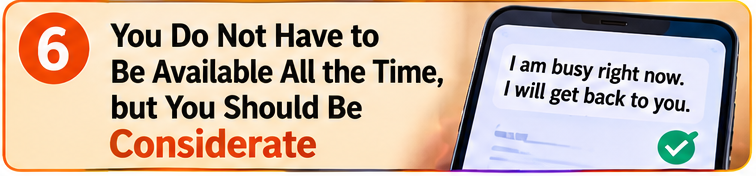
There is an important difference between being constantly available and being considerate towards others.
Nobody expects you to stop working, interrupt meetings, or sacrifice personal time every time someone contacts you.
- Boundaries are important: You have every right to prioritise your work, family, health, and personal commitments.
- A simple acknowledgement is enough: If you cannot talk, communicate that you will respond when available.
- Honesty prevents misunderstandings: Letting someone know that you are occupied is better than leaving them guessing.
- Consistency builds trust: People understand genuine commitments when you communicate clearly.
Respect does not demand your constant availability; it demands your basic consideration.
7. Your Response Reflects Your Priorities

We often make time for the things and people we consider important. This does not mean that everyone must receive an immediate response, but our communication habits can reveal where we place our priorities.
- People notice patterns: If you repeatedly respond quickly to certain people but consistently ignore others, they may notice the difference.
- Attention communicates importance: The time and effort you invest in communication can influence how others perceive your relationship.
- Convenience should not become the only consideration: Do not communicate with people only when you need something from them.
- Relationships require mutual effort: Maintaining meaningful connections requires attention from both sides.
Sometimes, the problem is not a lack of time but a lack of willingness to make time.
8. Small Gestures of Respect Create Strong Relationships

Strong relationships are not always built through expensive gifts, grand celebrations, or extraordinary sacrifices. Often, they grow through small and consistent gestures.
- A timely reply builds confidence: It assures people that they can communicate with you without feeling ignored.
- Regular communication maintains emotional connection: Even brief interactions can help relationships remain healthy.
- Consideration creates mutual respect: When you respect someone’s time, they are more likely to respect yours.
- Small efforts leave lasting impressions: People often remember how you made them feel through everyday interactions.
Never underestimate the importance of a simple message or a short phone call. Sometimes, these little things keep relationships alive.
9. Do Not Contact People Only When You Need Something

One of the most disappointing communication habits is ignoring people when they need you but suddenly remembering them when you require their assistance.
Such behaviour can make relationships appear transactional rather than genuine.
- Relationships should not be based on convenience: People deserve attention even when you have nothing to gain from them.
- Mutual respect matters: Do not expect immediate responses from others if you consistently ignore their attempts to communicate.
- Genuine connections require consistency: Remembering people only during your difficult times can weaken their trust in you.
- Appreciate people beyond their usefulness: Value individuals for who they are, not merely for what they can do for you.
Do not make people feel important only when you need their help.
10. Your Behaviour Today Determines How People Remember You Tomorrow

People may forget many conversations, but they often remember how you treated them. Your communication habits contribute to the impression you leave on others.
- Good manners create a positive impression: Responding thoughtfully reflects maturity, humility, and consideration.
- Respect earns respect: People naturally appreciate those who do not make them feel inferior or unimportant.
- Relationships are difficult to rebuild once damaged: Repeated ignorance can gradually destroy connections that once mattered.
- Character is reflected in everyday behaviour: The way you treat people when you have little time reveals your understanding of respect.
One day, your business achievements, professional position, and busy schedule may no longer matter to the people around you. What will remain is how you made them feel.
Conclusion: Being Busy Is Understandable, Making Others Feel Unimportant Is Not
Life is busy, and everyone has responsibilities that deserve attention. Nobody should be expected to respond to every message or phone call immediately. However, there is a difference between being genuinely occupied and repeatedly making people feel unimportant.
A simple message saying, “I am busy right now; I will get back to you,” can save someone from unnecessary waiting, confusion, and disappointment.
Remember, responding quickly is not merely about the speed of your reply; it is about the respect you show towards another person’s time and feelings.