
Why People Who Are Never Satisfied Are Rarely Happy
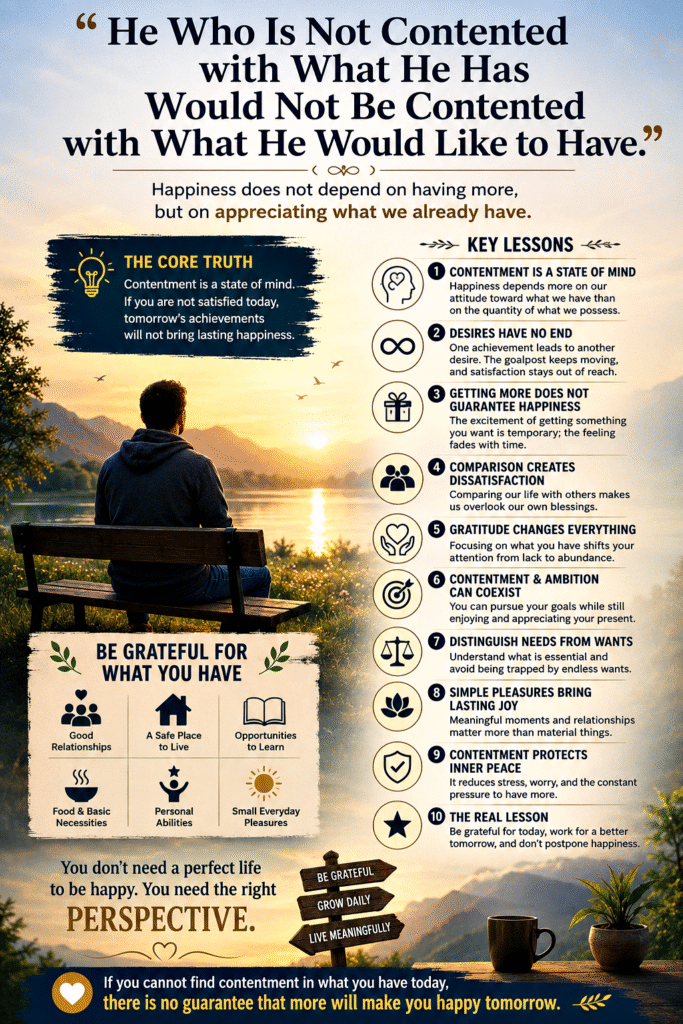
“He Who Is Not Contented with What He Has Would Not Be Contented with What He Would Like to Have”
This profound saying teaches us an important lesson about contentment, happiness, desire, and human nature. It means that a person who has not learned to appreciate and feel satisfied with what he or she already possesses will probably remain dissatisfied even after getting the things he or she currently desires.
Human desires are endless. We often believe, “I will be happy when I get this one thing.” But after achieving it, a new desire often takes its place. Therefore, true happiness does not depend entirely on possessing more; it also depends on developing the ability to appreciate what we already have.
Here is a detailed explanation in point form:
1. Contentment Is the Foundation of Happiness
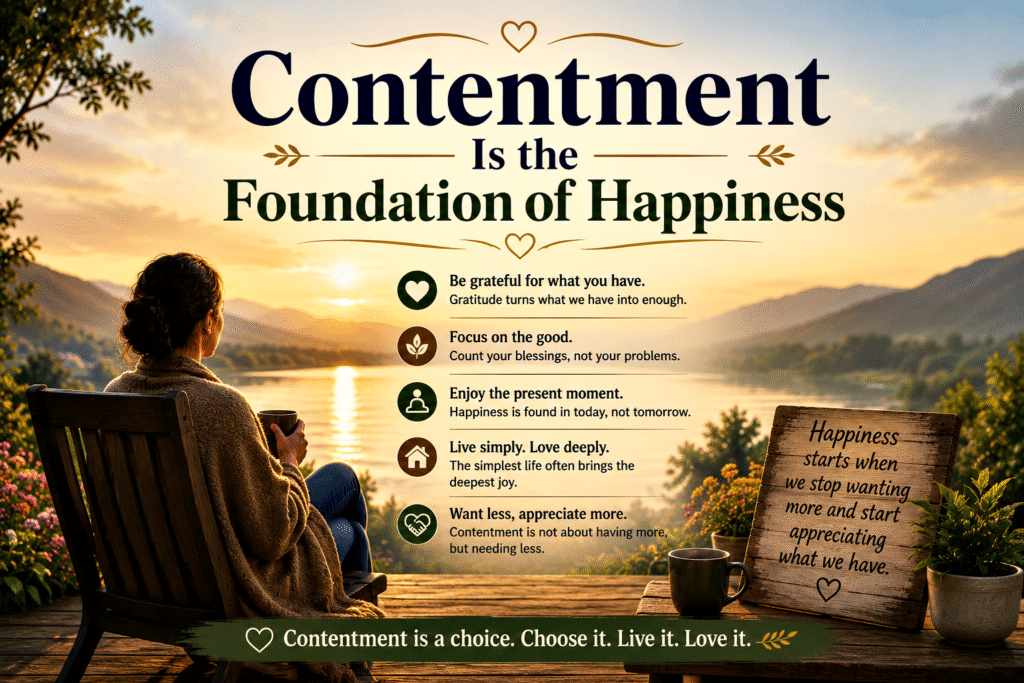
Key Point: True happiness begins with appreciating what we already have.
Contentment means having a sense of satisfaction, gratitude, and peace regarding our present circumstances. It does not mean that we should stop improving ourselves or abandon our dreams. Rather, it means that while working for a better future, we should not hate or constantly complain about our present life.
A person may have a house but dream of a bigger house. He may get the bigger house and then desire an even more luxurious one. If his happiness always depends on the next achievement, he may spend his entire life waiting to become happy.
Therefore, the philosopher reminds us that happiness is not simply found by adding more possessions to our lives; it is also created by changing our attitude toward what we already possess.
2. Human Desires Have No Natural End
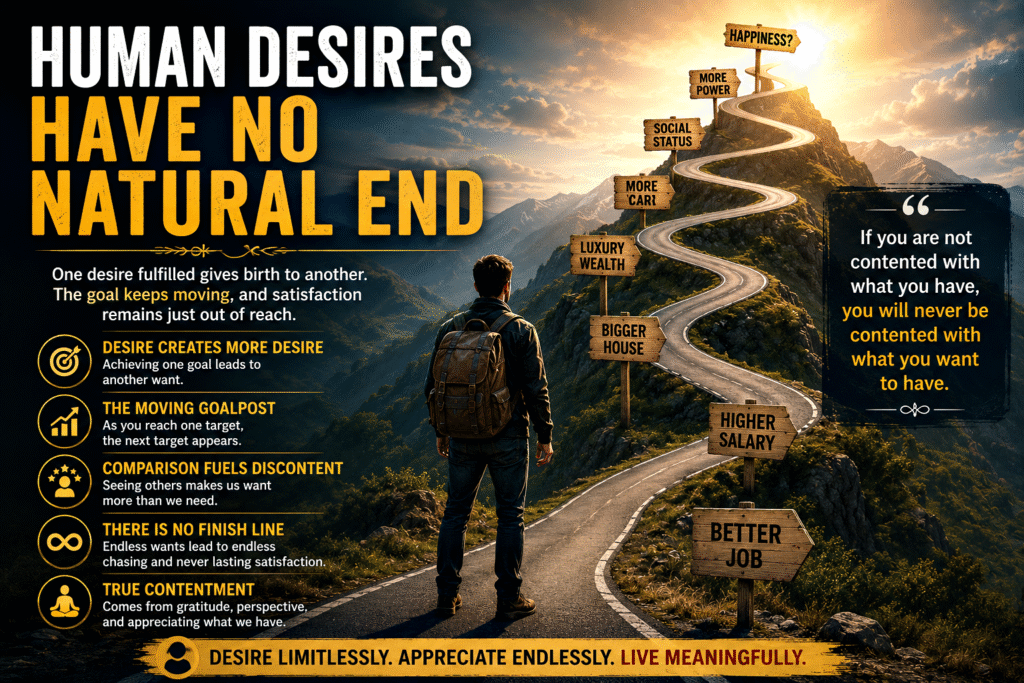
Key Point: When one desire is fulfilled, another often takes its place.
Human beings naturally desire progress and improvement. However, desires can become a never-ending race. A person who wants a bicycle may later want a motorcycle. After getting a motorcycle, he may desire a car. After getting a car, he may want a more expensive one.
The problem is not having goals. The problem begins when we believe that we cannot be happy until every desire is fulfilled.
If a person cannot enjoy a simple meal because he dreams of eating expensive food, he may later find expensive food ordinary and start searching for something even better. His mind has developed the habit of dissatisfaction.
Thus, an endless chain of desires cannot automatically produce lasting happiness.
3. We Often Postpone Happiness Until the Future
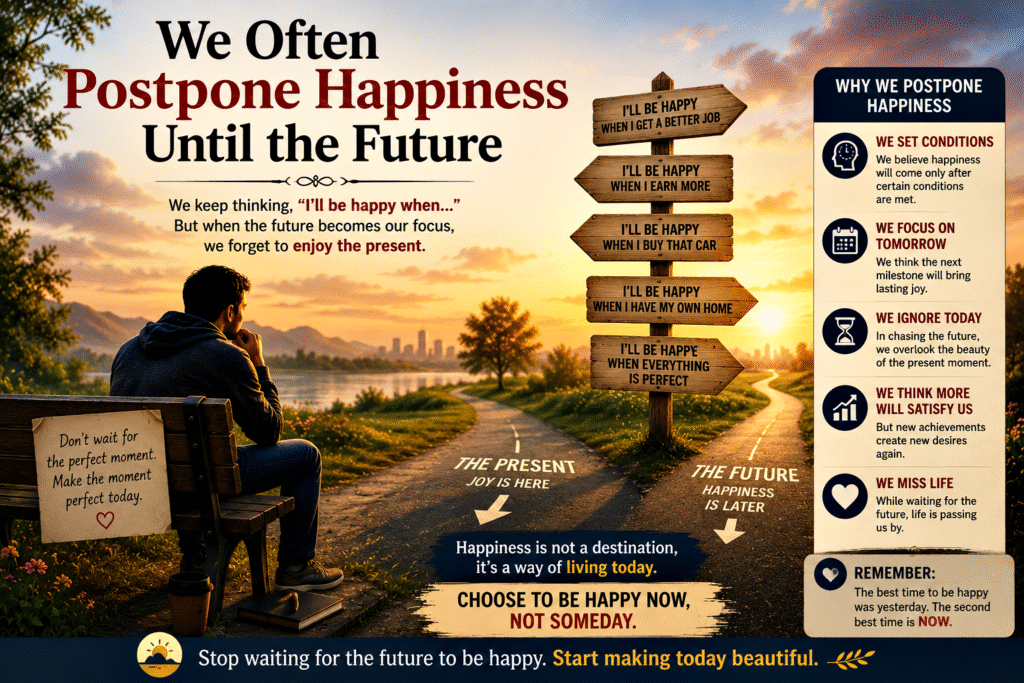
Key Point: Many people believe, “I will be happy when…”
People frequently connect happiness with future achievements:
- “I will be happy when I get a better job.”
- “I will be happy when I earn more money.”
- “I will be happy when I buy a house.”
- “I will be happy when I become successful.”
- “I will be happy when people respect me.”
Goals are valuable, but there is a danger in constantly postponing happiness. After achieving one goal, another goal appears. The person continues saying, “I will be happy when…”
Years may pass, but happiness remains permanently located somewhere in the future.
The wise approach is to work for tomorrow without sacrificing today’s ability to feel grateful and peaceful.
4. More Possessions Do Not Always Create More Satisfaction
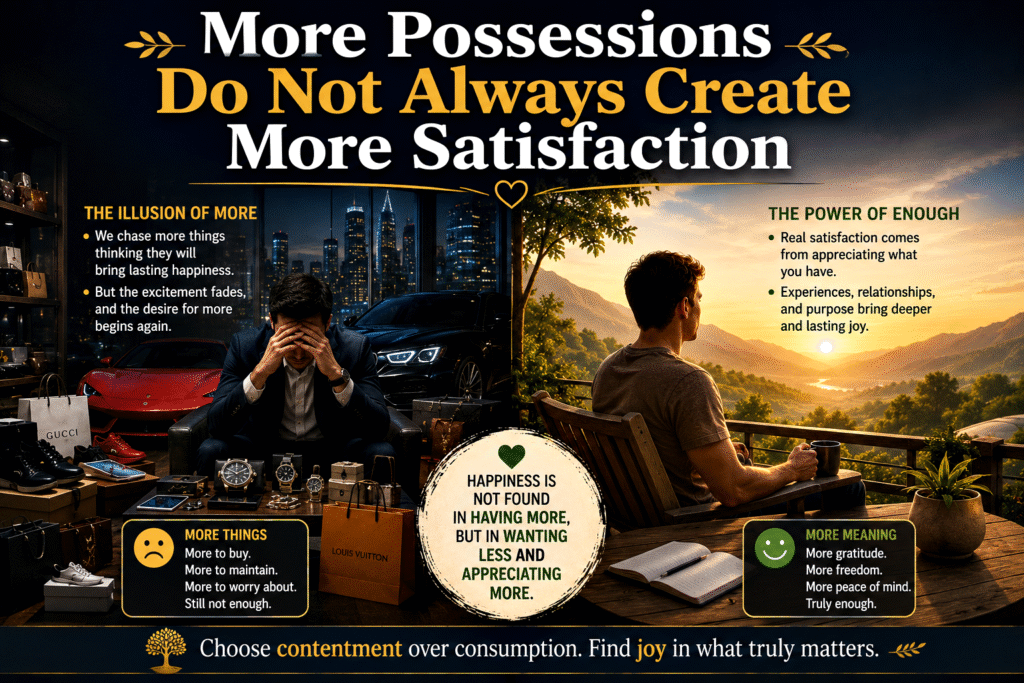
Key Point: Having more and feeling satisfied are two different things.
It is easy to assume that people with more wealth, luxury, and possessions must automatically be happier. Certainly, money can provide comfort and help meet important needs. However, material possessions alone cannot guarantee contentment.
A person may own many expensive things and still feel empty, restless, or dissatisfied. Another person with fewer possessions may experience gratitude, peace, and happiness.
This happens because satisfaction is partly an inner state of mind. If the mind is always focused on what is missing, even abundance may feel insufficient.
Therefore, instead of asking only, “What else do I need?” we should sometimes ask, “How much of what I already have am I failing to appreciate?”
5. Comparison Creates Dissatisfaction
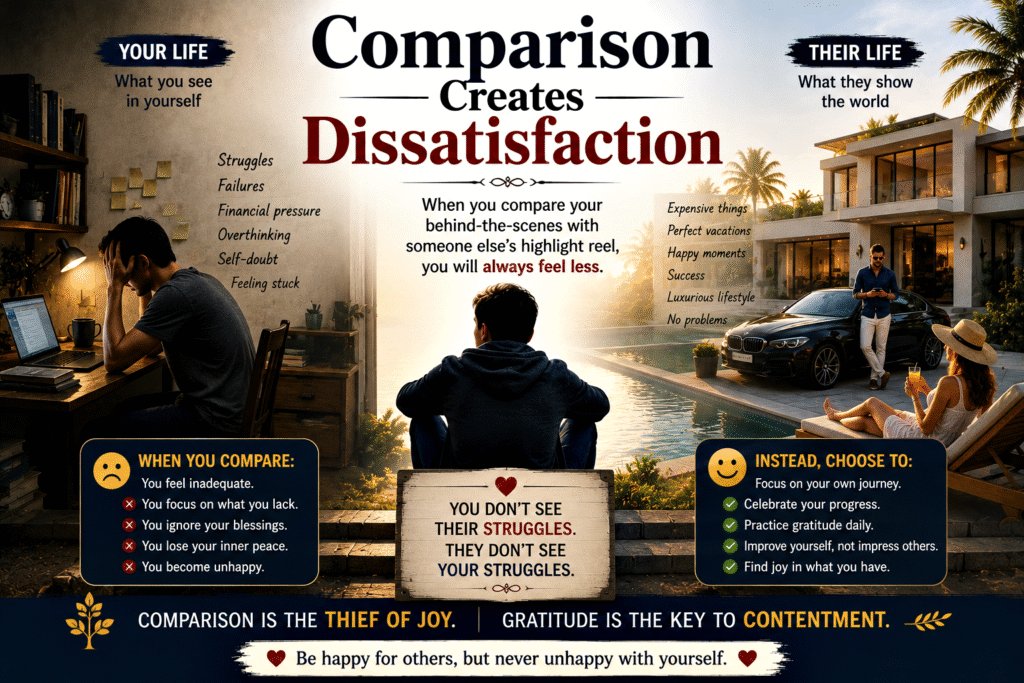
Key Point: Constantly comparing ourselves with others can make us forget our own blessings.
One major reason people become dissatisfied is comparison. We may be happy with our life until we see someone who appears to have more money, greater success, a better house, or more popularity.
Social comparison can create the feeling that whatever we possess is not enough.
For example, a person may be proud of buying a new car. But after seeing someone driving a more expensive car, his happiness may suddenly disappear. The car has not changed; only his comparison has changed.
This teaches us that contentment becomes difficult when our standard of happiness is based entirely on what other people possess.
6. The Mind Can Become Addicted to “More”
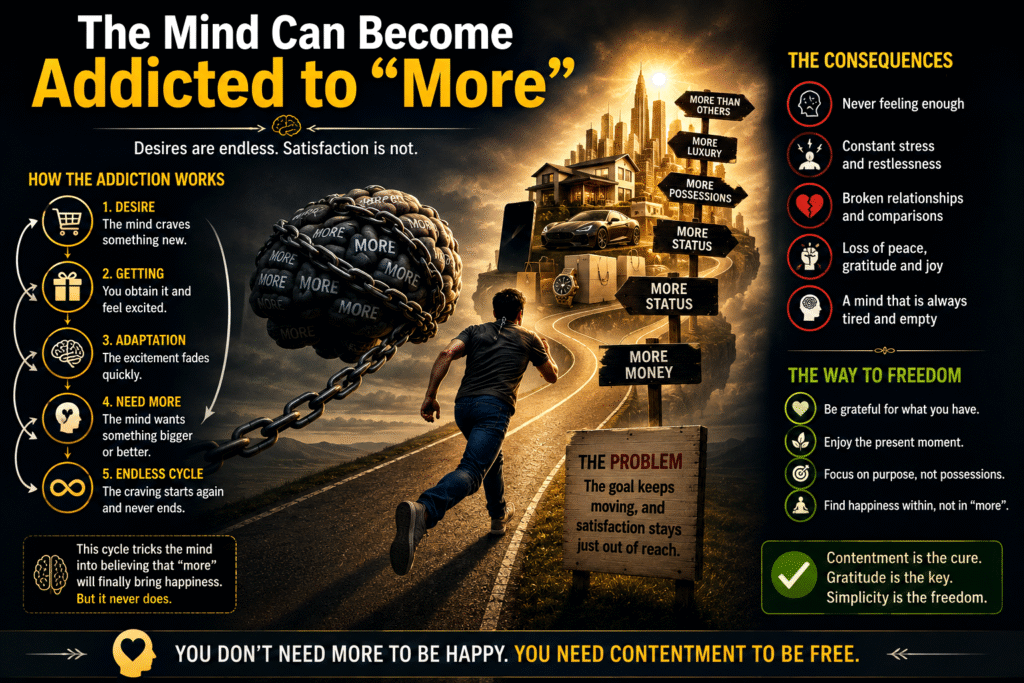
Key Point: The habit of wanting more can become stronger than the enjoyment of receiving.
When we constantly chase the next thing, we may become more excited about wanting than having. Before getting something, we imagine that it will transform our lives. But once we receive it, we gradually become used to it.
Then the excitement fades, and the search for something new begins.
This pattern can continue throughout life:
Desire → Effort → Achievement → Temporary Happiness → Adaptation → New Desire
The philosopher’s saying warns us about this cycle. If dissatisfaction has become our habit, receiving more may not solve the problem.
We do not always need a new life; sometimes we need a new way of looking at the life we already have.
7. Contentment Does Not Mean Lack of Ambition
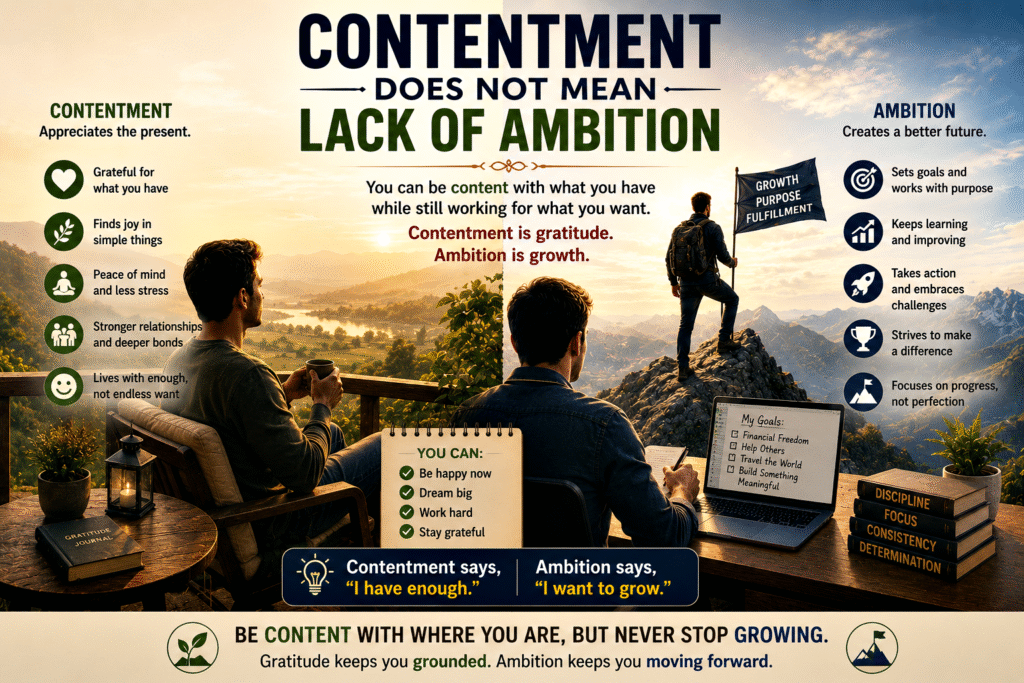
Key Point: We can be grateful for today while still working for a better tomorrow.
Some people mistakenly believe that being content means becoming lazy or unambitious. This is not true.
A student can be grateful for the education and opportunities currently available while still working hard for better results. A professional can appreciate his present job while preparing for career growth. A person can be thankful for a small home while working toward owning a larger one.
The important difference is this:
Ambition says: “I will work to improve my future.”
Dissatisfaction says: “My present life has no value until I get something better.”
Healthy ambition motivates us. Constant dissatisfaction destroys our peace.
8. Gratitude Helps Us Recognize What We Already Have
Key Point: Gratitude changes our focus from what is missing to what is present.
We often take many valuable things for granted, including:
- Good health
- Family and friends
- Food and shelter
- Education
- Freedom and opportunities
- Time and experiences
Sometimes we recognize the value of these things only after losing them.
Practising gratitude helps us become more aware of the blessings that already exist in our lives. This does not mean ignoring difficulties. It simply means refusing to allow difficulties to make us completely blind to everything good.
Gratitude and ambition can exist together. We can say, “I want to achieve more, but I am also thankful for what I have today.”
9. Contentment Protects Us from Endless Frustration
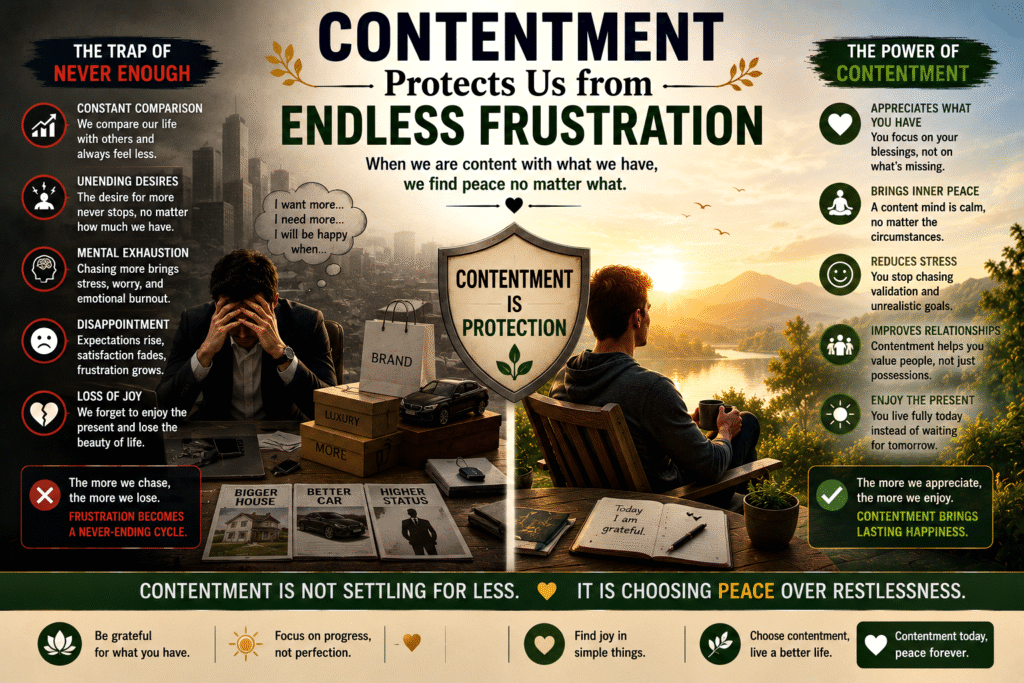
Key Point: A satisfied mind experiences greater peace even while facing challenges.
If our happiness depends on possessing everything we want, we will remain vulnerable to frustration because life cannot fulfill every desire.
There will always be something we do not have, somewhere we have not visited, a position we have not achieved, or an opportunity we have missed.
A contented person understands that life does not need to be perfect to be meaningful. Such a person can enjoy simple pleasures and find value in ordinary moments.
Therefore, contentment is not about having a perfect life; it is about developing a peaceful relationship with an imperfect life.
10. Success Without Contentment Can Feel Empty
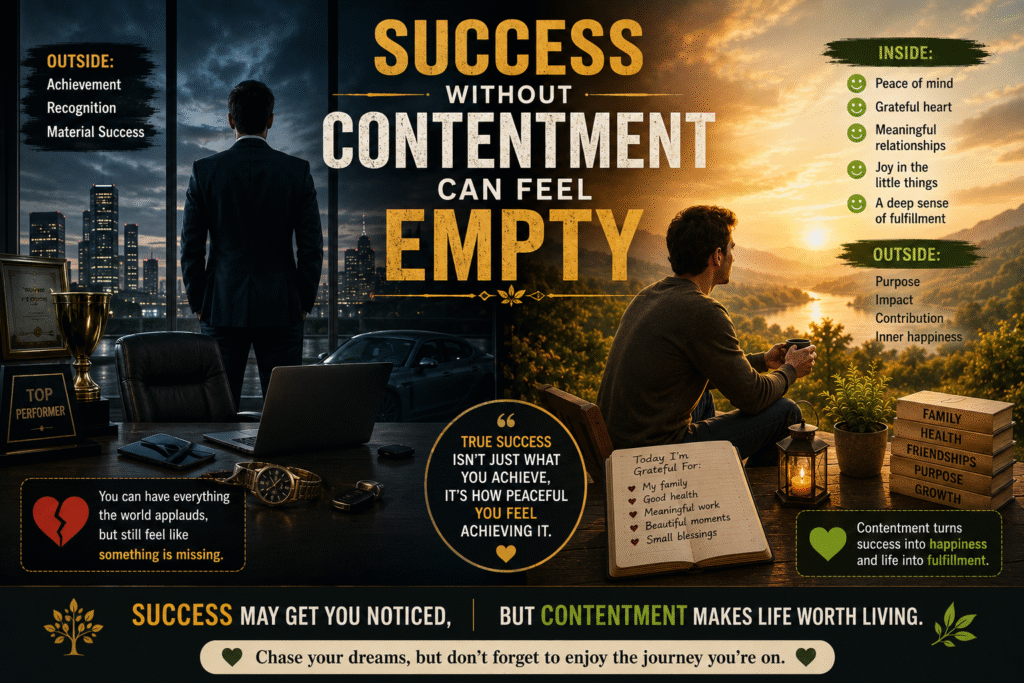
Key Point: Achieving goals is meaningful only when we know how to appreciate them.
Imagine a person who spends years trying to become successful. He finally achieves recognition, wealth, and influence. But instead of enjoying his achievements, he immediately begins worrying about someone who is more successful.
In such a situation, the person may technically be successful but emotionally remain dissatisfied.
This is why contentment is important. Success can increase our opportunities, but contentment helps us enjoy them.
Without the ability to appreciate success, even great achievements may feel ordinary after some time.
11. The Present Moment Should Not Be Ignored
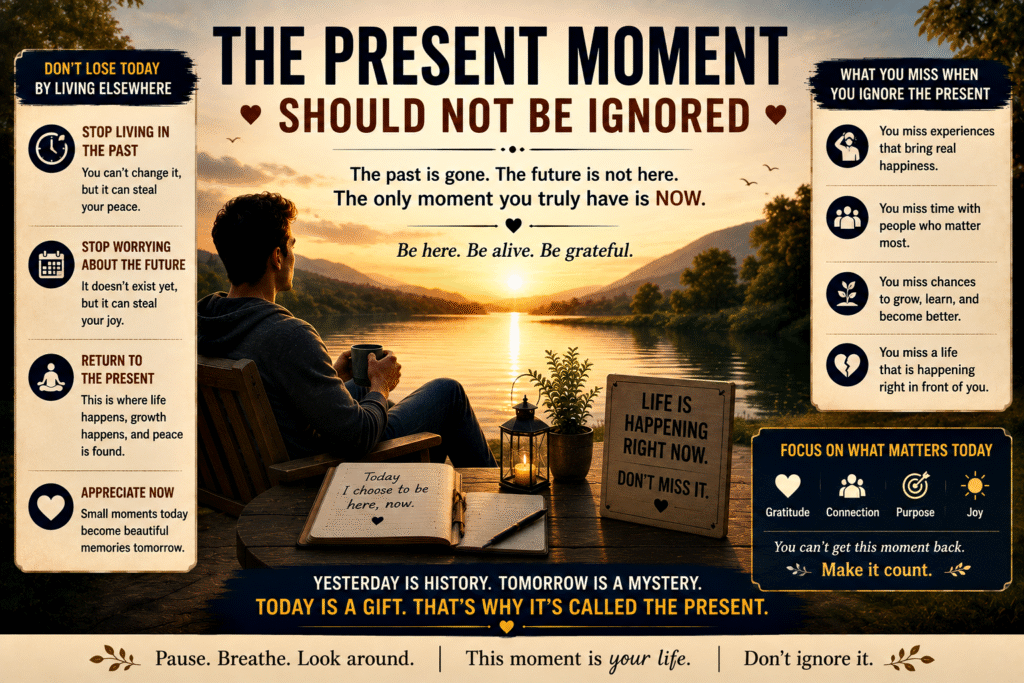
Key Point: Life is happening now, not only after our future goals are achieved.
Many people spend so much time preparing for the future that they forget to experience the present.
They work today for tomorrow, then work tomorrow for another tomorrow. While planning is important, life should not become an endless waiting room.
We should learn to enjoy the journey toward our goals. Celebrate small achievements. Appreciate the people around us. Take time to notice simple moments of happiness.
The future is important, but the present is the only time in which we can actually experience life.
12. True Wealth Is Not Measured Only by Possessions

Key Point: Inner peace, relationships, health, and time are also forms of wealth.
A person may have less money but possess loving relationships, good health, peace of mind, and meaningful experiences. Another person may have great financial wealth but lack peace and satisfaction.
Therefore, we should not measure our entire life through material possessions.
Real wealth can include:
- Peace of mind
- Good relationships
- Physical and emotional well-being
- Knowledge and wisdom
- Meaningful work
- Time with loved ones
- Freedom to make choices
The richest life is not necessarily the one with the most things, but the one in which a person recognises the value of what truly matters.
13. We Must Learn to Enjoy Simple Things

Key Point: Happiness often exists in ordinary moments that we overlook.
A beautiful sunrise, a conversation with a friend, a peaceful evening, laughter with family, a good book, or a simple meal can bring genuine happiness.
However, when the mind constantly demands something bigger and more exciting, ordinary joys may appear unimportant.
Learning to enjoy simple things is a sign of emotional maturity. It makes happiness less dependent on expensive possessions or extraordinary events.
A person who can find joy in simple things carries a source of happiness within himself.
14. The Problem May Not Be What We Have but How We Think
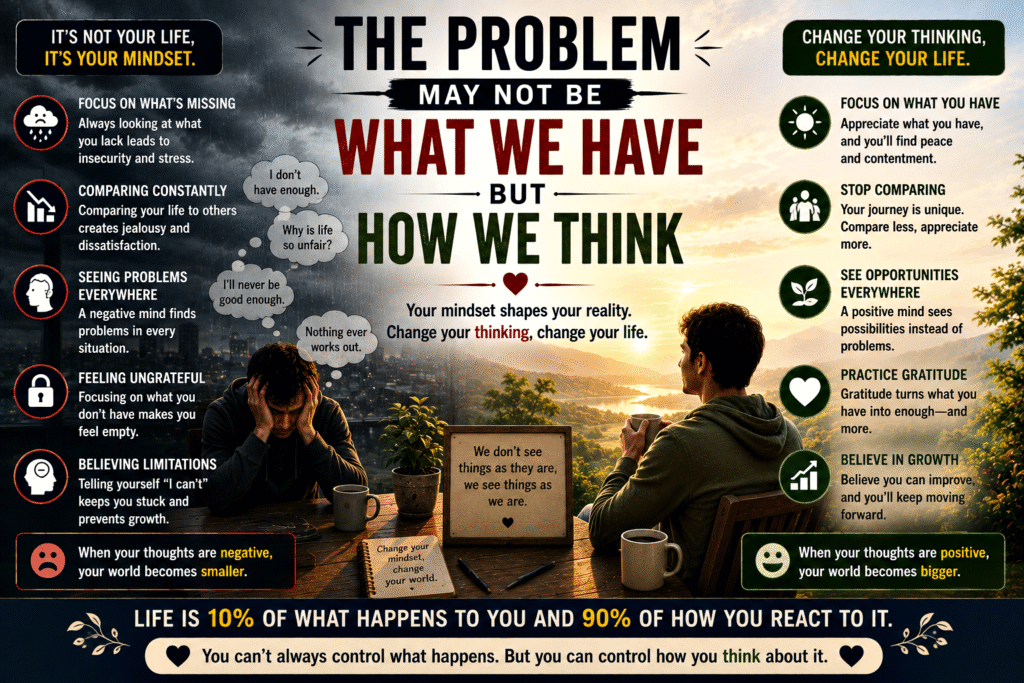
Key Point: Changing our attitude can sometimes bring more happiness than changing our circumstances.
Of course, there are situations where people genuinely need better conditions, opportunities, income, or security. We should never use the idea of contentment to suggest that people should accept injustice or avoid necessary improvement.
However, in many situations, our dissatisfaction comes from the belief that nothing is ever enough.
The same life can appear completely different depending on our perspective. One person sees only limitations, while another recognises possibilities and blessings.
Therefore, external improvement is valuable, but internal improvement is equally important.
15. The Greatest Lesson Is to Balance Desire and Contentment
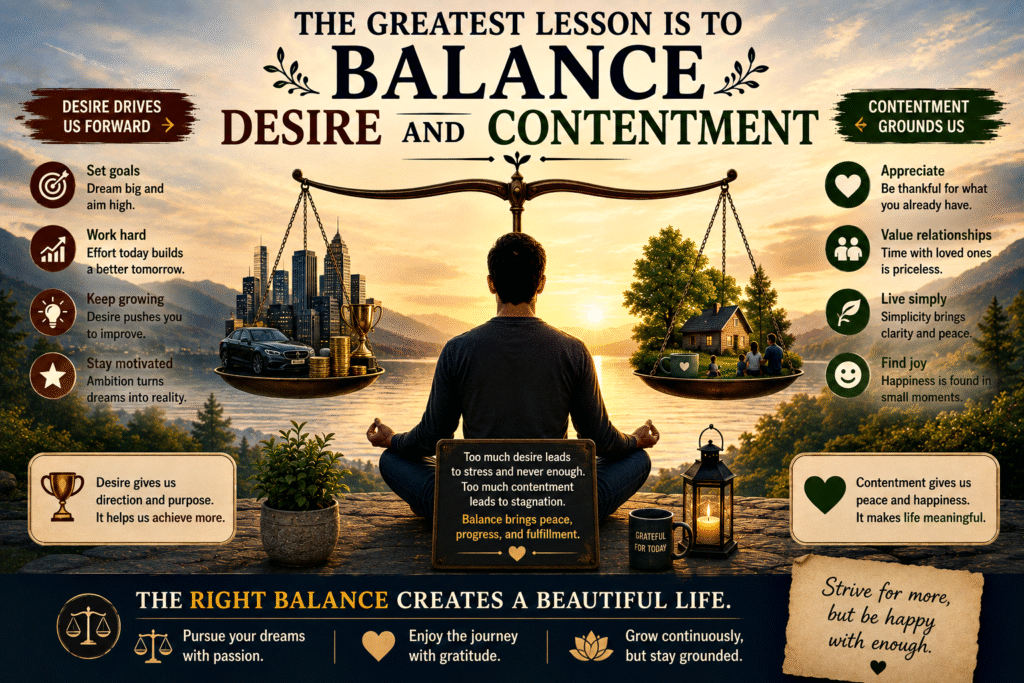
Key Point: Dream for more, work for more, but do not become miserable because you do not yet have more.
This is perhaps the central message of the philosopher’s statement.
We should have dreams. We should set goals. We should work hard to improve our lives. But we should not allow our future desires to destroy our present peace.
The healthiest attitude is:
“I am grateful for what I have, and I will continue working for what I want.”
This balance allows us to enjoy the journey of life rather than constantly feeling that happiness is somewhere beyond the next achievement.
Conclusion
The saying, “He who is not contented with what he has would not be contented with what he would like to have,” teaches us that contentment is an inner quality rather than merely the result of acquiring more things.
The key lesson is not to stop dreaming. It is to stop believing that happiness will begin only after every dream comes true.
Be ambitious, work hard, and strive for a better future—but also pause, look around, and appreciate what you already have. After all, a person who never learns the art of contentment may spend an entire lifetime gaining more, yet never truly feel that he has enough.