
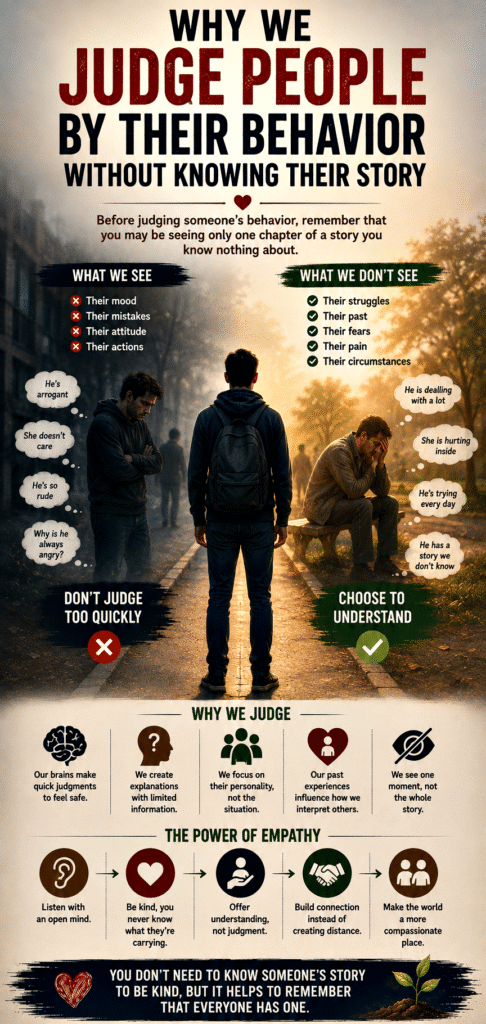
We See Their Behaviour, But Not Their Story
We often form opinions about people within seconds. Someone speaks rudely, and we call them arrogant. Someone doesn’t respond to our message, and we assume they don’t care. Someone makes a mistake, and we immediately question their intelligence or character.
But what if there is a story behind that behaviour that we cannot see?
Human behaviour is influenced by countless factors—past experiences, emotions, stress, fears, relationships, upbringing, personal struggles, and circumstances. Yet, we often judge people based only on what is visible to us.
1. The Psychology of Making Quick Judgments
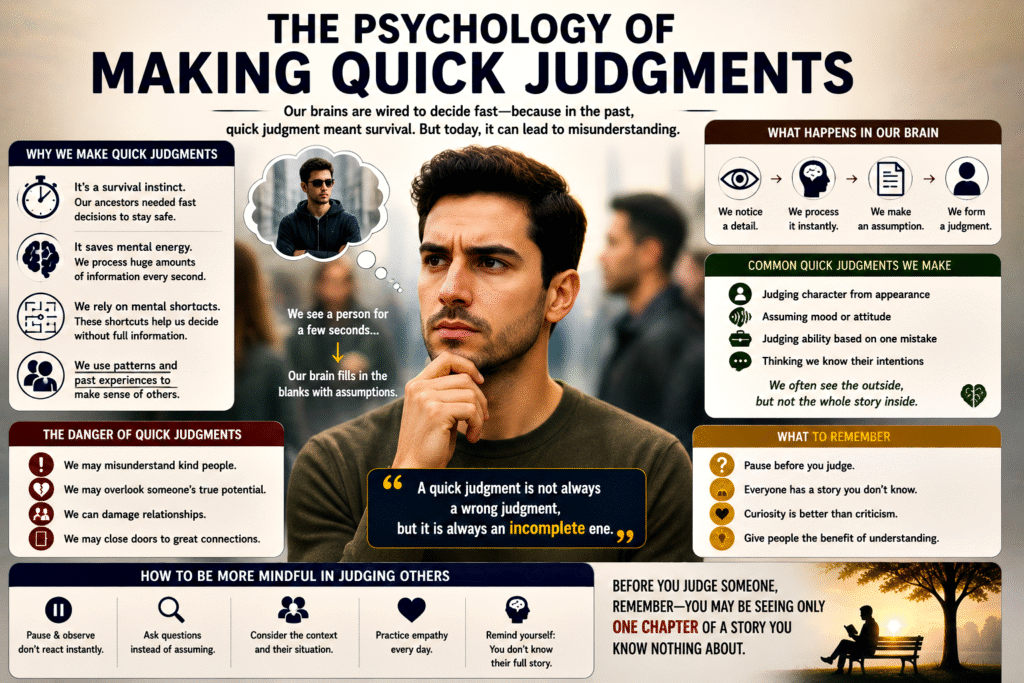
Key Point: Our brains make rapid judgments because quickly interpreting people and situations helps us navigate the world.
The human brain constantly processes enormous amounts of information. To function efficiently, it often relies on mental shortcuts rather than carefully analysing every situation.
When we meet someone, we quickly form impressions based on their facial expressions, tone of voice, body language, clothing, and behaviour.
This ability can be useful. If someone behaves aggressively, recognising the behaviour quickly can help us protect ourselves.
The problem begins when we assume that our first impression represents the person’s entire personality.
For example, someone who doesn’t smile at you may appear unfriendly. But perhaps they are worried about a family problem. Someone who seems distracted during a conversation may appear disrespectful, but they may be dealing with stress.
The behavior is real, but our interpretation may be incomplete.
Lesson: A first impression is information—not the complete truth about a person.
2. Why Humans Naturally Create Explanations for Other People’s Behaviour
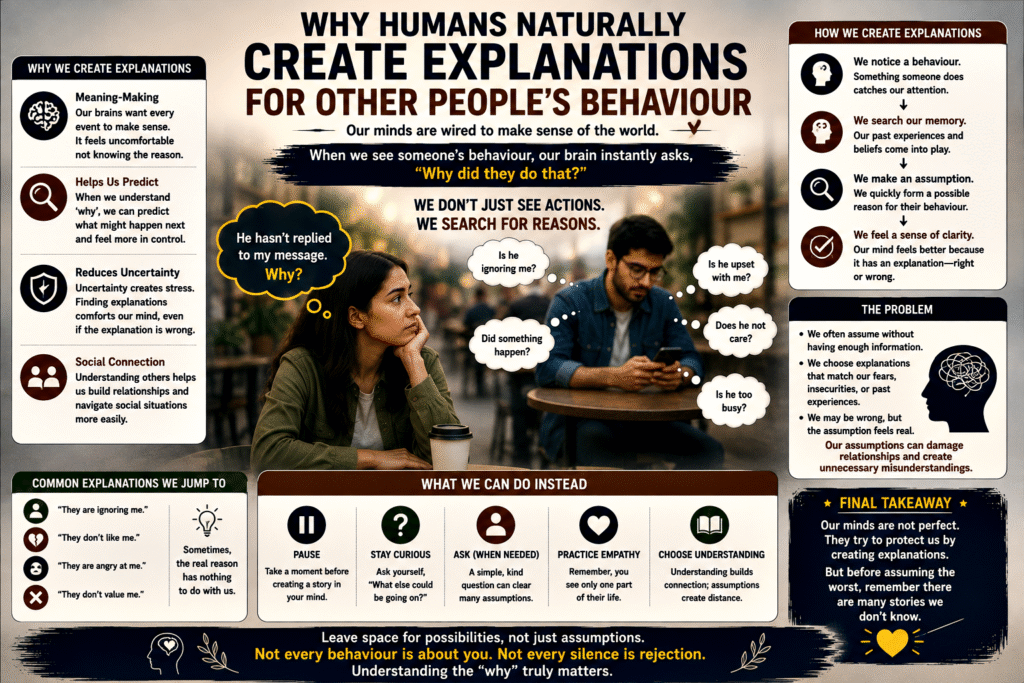
Key Point: When we see someone’s behaviour, our minds naturally try to find a reason for it.
Human beings are meaning-making creatures. When something happens, we instinctively ask, “Why?”
If someone doesn’t reply to our message, our mind immediately begins creating explanations:
- “They are ignoring me.”
- “They don’t respect me.”
- “They’re angry with me.”
- “They don’t value our relationship.”
The problem is that we often create explanations without having enough information.
Instead of considering several possibilities, we may automatically choose the explanation that fits our existing beliefs or emotions.
This becomes especially problematic when we already feel insecure or upset.
A delayed response from a friend may have nothing to do with us. They could be working, driving, sleeping, dealing with an emergency, or simply having a difficult day.
Yet our brain may turn a small event into a personal story.
Lesson: When you don’t know the reason behind someone’s behavior, leave room for possibilities instead of immediately assuming the worst.
3. The Fundamental Attribution Error
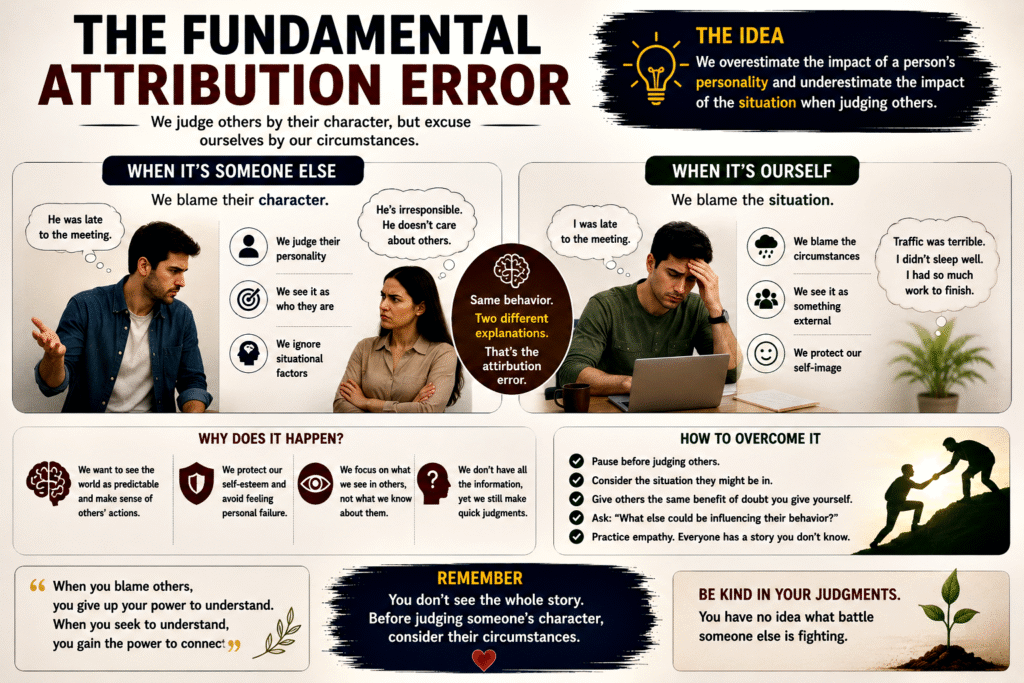
Key Point: We often explain other people’s mistakes through their personality while explaining our own mistakes through circumstances.
One important concept in social psychology is the fundamental attribution error.
It describes our tendency to overemphasize a person’s personality or character when explaining their behavior while underestimating the influence of circumstances.
Imagine someone arriving late to an important meeting.
You might think:
“They’re irresponsible.”
But when you arrive late, you may explain:
“There was terrible traffic.”
The same behavior receives two different explanations.
We give ourselves the benefit of context, but we don’t always give the same benefit to others.
Someone who loses their temper may be labeled an angry person. But perhaps they are experiencing tremendous stress.
Someone who makes a poor decision may be called careless. But perhaps they were dealing with circumstances we know nothing about.
This doesn’t mean harmful behavior should always be excused. Accountability is important.
But understanding context and holding someone accountable can exist at the same time.
Lesson: Before judging someone’s character, consider whether circumstances may have influenced their behavior.
4. We See Behaviour, But We Don’t See the Whole Story
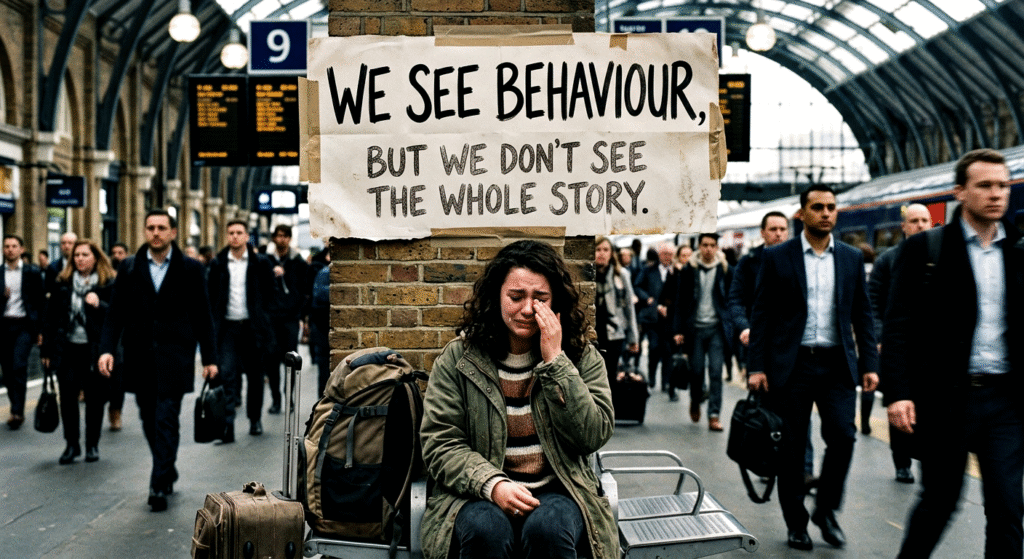
Key Point: Visible behaviour is only one small part of a person’s life.
Imagine watching a movie for five minutes and then deciding you understand the entire story.
It would be unfair.
Yet we sometimes do exactly this with people.
We see someone becoming quiet.
We see someone making a mistake.
We see someone losing their temper.
We see someone withdrawing from others.
But we don’t see everything that happened before that moment.
We don’t know:
- What they experienced growing up.
- What they are currently worried about.
- What losses they have experienced.
- What fears they carry.
- What personal battles they are fighting.
- What happened immediately before we met them.
A person’s behavior may be influenced by experiences that happened years before we entered their life.
Lesson: You may be seeing someone’s reaction without knowing what caused it.
5. Our Own Experiences Influence How We Judge Others

Key Point: We don’t judge people objectively; our past experiences influence the way we interpret their behavior.
Two people can observe exactly the same behavior and reach completely different conclusions.
Why?
Because everyone carries a different psychological history.
If you have been betrayed before, you may become more suspicious of people.
If you have experienced rejection, you may interpret distance as rejection.
If someone has repeatedly disappointed you, you may become quicker to expect disappointment from others.
Our past experiences create expectations about the future.
This can be helpful when previous experiences teach us important lessons. But it can also cause us to project old experiences onto new people.
A new friend shouldn’t automatically be judged according to what an old friend did.
A new relationship shouldn’t necessarily be punished for the mistakes of a previous relationship.
Lesson: Sometimes we are not judging the person in front of us—we are reacting to the memories of people from our past.
6. Social Media Can Make Judgment Even Easier
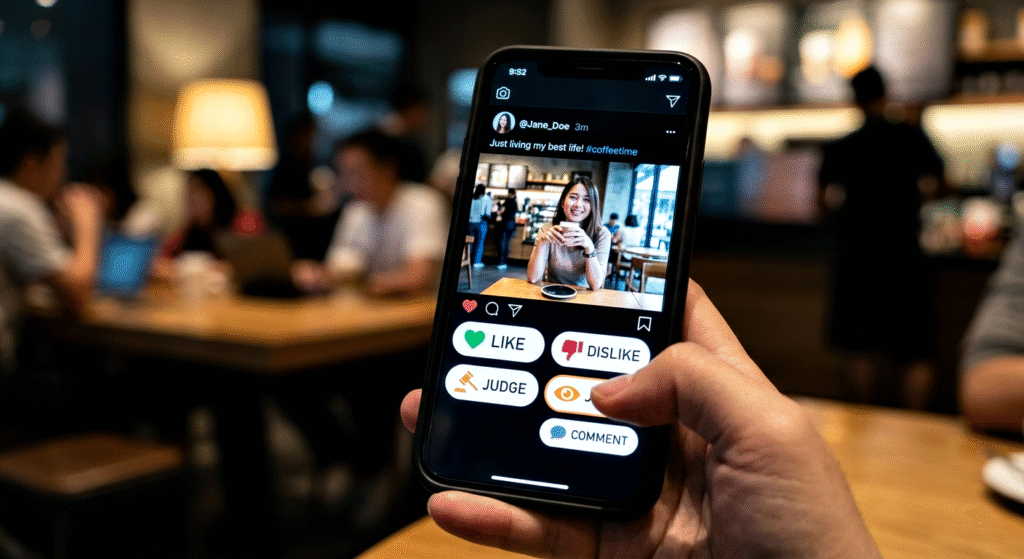
Key Point: Seeing small pieces of someone’s life can encourage us to create large assumptions about them.
Social media gives us carefully selected snapshots of people’s lives.
We see:
- Their successes.
- Their vacations.
- Their celebrations.
- Their opinions.
- Their relationships.
- Their achievements.
But we rarely see the complete context.
A person who appears extremely successful may be struggling privately.
Someone who appears constantly happy may be dealing with emotional difficulties.
Someone who posts little may simply value privacy.
This reminds us that what people show us is not necessarily everything they are experiencing.
The same principle applies offline.
Even when we interact with someone personally, we still see only a fraction of their internal world.
Lesson: Never mistake a visible moment for the complete reality of someone’s life.
7. Empathy Changes the Way We See People
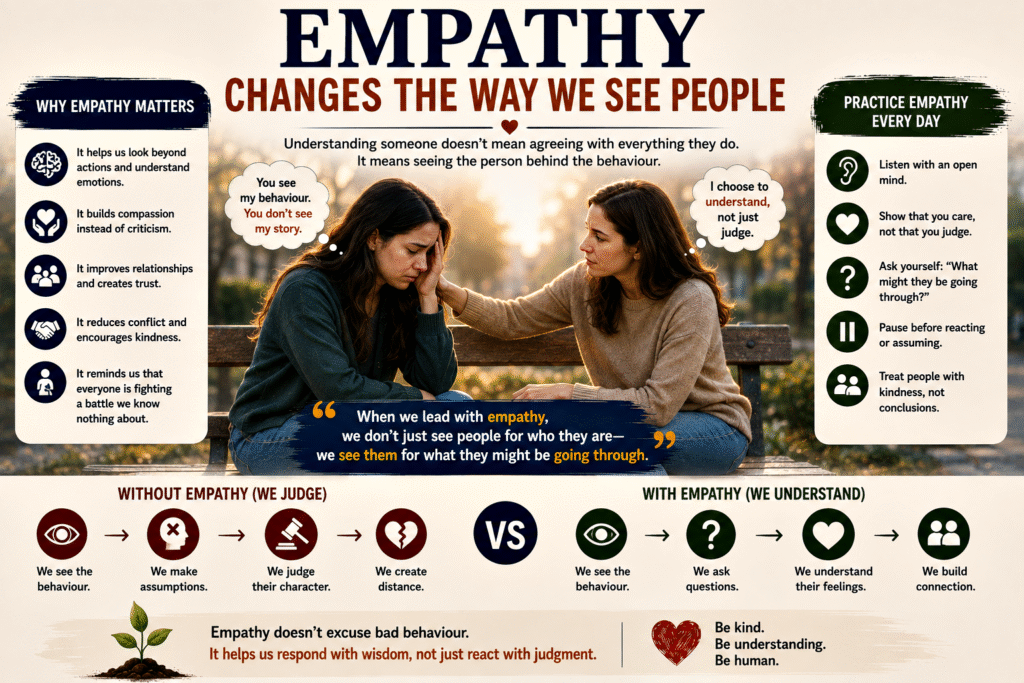
Key Point: Empathy allows us to understand behavior without immediately condemning the person.
Empathy doesn’t mean agreeing with everything someone does.
It means trying to understand their perspective before forming a final judgment.
Instead of asking:
“What’s wrong with this person?”
try asking:
“What might this person be going through?”
That simple change in thinking can completely alter our response.
If someone seems impatient, perhaps they are overwhelmed.
If someone is unusually quiet, perhaps they are struggling.
If someone reacts emotionally, perhaps something touched an old wound.
We may still disagree with their behavior, but empathy helps us respond with greater wisdom.
Lesson: Understanding someone doesn’t require approving of their behavior; it requires recognizing that there may be more to the story.
8. Pause Before You Judge
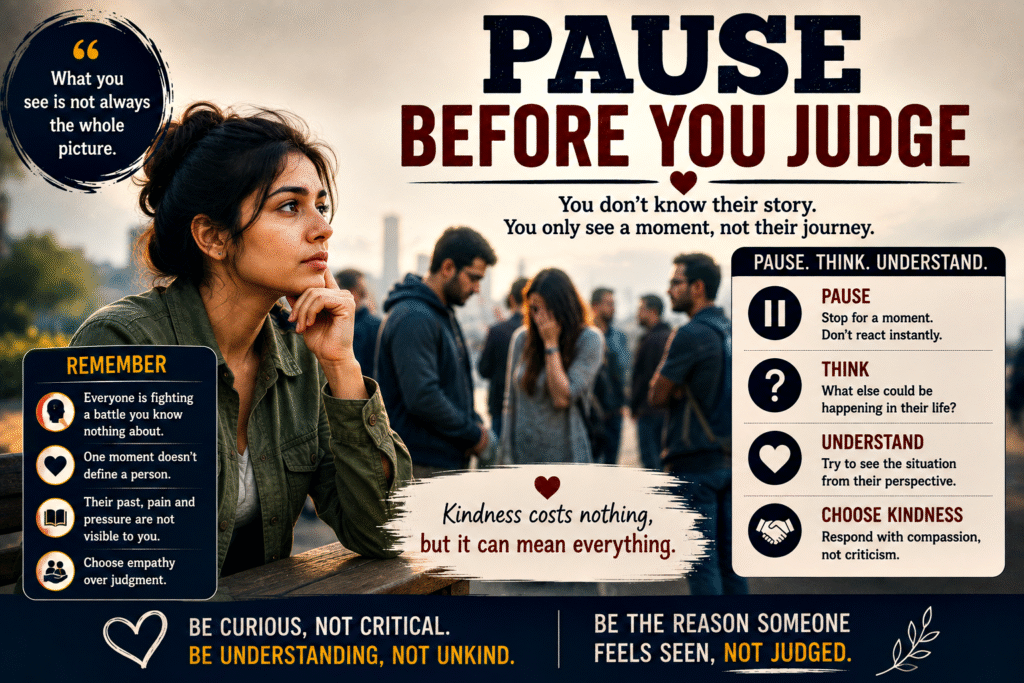
Key Point: A short pause can prevent an unfair conclusion.
When someone’s behaviour bothers us, our first emotional reaction may be strong.
Instead of immediately labelling the person, pause.
Ask yourself:
“What do I actually know?”
Then ask:
“What am I assuming?”
Finally:
“Could there be another explanation?”
These questions create psychological distance between the event and your interpretation.
This doesn’t mean becoming naive or ignoring warning signs. If someone repeatedly behaves dishonestly, aggressively, or disrespectfully, patterns matter.
The goal isn’t to stop making judgments altogether.
The goal is to make better-informed judgments.
Lesson: Don’t eliminate judgment; improve the quality of your judgment.
9. Practice Compassion Without Ignoring Boundaries
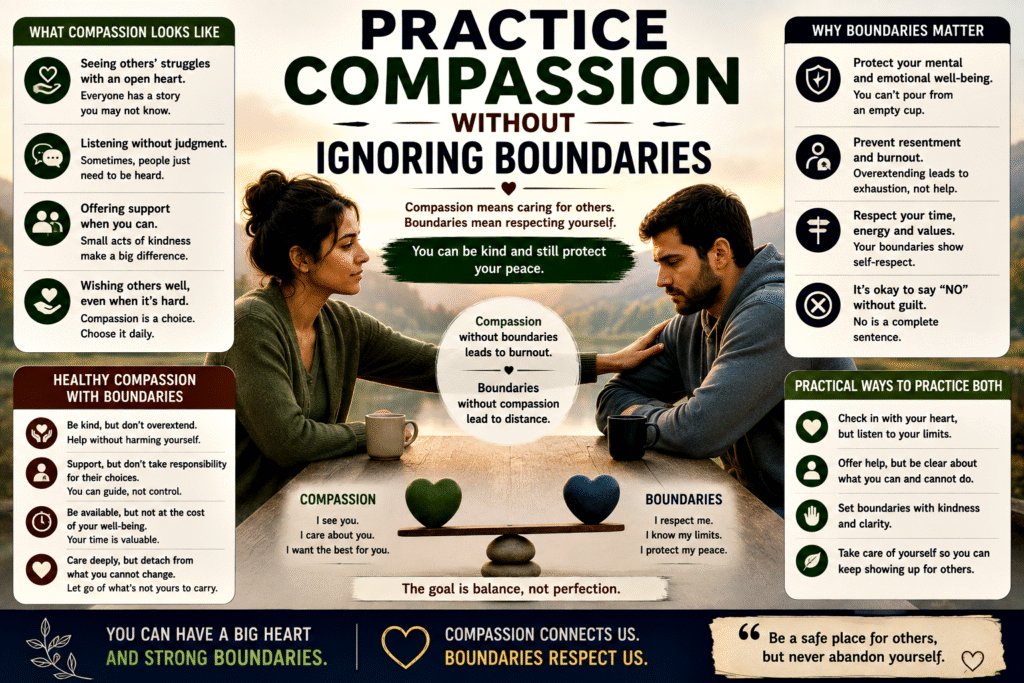
Key Point: Understanding people does not mean allowing them to mistreat you.
There is an important difference between empathy and tolerance of harmful behaviour.
You can understand why someone behaves a certain way and still establish boundaries.
For example:
“I understand that you’re under stress, but it’s not acceptable to speak to me disrespectfully.”
This approach combines compassion with self-respect.
Healthy relationships require both.
Empathy helps us avoid unnecessary condemnation.
Boundaries protect us from repeated harm.
Lesson: You can give people understanding without permitting them to hurt you.
Conclusion
Key Point: Every person you meet has a story you cannot fully see.
We often judge people based on a single conversation, one mistake, one reaction, or one uncomfortable moment.
But human beings are far more complicated than isolated behaviours.
Someone’s behavior may be influenced by fear, stress, insecurity, upbringing, past experiences, or circumstances that we know nothing about.
This doesn’t mean we should ignore harmful behaviour or abandon our boundaries. Instead, it means we should be careful about turning one moment into a permanent judgment about someone’s character.
Before calling someone rude, consider whether they may be struggling.
Before calling someone arrogant, consider whether you might be misunderstanding their behaviour.
Before deciding someone doesn’t care, consider whether you actually know what they are going through.
And before judging another person’s story, remember that you wouldn’t want someone to define your entire character by your worst moment.
Final Takeaway
Before judging someone’s behaviour, remember that you may be seeing only one chapter of a story you know nothing about.
Be curious before being critical.
Be empathetic without abandoning your boundaries.
And remember: the person you judge today may be fighting a battle you cannot see—and you may also have moments in your own life when you hope someone chooses understanding over judgment.