
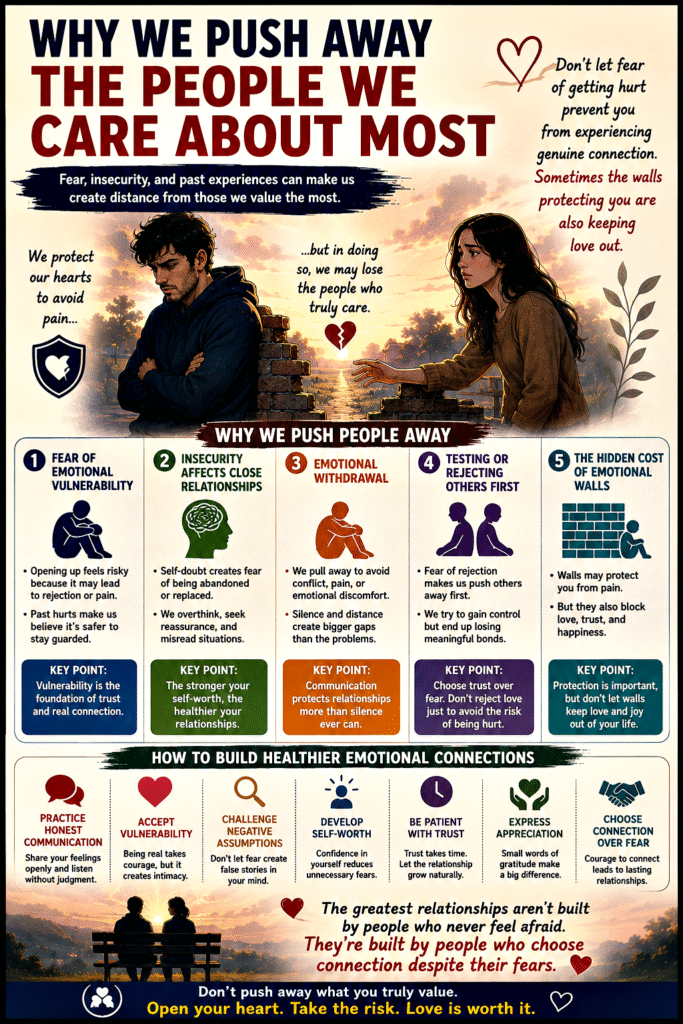
The Psychology of Fear, Emotional Vulnerability, and Building Stronger Relationships
Relationships are one of the greatest sources of happiness, comfort, and personal growth. Yet, one of the most confusing aspects of human behaviour is that people sometimes push away the very individuals they love and value the most. A caring partner, a loyal friend, a supportive family member, or someone who genuinely wants the best for us may suddenly find us becoming distant, defensive, or emotionally unavailable.
At first glance, this behaviour seems irrational. If we care about someone, why would we create distance? Psychology suggests that this reaction is often rooted not in a lack of love, but in fear, insecurity, and past emotional experiences. Many people unconsciously build emotional walls to protect themselves from rejection, disappointment, or heartbreak. Unfortunately, those same walls often block trust, intimacy, and genuine connection.
Understanding why we push people away is the first step toward creating healthier, more meaningful relationships.
1. Why People Fear Emotional Vulnerability
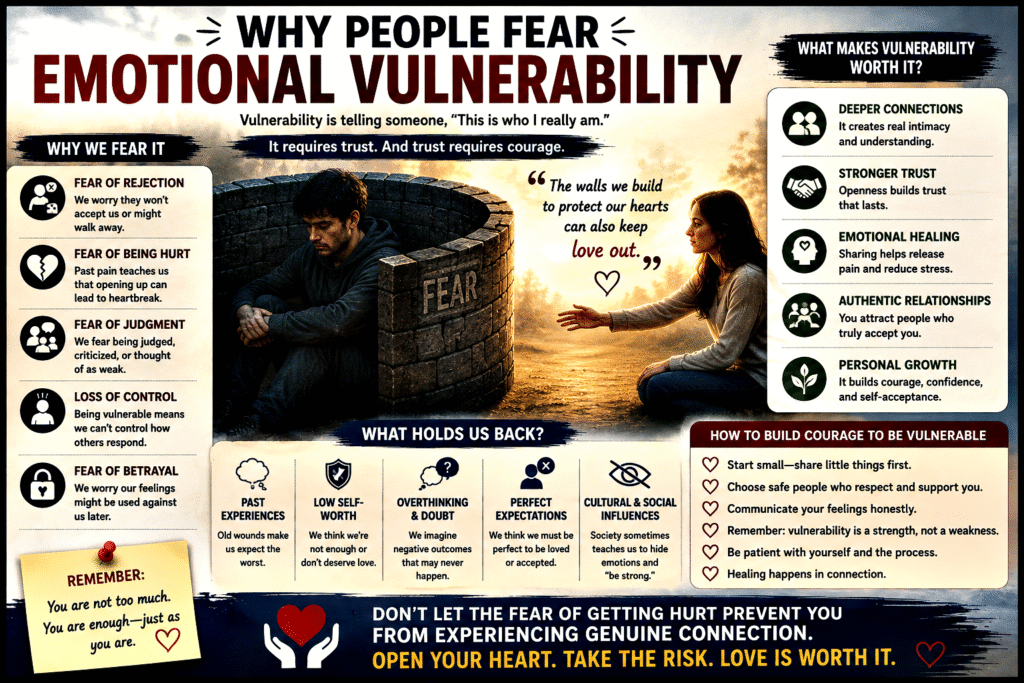
Key Point: Opening your heart feels risky because vulnerability always carries the possibility of emotional pain.
Being emotionally vulnerable means allowing someone to see your true thoughts, feelings, fears, and imperfections. While vulnerability is essential for deep relationships, it also requires trust.
For many people, this feels uncomfortable because it involves uncertainty. They may wonder:
- “What if they reject me?”
- “What if they stop caring about me?”
- “What if they use my weaknesses against me?”
- “What if I get hurt again?”
Psychologists explain that emotional vulnerability activates the brain’s threat detection system. Even when there is no real danger, past painful experiences can make openness feel unsafe.
As a result, people may avoid expressing their feelings, hide their struggles, or pretend they don’t need anyone.
Ironically, vulnerability is not a sign of weakness. It is the foundation of trust, intimacy, and emotional closeness.
Without vulnerability, relationships often remain shallow because neither person feels truly known or understood.
Lesson:
Real connection begins when you dare to be seen as you truly are, imperfections and all.
2. How Insecurity Affects Close Relationships
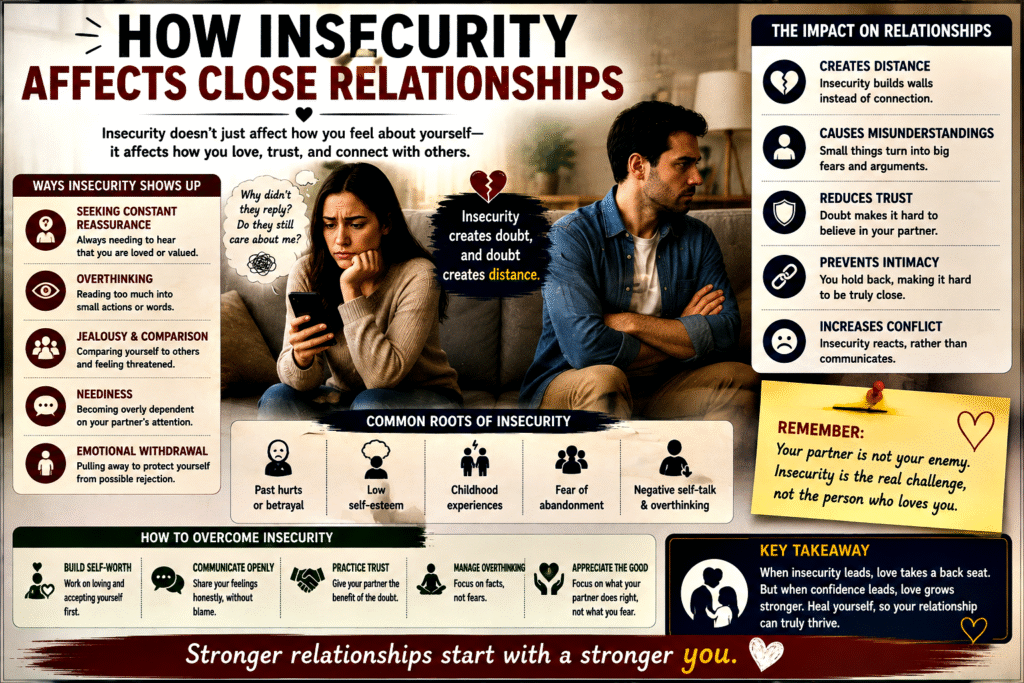
Key Point: Personal insecurities often influence how we treat the people we love.
Everyone experiences moments of self-doubt, but unresolved insecurities can quietly shape our relationships.
Someone who believes they are not good enough may constantly fear being abandoned or replaced. Instead of enjoying the relationship, they become focused on protecting themselves from possible rejection.
This can lead to behaviors such as:
- Seeking constant reassurance.
- Becoming overly jealous.
- Misinterpreting harmless situations.
- Avoiding emotional closeness.
- Assuming others will eventually leave.
For example, if someone receives a delayed reply to a message, insecurity may cause them to think, “They must be losing interest,” even when the other person is simply busy.
These thoughts are often driven by internal fears rather than external reality.
Healthy relationships require trust, but insecurity creates doubt where there may be no reason for it.
Building self-confidence helps reduce unnecessary fears and allows relationships to grow naturally.
Lesson:
The stronger your relationship with yourself becomes, the healthier your relationships with others will be.
3. The Psychology of Emotional Withdrawal
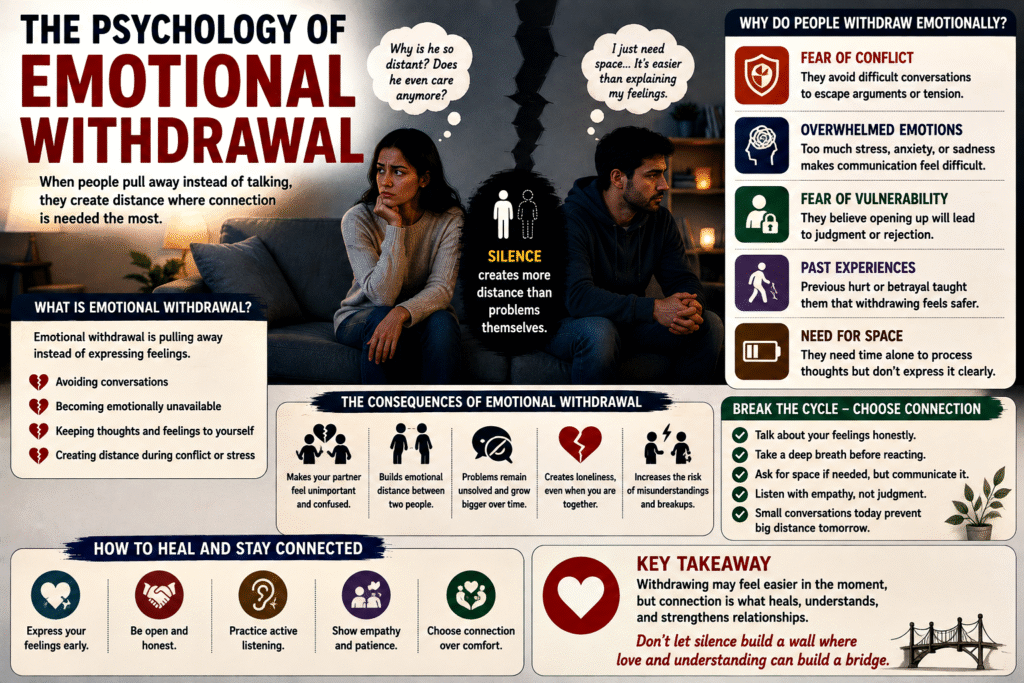
Key Point: Emotional withdrawal is often a defense mechanism rather than a lack of love.
Sometimes people respond to emotional discomfort by creating distance.
Instead of discussing their feelings, they:
- Stop communicating.
- Become emotionally unavailable.
- Avoid meaningful conversations.
- Spend less time together.
- Pretend everything is fine.
Psychologists describe this as emotional withdrawal—a protective strategy used to avoid conflict, disappointment, or emotional pain.
The problem is that silence rarely solves relationship issues.
When one person withdraws, the other often feels confused, rejected, or unimportant.
Over time, emotional distance can become larger than the original problem.
Healthy relationships are strengthened through honest communication, not emotional avoidance.
Sharing your feelings may feel uncomfortable initially, but it usually creates greater understanding and trust.
Lesson:
Distance may protect you from temporary discomfort, but honest communication protects your relationship.
4. Why People Sometimes Test or Reject Others Before They Can Be Rejected
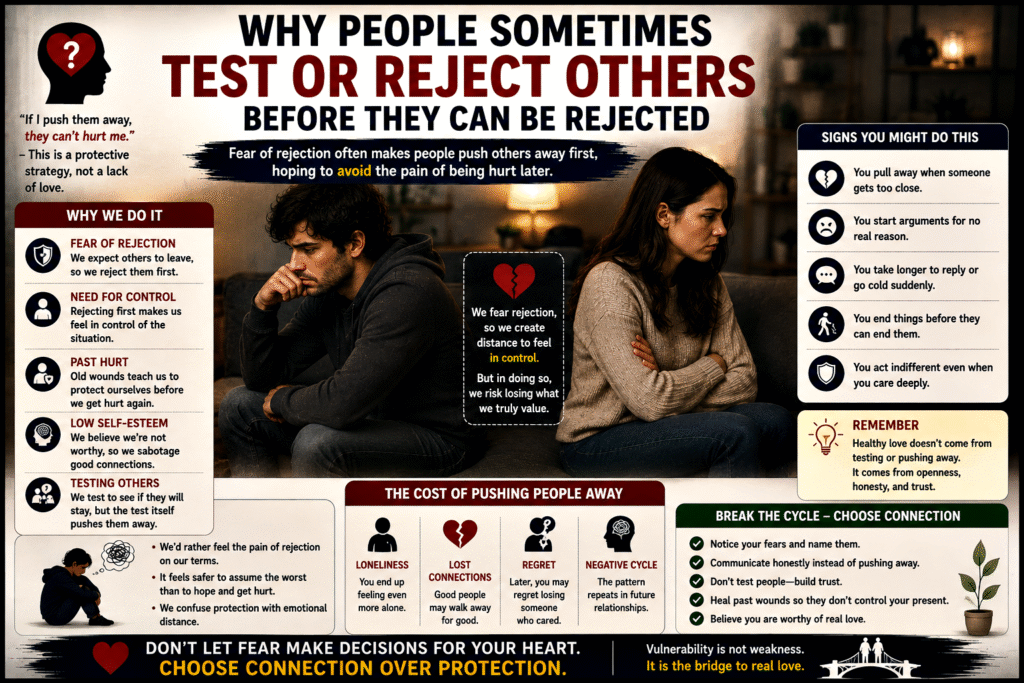
Key Point: Fear of rejection sometimes causes people to reject others first.
One of the most surprising psychological behaviors is preemptive rejection.
Some people unconsciously believe:
“If I push them away first, they can’t hurt me later.”
This may appear as:
- Ending relationships without clear reasons.
- Becoming cold when someone gets emotionally close.
- Starting unnecessary arguments.
- Ignoring messages.
- Acting indifferent despite caring deeply.
These behaviors are often attempts to gain a sense of control over emotional uncertainty.
Unfortunately, this strategy usually creates the very outcome people fear.
By pushing others away, they increase the likelihood of losing meaningful relationships.
Healthy relationships require emotional courage.
Instead of testing whether someone will stay, it is healthier to communicate your fears openly.
Trust grows through honesty, not emotional games.
Lesson:
Don’t let the fear of being rejected cause you to reject the people who genuinely care about you.
5. The Hidden Cost of Building Emotional Walls
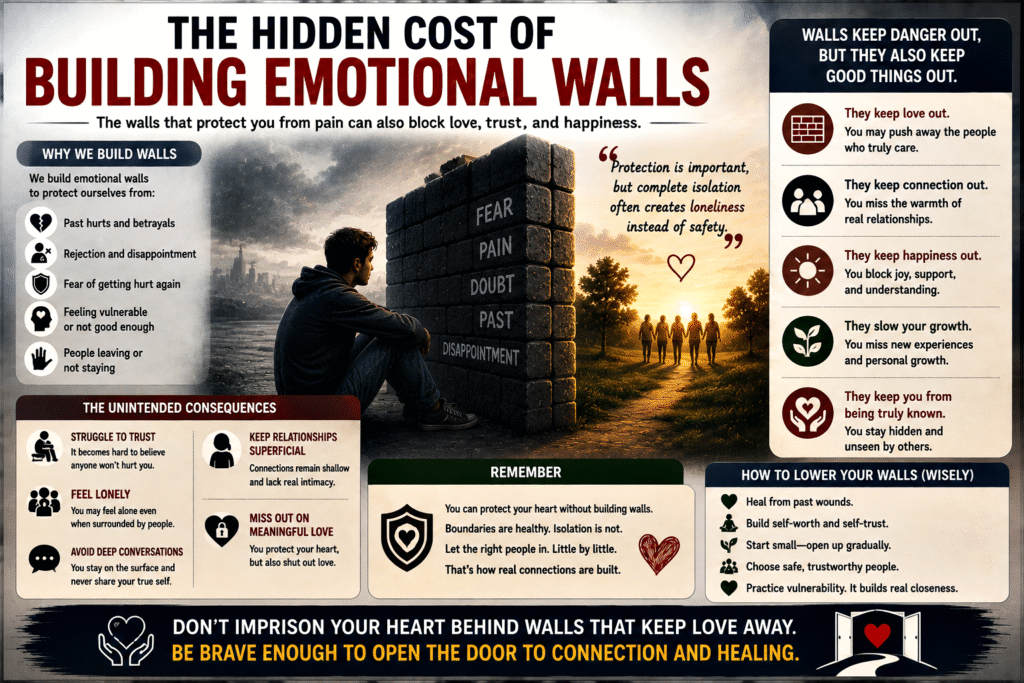
Key Point: The walls that protect you from pain can also block love, trust, and happiness.
Emotional walls often develop after painful experiences such as betrayal, heartbreak, rejection, or disappointment.
Initially, these walls seem helpful because they reduce vulnerability.
However, over time they create unintended consequences.
People with strong emotional walls may:
- Struggle to trust others.
- Feel lonely despite being surrounded by people.
- Avoid deep conversations.
- Keep relationships superficial.
- Miss opportunities for meaningful connection.
Imagine living in a house surrounded by high walls.
The walls keep danger out.
But they also keep visitors out.
Emotionally, the same principle applies.
Protection is important, but complete emotional isolation often creates loneliness rather than safety.
Lesson:
Protect your heart wisely, but don’t imprison it behind walls that keep genuine love away.
6. How to Build Healthier Emotional Connections
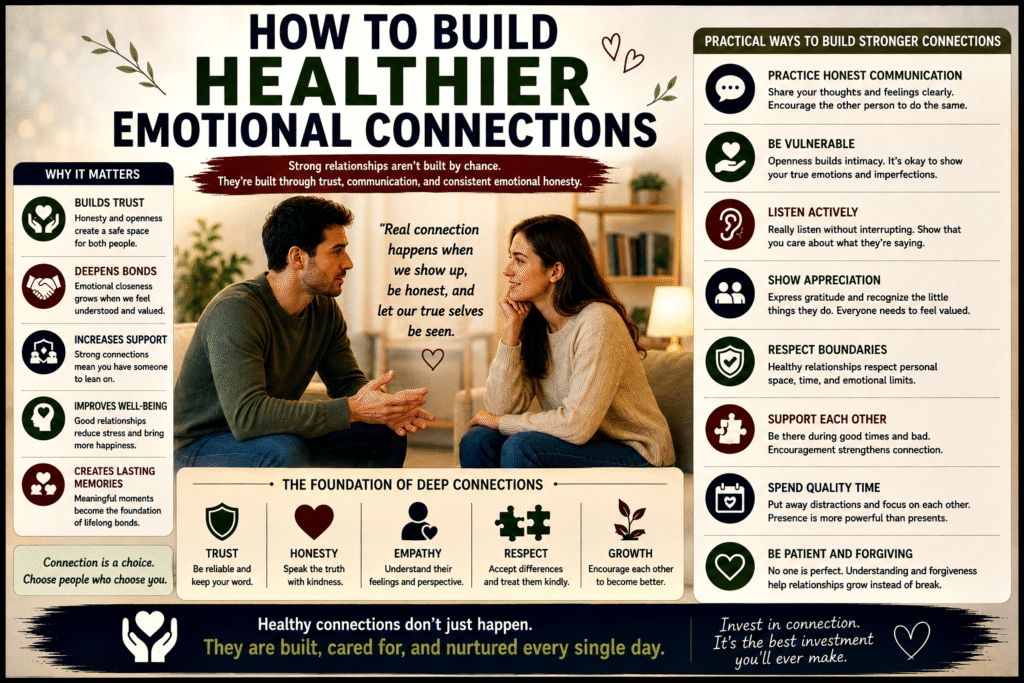
Key Point: Strong relationships are built through trust, communication, and consistent emotional honesty.
Healthy emotional connections don’t happen by chance.
They grow through intentional effort.
Here are practical ways to strengthen your relationships.
Practice Honest Communication
Share your feelings instead of expecting others to guess them.
Simple conversations prevent many misunderstandings.
Accept That Vulnerability Is Strength
Opening up requires courage.
Every honest conversation strengthens emotional intimacy.
Challenge Negative Assumptions
Before assuming someone is rejecting you, ask yourself:
- Do I have evidence?
- Could there be another explanation?
Avoid letting fear create false stories.
Develop Self-Worth
The more secure you feel within yourself, the less dependent you become on constant reassurance from others.
Healthy confidence creates healthier relationships.
Be Patient With Trust
Trust develops gradually.
Allow relationships to grow naturally instead of demanding certainty immediately.
Express Appreciation Regularly
Tell people they matter.
Don’t assume they already know.
Small expressions of gratitude strengthen emotional bonds.
Lesson:
Healthy relationships are built one honest conversation, one act of trust, and one moment of vulnerability at a time.
7. The Power of Choosing Connection Over Fear
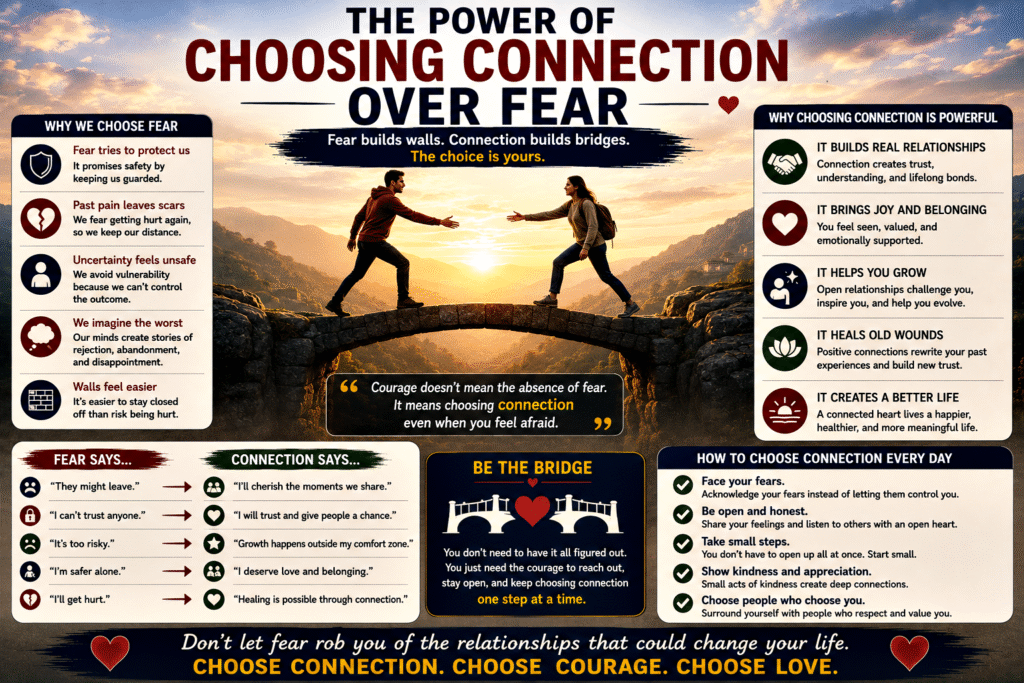
Key Point: Lasting relationships require courage, not certainty.
No relationship comes with guarantees.
People may disappoint us.
Misunderstandings may happen.
Conflict is inevitable.
But allowing fear to control every relationship guarantees emotional distance.
The people who build strong relationships are not fearless.
They simply decide that connection is more important than perfect emotional safety.
Every meaningful friendship, family bond, or romantic relationship requires taking emotional risks.
The reward is worth it.
Trust, belonging, understanding, and love cannot exist without vulnerability.
Lesson:
The greatest relationships are not built by people who never feel afraid—they are built by people who choose connection despite their fears.
Conclusion
Key Point: Don’t let fear of getting hurt prevent you from experiencing genuine connection.
Pushing away the people we care about most is often an unconscious attempt to protect ourselves from emotional pain. Fear of vulnerability, insecurity, emotional withdrawal, and the anticipation of rejection can quietly create distance between us and those who genuinely want to support us.
While these protective behaviors may provide temporary comfort, they often prevent us from experiencing the trust, love, and closeness we truly desire.
Psychology reminds us that meaningful relationships require openness, honest communication, and the courage to be emotionally authentic. Building healthier connections starts with recognizing our fears instead of allowing those fears to control our actions.
The strongest relationships are not those without conflict or uncertainty—they are those where people choose understanding over avoidance, trust over suspicion, and vulnerability over emotional walls.
Final Takeaway
Don’t let fear convince you to push away the people who genuinely care about you. Sometimes the walls you build to protect your heart also keep love, trust, and happiness from reaching it. True strength is not found in hiding your emotions—it is found in having the courage to connect, communicate, and let yourself be truly known.