
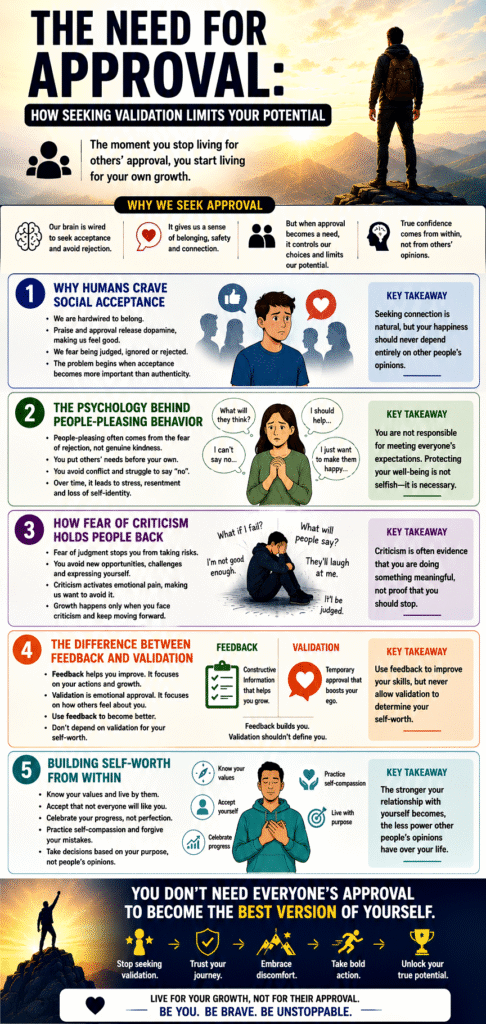
Why True Success Begins When You Stop Living for Others’ Opinions
Human beings are social creatures. From childhood, we naturally seek love, acceptance, and appreciation from those around us. A compliment from a parent, praise from a teacher, or recognition from friends makes us feel valued and connected. While the desire for acceptance is normal, constantly depending on others’ approval can become a major obstacle to personal growth and happiness.
Many people spend their lives making decisions based on what others might think rather than what they truly want. They avoid taking risks, hide their authentic selves, and sacrifice their dreams simply to gain acceptance. Psychology explains that this behaviour is deeply rooted in our need to belong, but it also shows that lasting confidence comes from within—not from external validation.
Let’s explore why seeking approval can limit your potential and how you can develop genuine self-worth.
1. Why Humans Crave Social Acceptance
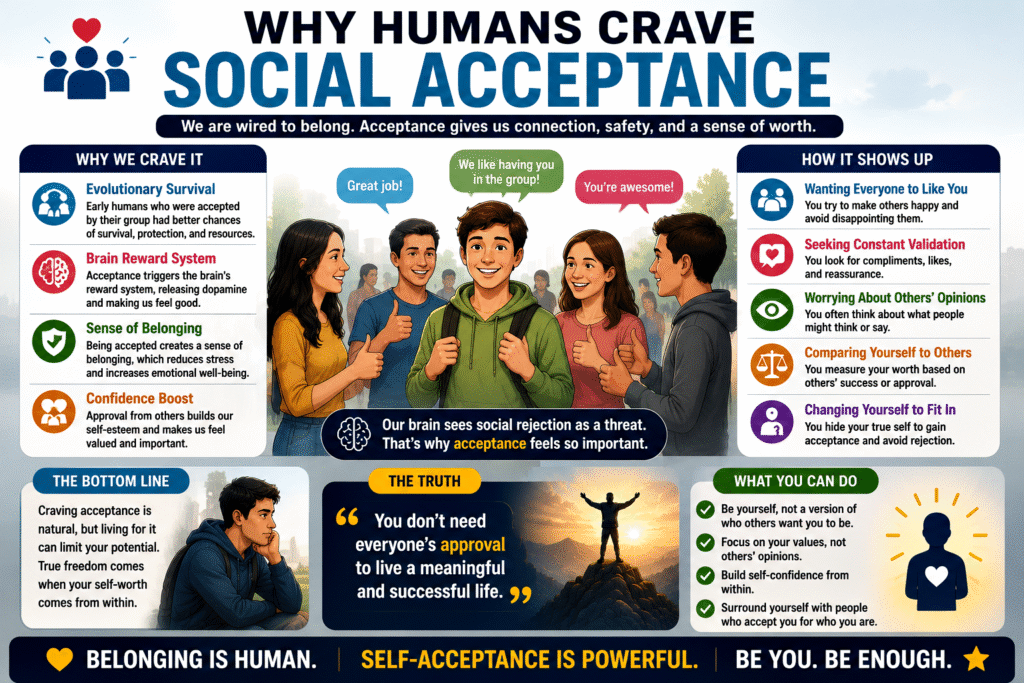
Key Point: The desire for acceptance is a basic human need, but it should not define your identity.
Since ancient times, survival depended on being part of a group. Early humans who were accepted by their community had better chances of finding food, protection, and support. Those who were rejected faced greater risks.
Although society has changed dramatically, our brains still carry this evolutionary programming. Being appreciated by others activates the brain’s reward system, making us feel happy and secure. Receiving compliments, likes on social media, promotions, or praise releases dopamine, creating a temporary sense of satisfaction.
This explains why many people:
- Want everyone to like them.
- Feel disappointed when they are ignored.
- Worry excessively about others’ opinions.
- Seek constant reassurance before making decisions.
- Compare themselves with others.
The problem begins when acceptance becomes more important than authenticity. Instead of asking, “What do I truly want?” people start asking, “What will others think?”
Living this way gradually disconnects you from your real values and aspirations.
Lesson:
Seeking connection is natural, but your happiness should never depend entirely on other people’s opinions.
2. The Psychology Behind People-Pleasing Behavior
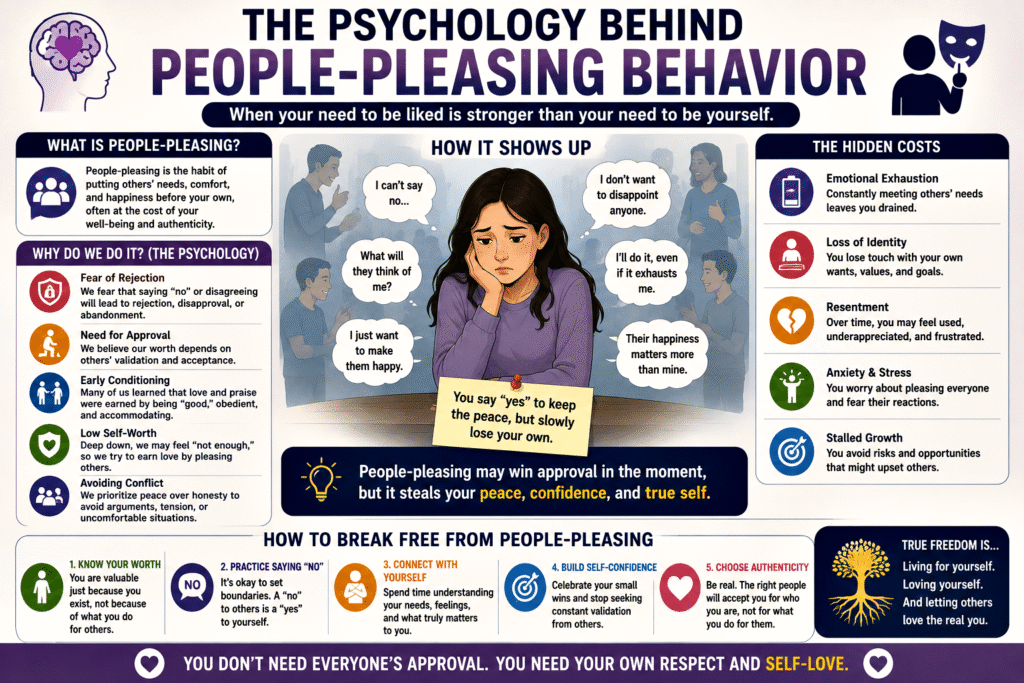
Key Point: People-pleasing often comes from the fear of rejection rather than genuine kindness.
Many people believe they are simply being kind when they constantly put others first. However, psychology suggests that excessive people-pleasing is often driven by anxiety and insecurity.
People-pleasers usually:
- Find it difficult to say “no.”
- Avoid conflict at any cost.
- Put others’ needs before their own.
- Feel guilty when they disappoint someone.
- Constantly seek reassurance.
This behavior may develop from childhood experiences where love or approval seemed conditional. A child who was praised only when they behaved perfectly may grow into an adult who believes their worth depends on keeping everyone happy.
Over time, people-pleasing creates emotional exhaustion. Instead of living according to personal values, individuals become trapped trying to satisfy everyone around them—a task that is impossible.
Ironically, trying to please everyone often results in losing your own identity.
Healthy kindness comes from generosity, while unhealthy people-pleasing comes from fear.
Lesson:
You are not responsible for meeting everyone’s expectations. Protecting your own well-being is not selfish—it is necessary.
3. How Fear of Criticism Holds People Back
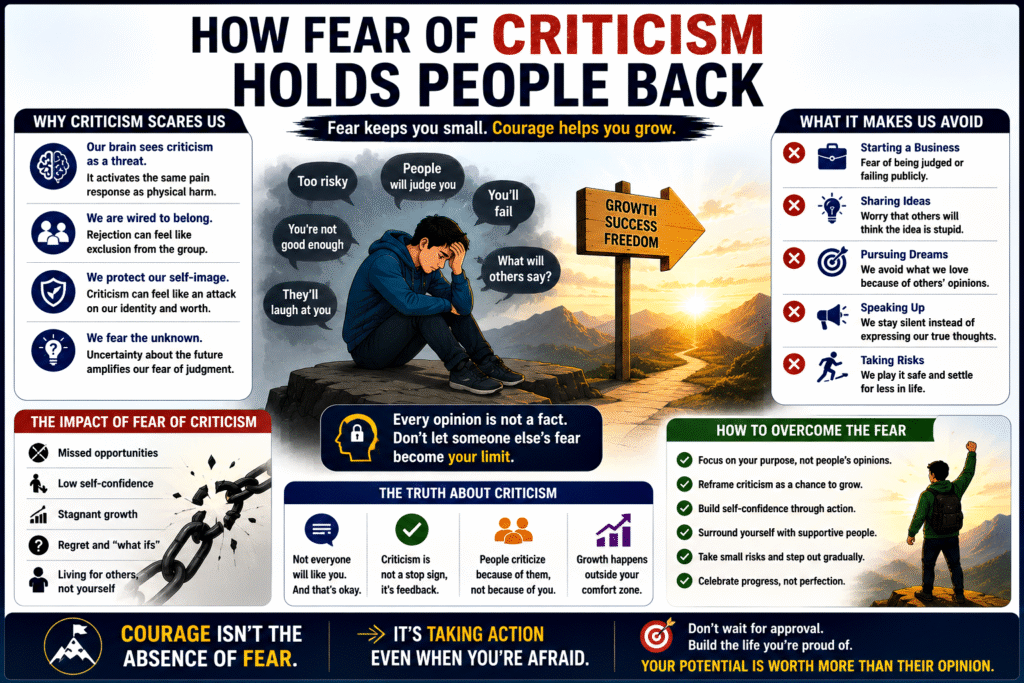
Key Point: Fear of judgment often prevents people from reaching their full potential.
One of the strongest reasons people seek approval is their fear of criticism.
Many dreams remain unrealized because people worry about being judged.
They hesitate to:
- Start a business.
- Change careers.
- Speak in public.
- Share creative ideas.
- Learn new skills.
- Express honest opinions.
Psychologists explain that criticism activates emotional pain similar to physical pain. As a result, the brain naturally tries to avoid situations where rejection might occur.
Unfortunately, avoiding criticism also means avoiding growth.
Every successful person has faced criticism.
Entrepreneurs are criticized for taking risks.
Artists are criticized for their creativity.
Athletes are criticized for mistakes.
Leaders are criticized for difficult decisions.
The difference is that successful individuals accept criticism as an unavoidable part of growth instead of allowing it to stop them.
Remember, if you never face criticism, you are probably not stretching beyond your comfort zone.
Lesson:
Criticism is often evidence that you are doing something meaningful, not proof that you should stop.
4. The Difference Between Feedback and Validation
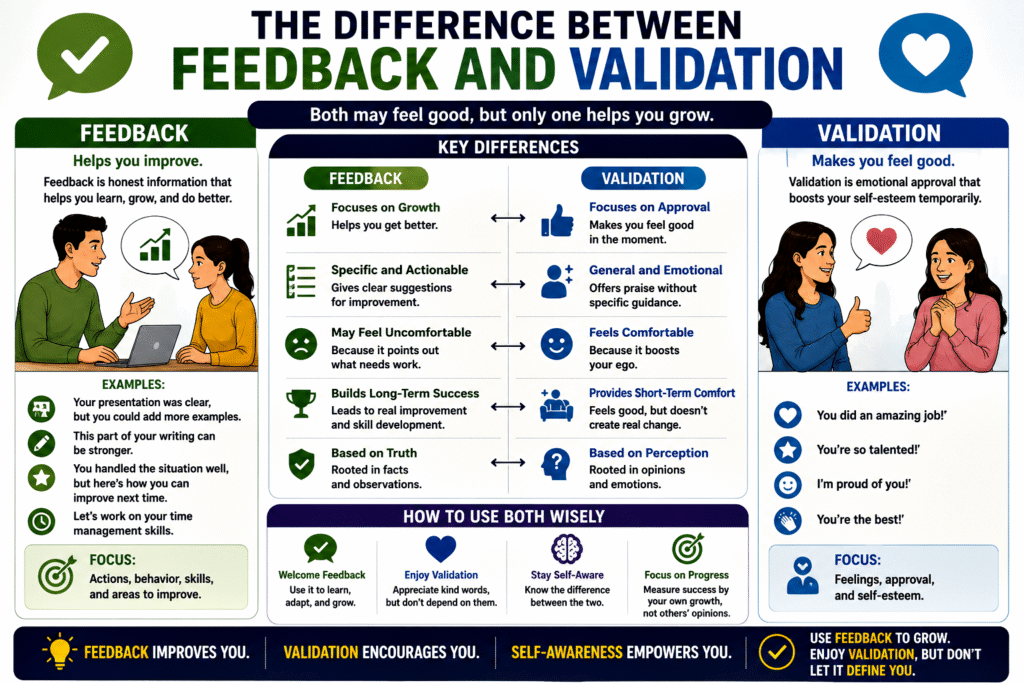
Key Point: Feedback helps you improve, while validation determines how you feel about yourself.
Many people confuse feedback with validation, but they serve completely different purposes.
Feedback is information that helps you learn, improve, and grow. It focuses on your actions, skills, or performance.
For example:
- A manager suggests improving your presentation skills.
- A teacher corrects your mistakes.
- A coach offers techniques to improve performance.
Feedback is constructive because it encourages development.
Validation, on the other hand, is emotional approval from others. It involves hearing statements such as:
- “You’re amazing.”
- “Everyone likes you.”
- “You’re doing everything perfectly.”
While positive encouragement feels good, depending on validation creates emotional instability. Your confidence rises when people praise you and falls when they don’t.
Emotionally strong individuals appreciate feedback but do not depend on constant validation.
They ask:
“What can I learn?”
Instead of:
“Do people approve of me?”
This mindset creates continuous personal growth.
Lesson:
Use feedback to improve your skills, but never allow validation to determine your self-worth.
5. Building Self-Worth from Within
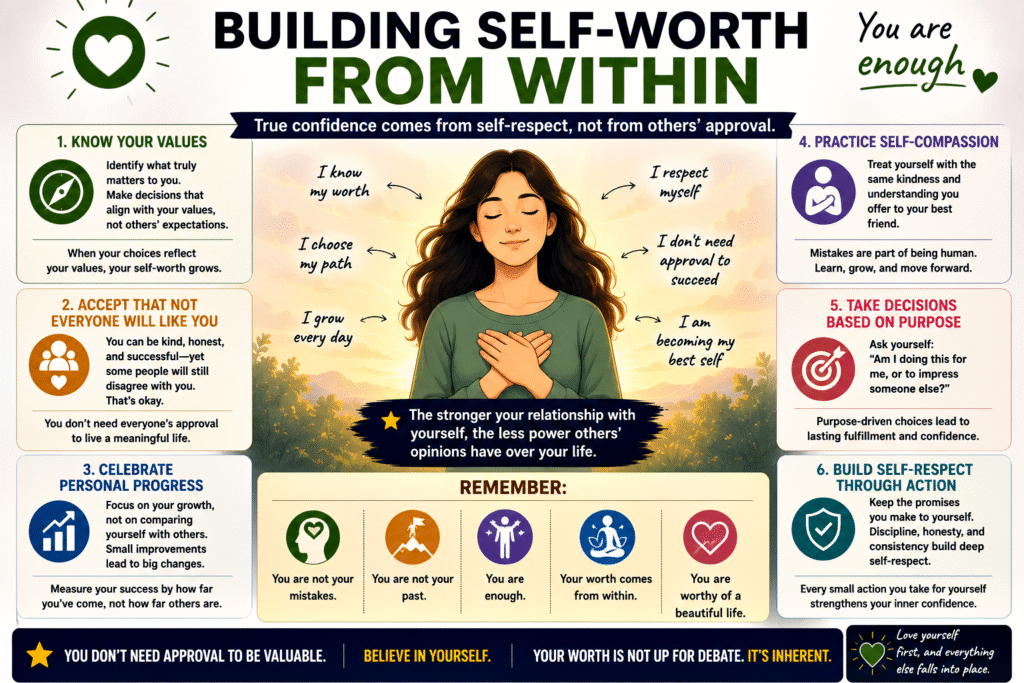
Key Point: Lasting confidence comes from self-respect, not public approval.
The most successful and emotionally resilient people build their confidence internally rather than externally.
Self-worth grows through consistent actions that align with your values.
Here are practical ways to strengthen your inner confidence:
Know Your Values
Clearly identify what matters most to you. When your decisions reflect your values, you become less dependent on others’ opinions.
Accept That Not Everyone Will Like You
No matter how kind, talented, or successful you become, some people will disagree with you—and that’s perfectly normal.
Trying to satisfy everyone only leads to disappointment.
Celebrate Personal Progress
Instead of comparing yourself with others, measure your growth against your previous self.
Small improvements build lasting confidence.
Practice Self-Compassion
Treat yourself with the same kindness you would offer a close friend.
Mistakes are opportunities for learning, not evidence of failure.
Take Decisions Based on Purpose
Before making important choices, ask yourself:
- Does this align with my goals?
- Am I doing this because I truly want it?
- Or am I simply trying to impress someone?
Purpose-driven decisions lead to authentic success.
Lesson:
The stronger your relationship with yourself becomes, the less power other people’s opinions have over your life.
Conclusion
Key Point: The moment you stop living for others’ approval, you start living for your own growth.
The desire for social acceptance is part of being human, but allowing it to control your decisions can quietly limit your potential. Constantly seeking validation may provide temporary comfort, but it often comes at the cost of authenticity, confidence, and personal fulfillment.
Psychology reminds us that people-pleasing, fear of criticism, and dependence on external approval are habits—not permanent traits. They can be replaced with self-awareness, healthy boundaries, and genuine self-respect.
When you learn to accept constructive feedback without depending on validation, you free yourself to pursue goals that truly matter. You become more resilient, more confident, and more willing to take meaningful risks.
Remember, the people who make the greatest impact in life are rarely those who try to please everyone. They are the ones who remain true to their values, embrace criticism as part of growth, and measure success by their own progress rather than public opinion.
Final Takeaway
You don’t need everyone’s approval to become the best version of yourself. The day you stop chasing validation is the day you begin living with confidence, authenticity, and purpose. Your greatest potential is unlocked not by pleasing others, but by believing in yourself.