
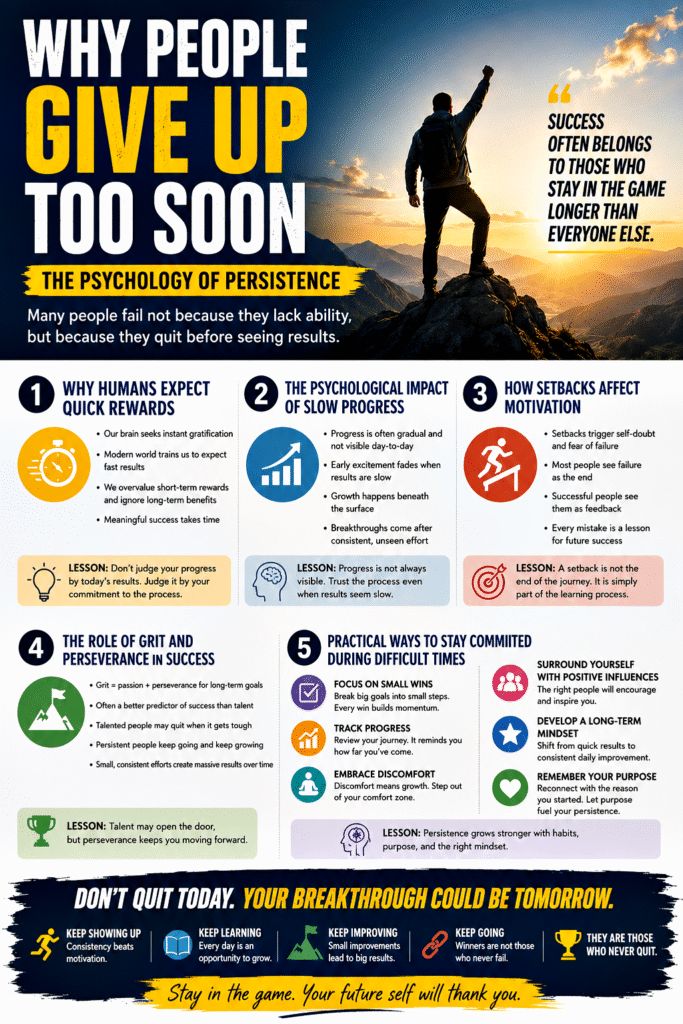
Why Persistence Matters More Than Talent in Achieving Success
Success is often portrayed as a result of talent, intelligence, or luck. While these factors can certainly help, psychology suggests that one of the biggest reasons people fail is much simpler: they give up too soon. Many individuals abandon their goals just before they are about to see meaningful progress. Whether it is building a business, learning a new skill, losing weight, or pursuing a dream career, the journey to success is rarely quick or easy.
The psychology of persistence reveals that people who continue despite difficulties often outperform those who are more talented but less determined. Success frequently belongs to those who stay committed long enough for their efforts to pay off.
1. Why Humans Expect Quick Rewards
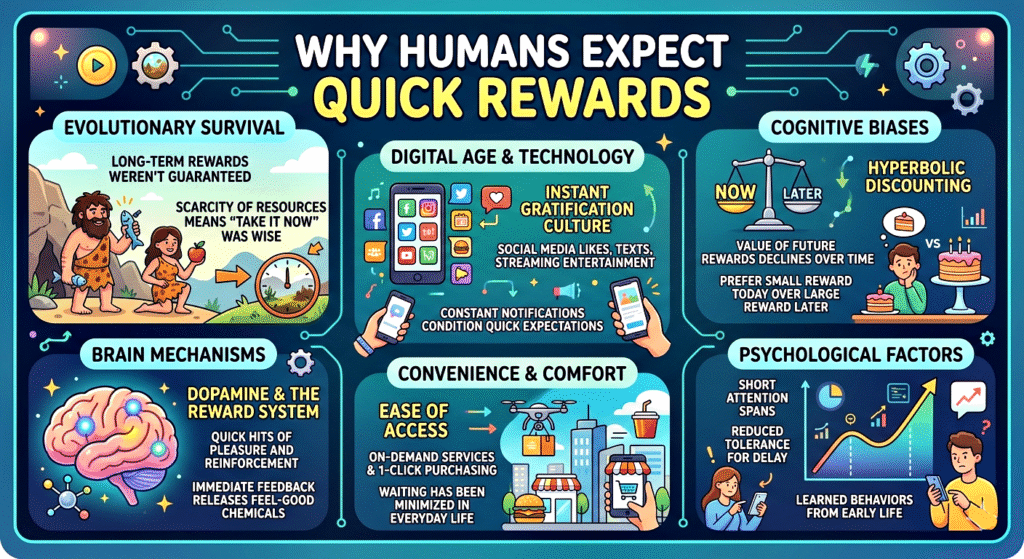
Key Point: The human brain is naturally wired to seek immediate gratification.
One of the biggest reasons people quit early is that they expect results to appear quickly. Human beings are naturally attracted to instant rewards because they provide immediate pleasure and satisfaction. In today’s world, we can order food instantly, stream entertainment immediately, and receive information within seconds. This environment conditions us to expect fast outcomes in every area of life.
However, meaningful achievements rarely follow this pattern. Building a successful career, mastering a skill, or creating financial stability often requires months or even years of consistent effort.
When people do not see immediate results, they begin to question whether their efforts are worthwhile. They may assume they are doing something wrong or that success is simply not meant for them.
Psychologists refer to this tendency as “instant gratification bias.” We often overvalue short-term rewards and undervalue long-term benefits. As a result, many people choose immediate comfort over future success.
The reality is that most worthwhile goals require patience. The seeds of success are planted long before the results become visible.
Lesson: Do not judge your progress by today’s results alone. Judge it by your commitment to the process.
2. The Psychological Impact of Slow Progress
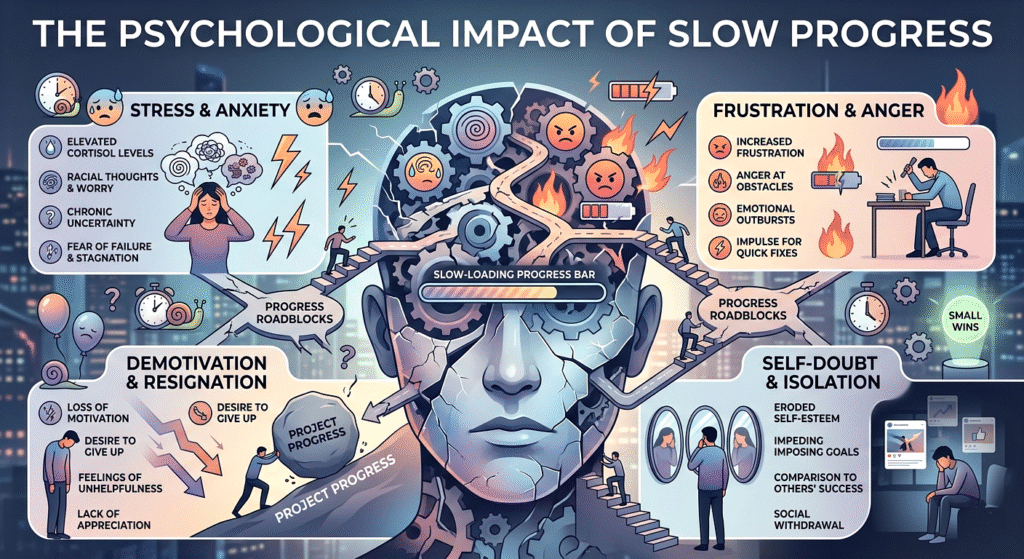
Key Point: Slow progress often feels like no progress, even when growth is happening.
Another major reason people give up is that progress often occurs much more slowly than expected.
When individuals begin working toward a goal, they are usually highly motivated. They imagine dramatic improvements and exciting milestones. However, reality tends to be less exciting. Progress is often gradual, almost invisible on a day-to-day basis.
For example:
- A person learning a language may not notice improvement for months.
- An entrepreneur may work for years before achieving profitability.
- Someone trying to lose weight may experience long periods with little visible change.
Psychologically, slow progress can be discouraging because our brains crave evidence that our efforts are working. When visible results are absent, motivation naturally declines.
What many people fail to realize is that growth is often happening beneath the surface. Just as a tree develops roots before growing taller, personal development frequently occurs before visible success appears.
Many successful people describe a “breakthrough moment” that seemed sudden to others. In reality, that breakthrough was built on countless days of unseen effort.
Lesson: Progress is not always visible. Trust the process even when results seem slow.
3. How Setbacks Affect Motivation
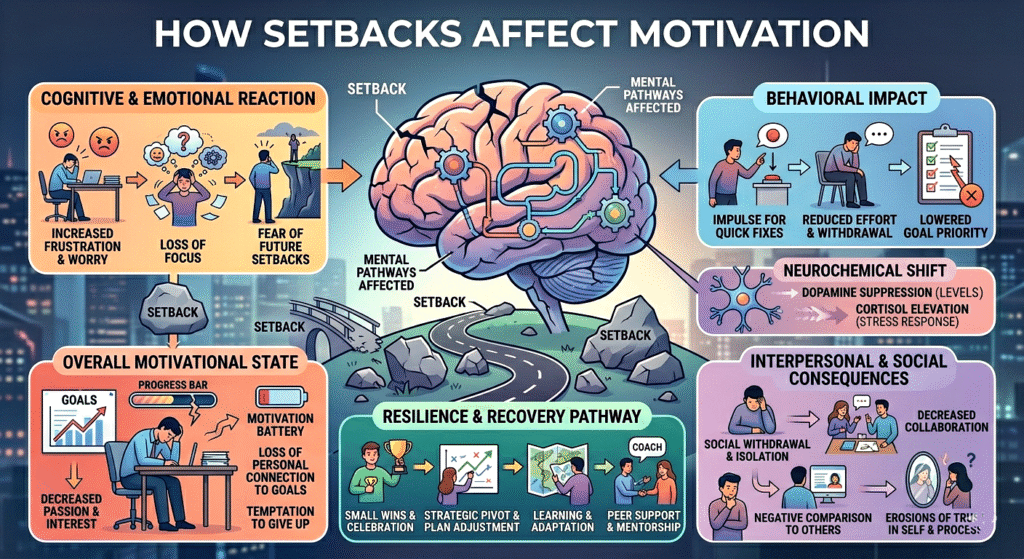
Key Point: Most people interpret setbacks as failure instead of feedback.
Every meaningful goal involves obstacles. Unfortunately, many people view setbacks as proof that they are incapable of succeeding.
Imagine someone starting a business that loses money in its first year. Another person applies for jobs and receives multiple rejections. A student studies hard but performs poorly on an exam. These experiences can be emotionally painful.
Psychologically, setbacks trigger self-doubt. People begin questioning their abilities, intelligence, and potential. Negative thoughts such as “I’m not good enough” or “Maybe I should quit” become common.
However, successful individuals interpret setbacks differently. Instead of seeing them as signs of failure, they view them as opportunities to learn and improve.
History provides countless examples:
- Inventors experienced repeated failures before creating successful products.
- Athletes lost competitions before becoming champions.
- Entrepreneurs faced bankruptcies before building thriving businesses.
The difference is not that successful people avoid setbacks. The difference is that they refuse to let setbacks define them.
Every mistake contains valuable information. Those who learn from failure become stronger, wiser, and more prepared for future challenges.
Lesson: A setback is not the end of the journey. It is simply part of the learning process.
4. The Role of Grit and Perseverance in Success
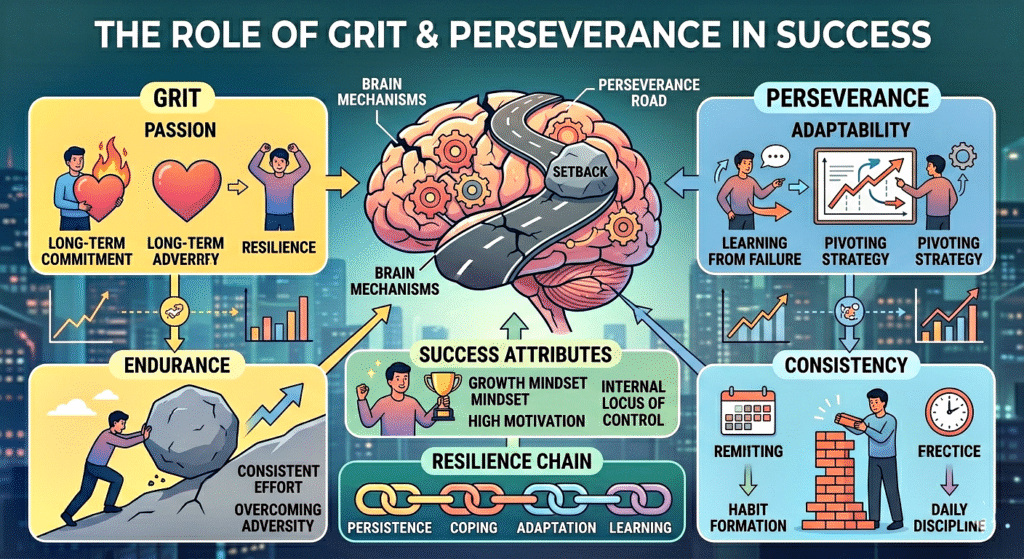
Key Point: Persistence often matters more than talent.
Psychologist Angela Duckworth popularised the concept of “grit,” which refers to passion and perseverance toward long-term goals.
Her research suggests that grit is often a stronger predictor of success than natural talent. While talent can provide an advantage, it cannot replace consistent effort.
Many talented individuals fail because they lose motivation when challenges arise. On the other hand, people with average abilities frequently achieve extraordinary results because they continue working when others stop.
Perseverance creates a powerful advantage over time. Every day of effort builds knowledge, experience, and resilience. Eventually, the accumulated benefits become difficult to ignore.
Think about athletes, musicians, writers, and business leaders. Their success is rarely the result of one brilliant moment. It is usually the outcome of years of disciplined practice and persistence.
The truth is simple: talent may open the door, but perseverance keeps you moving forward.
Lesson: Success is often won by those who refuse to quit, not necessarily those who start with the most talent.
5. Practical Ways to Stay Committed During Difficult Times
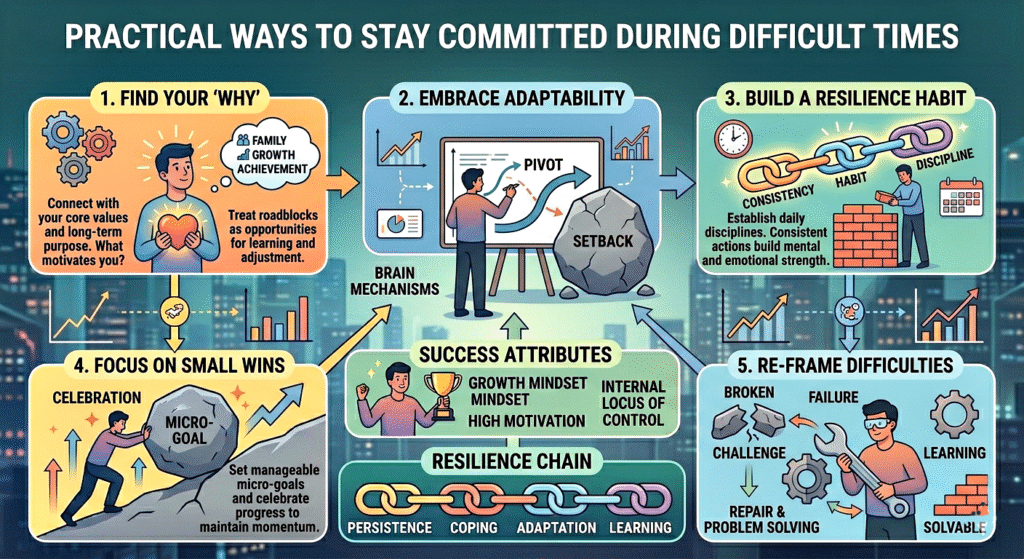
Key Point: Persistence is a skill that can be developed and strengthened.
The good news is that persistence is not something people are simply born with. It can be cultivated through deliberate habits and mindset shifts.
Focus on Small Wins
Large goals can feel overwhelming. Break them into smaller, manageable tasks. Each small success builds confidence and momentum.
Track Progress
Keep a record of your efforts and achievements. Looking back at how far you have come can provide motivation during difficult periods.
Embrace Discomfort
Growth often feels uncomfortable. Instead of avoiding challenges, learn to view discomfort as evidence that you are developing new skills.
Develop a Long-Term Mindset
Remind yourself that meaningful success takes time. Shift your focus from immediate results to consistent daily improvement.
Surround Yourself with Positive Influences
Spend time with people who encourage growth and persistence. Their support can help you remain motivated when obstacles arise.
Remember Your Purpose
When motivation fades, reconnect with the deeper reason behind your goal. A strong sense of purpose can sustain effort even during difficult times.
Lesson: Persistence grows stronger when supported by daily habits, clear goals, and a long-term perspective.
Conclusion
Key Point: Success often belongs to those who stay in the game longer than everyone else.
Many people give up too soon because they expect quick rewards, become discouraged by slow progress, or allow setbacks to undermine their confidence. Yet psychology consistently shows that persistence is one of the most important ingredients of achievement.
The path to success is rarely straight. It involves obstacles, delays, failures, and moments of doubt. However, those who continue moving forward despite these challenges develop the resilience and experience necessary for long-term success.
Remember, most people do not fail because they lack ability. They fail because they stop trying before their efforts have time to bear fruit.
The next time you feel like quitting, remind yourself that every successful person once stood where you stand now—uncertain, frustrated, and tempted to give up. The difference is that they chose to keep going.
Keep showing up. Keep learning. Keep improving. Persistence turns ordinary effort into extraordinary results.