
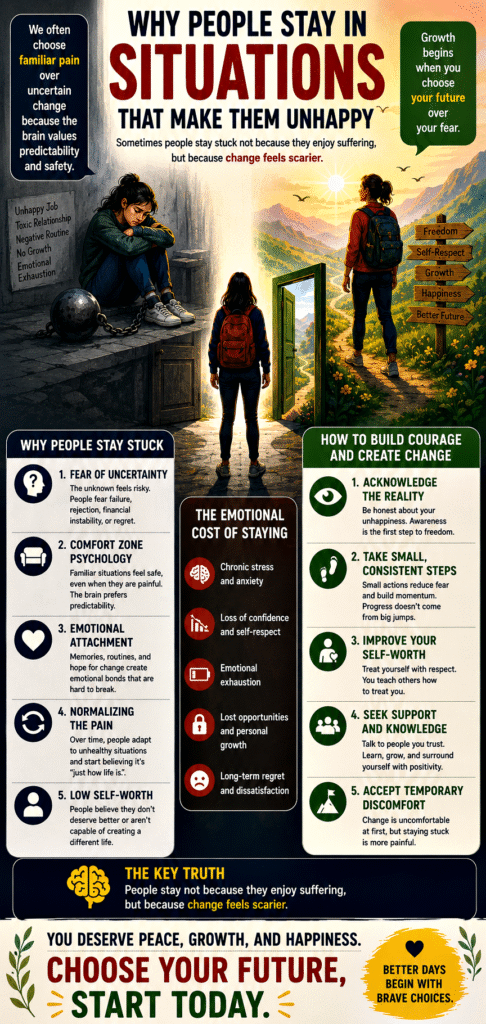
Why Familiar Pain Feels Safer Than Uncertain Change
Many people remain in situations that drain their energy, damage their confidence, and make them deeply unhappy. Even though they are aware that these things are hurting them, they continue in painful routines, stressful jobs, toxic environments, and unhealthy relationships. From the outside, this behaviour can seem confusing.
A lot of people ask:
• “Why don’t they simply leave?”
• “Why would someone stay somewhere they are unhappy?”
But human behaviour is far more emotional and psychological than it appears.
The truth is:
Because the brain values safety, predictability, and emotional survival, people frequently choose familiar pain over uncertain change. Sometimes people stay stuck not because they enjoy suffering, but because change feels scarier than staying where they are.
This article explores the psychology behind why people remain in unhappy situations, how fear and self-worth shape decisions, and how individuals can slowly build the courage to create a healthier life.
1. Fear of Uncertainty and Emotional Attachment
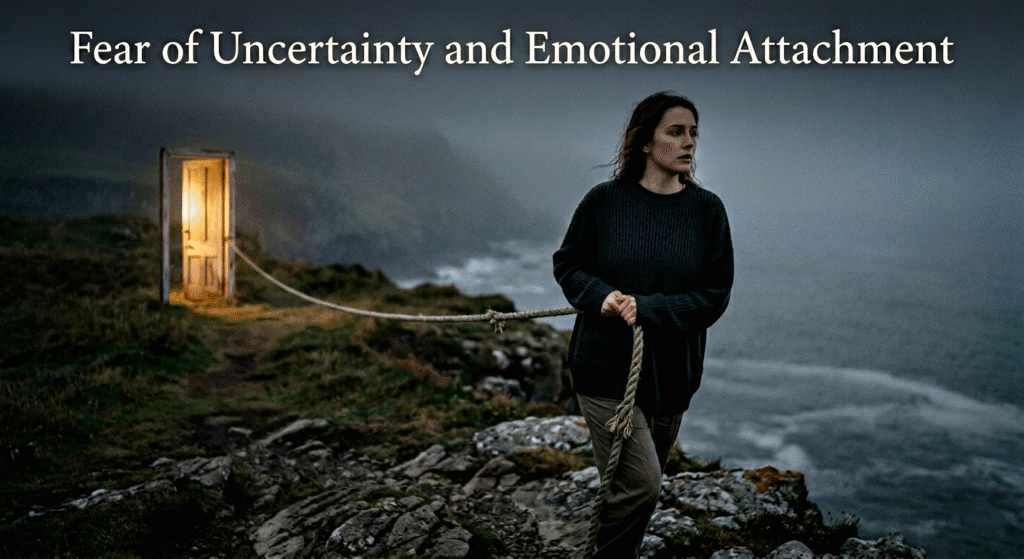
One of the biggest reasons people stay in unhappy situations is fear of the unknown.
The human brain naturally seeks certainty and predictability. Even when a situation is painful, the brain often prefers familiar discomfort over unfamiliar possibilities.
For example:
- Someone may stay in a toxic relationship because they fear loneliness
- An employee may remain in a miserable job because they fear financial instability
- A person may avoid changing their lifestyle because uncertainty feels overwhelming
The brain asks:
- “What if things get worse?”
- “What if I fail?”
- “What if I regret leaving?”
This fear creates emotional paralysis.
At the same time, emotional attachment makes leaving even harder. People become attached to:
- Memories
- Routines
- Familiar people
- Shared experiences
- The hope that things might improve
Even unhealthy situations can create emotional bonds over time.
Key Point:
People often stay in painful situations because uncertainty feels more dangerous than familiar suffering.
2. The Psychology of Comfort Zones
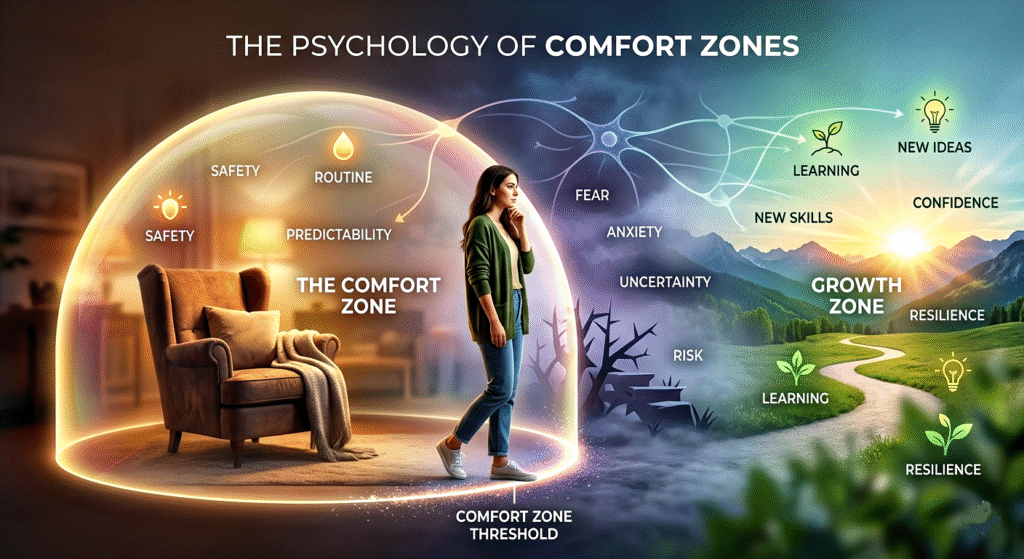
Comfort zones are psychological spaces where people feel emotionally safe and familiar.
A comfort zone does not always mean happiness—it simply means predictability.
This is why someone can feel unhappy yet still resist change.
The brain associates familiar routines with survival. Even if those routines are unhealthy, they feel emotionally manageable because they are known.
For example:
- A person may complain daily about their job but never apply elsewhere
- Someone may remain in a draining relationship because they have adapted to the emotional pattern
- A person may stay stuck in unhealthy habits because change requires discomfort and effort
Leaving a comfort zone activates fear, stress, and uncertainty. The brain interprets this as risk.
This explains why personal growth often feels uncomfortable.
Key Point:
Comfort zones are not always comfortable—they are simply familiar.
Growth begins when people become willing to tolerate temporary discomfort for long-term improvement.
3. Why People Tolerate Unhealthy Jobs, Relationships, and Routines
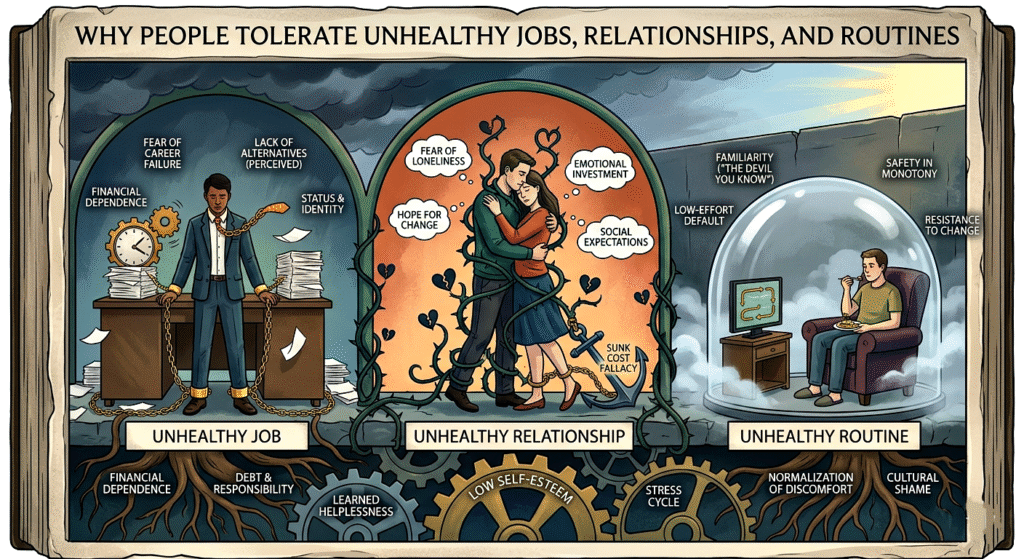
People often tolerate unhealthy environments longer than they should because emotional adaptation happens slowly.
Over time, individuals normalize stress, disrespect, disappointment, or emotional exhaustion.
This can happen in:
- Relationships
- Workplaces
- Friendships
- Daily routines
For example:
- Someone in a toxic relationship may start believing constant conflict is normal
- An employee may accept burnout as “part of life”
- A person with unhealthy habits may stop believing change is possible
Psychologists sometimes call this learned helplessness—when repeated negative experiences make people feel powerless to improve their situation.
The longer someone stays stuck, the more difficult change feels emotionally.
Additionally, people often stay because of:
- Financial dependence
- Fear of starting over
- Social pressure
- Concern about others’ opinions
- Low confidence in their ability to succeed elsewhere
Key Point:
People slowly adapt to unhealthy situations until suffering begins to feel normal.
4. How Self-Worth Affects Decision-Making
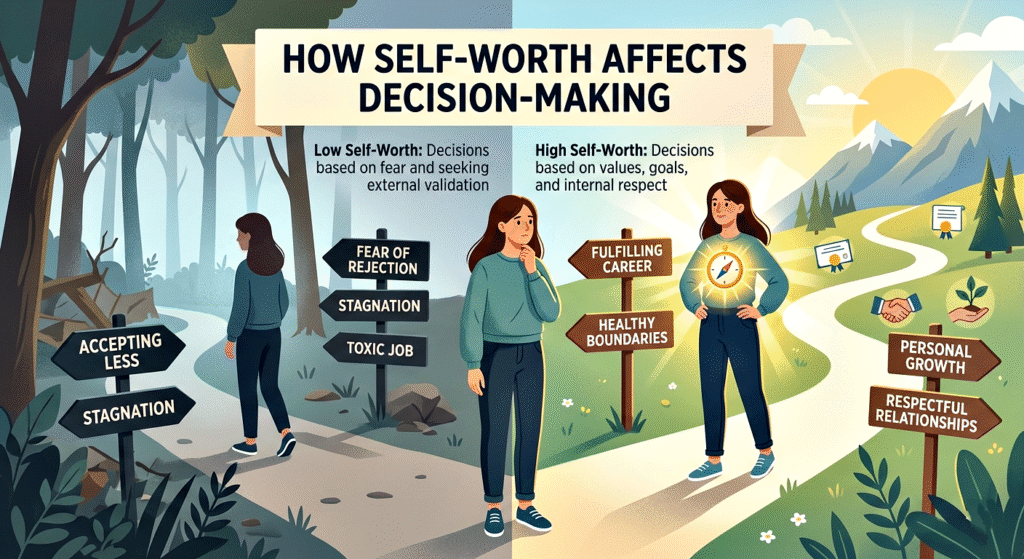
Self-worth plays a major role in the decisions people make.
People who struggle with low self-esteem often believe:
- They do not deserve better
- Their needs are unimportant
- They are incapable of creating change
- Failure is inevitable
Because of these beliefs, they tolerate situations that healthier self-worth would reject.
For example:
- Someone with low confidence may stay in a disrespectful relationship because they fear nobody else will love them
- An employee may avoid asking for better opportunities because they doubt their abilities
- A person may settle for less because they secretly believe they are not capable of more
Human behavior often reflects internal beliefs.
When people value themselves more, they become more willing to:
- Set boundaries
- Leave unhealthy situations
- Pursue growth
- Protect their emotional well-being
Key Point:
The way people see themselves influences what they are willing to tolerate.
Improving self-worth often changes life decisions dramatically.
5. The Emotional Cost of Staying Stuck
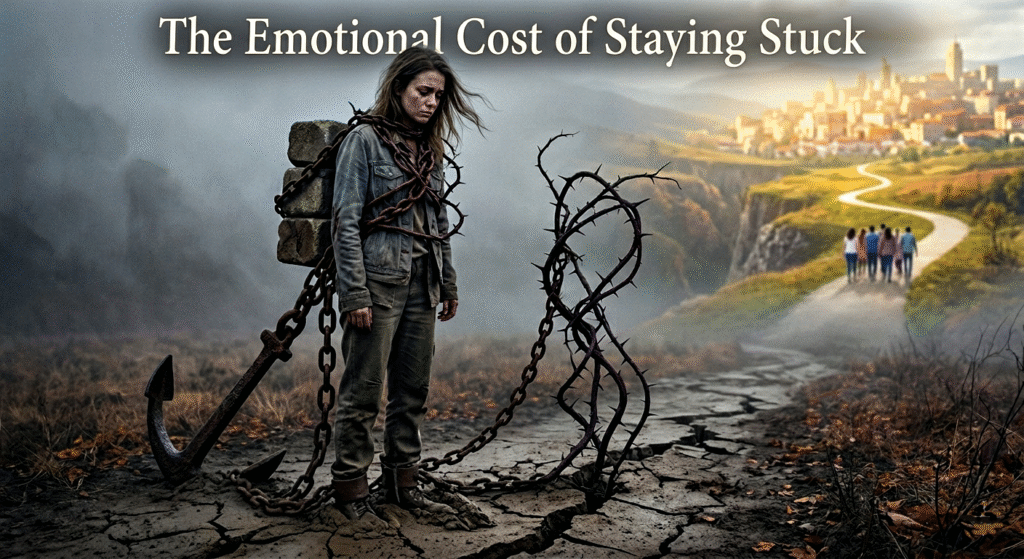
While staying in familiar situations may feel safer temporarily, it often creates deep emotional consequences over time.
People who remain stuck frequently experience:
- Anxiety
- Emotional exhaustion
- Frustration
- Loss of confidence
- Hopelessness
- Regret
The longer someone ignores their unhappiness, the heavier it becomes emotionally.
Many people eventually realize:
- They stopped growing
- They lost confidence in themselves
- They abandoned their dreams
- They became emotionally disconnected from life
Staying stuck slowly damages mental and emotional well-being.
Key Point:
Avoiding change may protect temporary comfort, but it can silently destroy long-term happiness.
6. Why Change Feels So Difficult
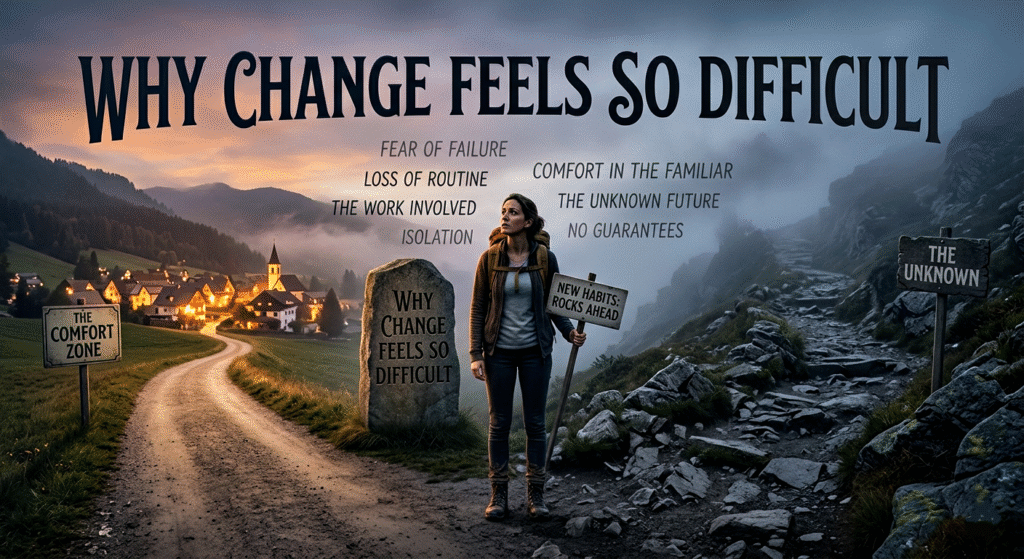
Change is emotionally difficult because it requires uncertainty.
The brain prefers:
- Predictability
- Familiar patterns
- Immediate emotional safety
Change challenges all three.
Even positive change involves:
- Risk
- Discomfort
- Fear of failure
- Temporary instability
This is why many people delay:
- Leaving unhealthy situations
- Starting new goals
- Speaking up for themselves
- Making important life decisions
The brain focuses more on possible loss than possible growth.
Key Point:
Humans are naturally wired to avoid uncertainty, even when change could improve their lives.
7. Steps to Build Courage and Create Positive Change
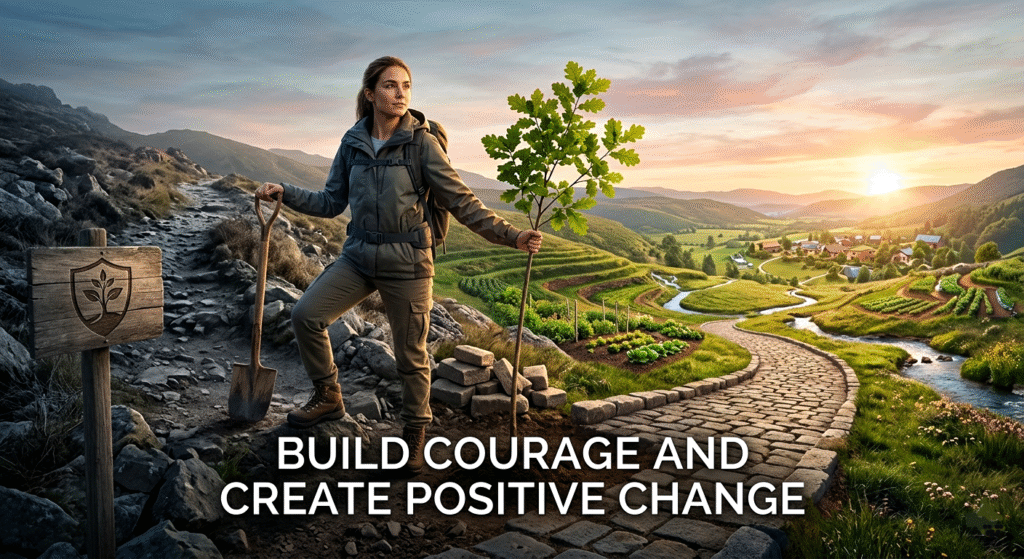
Although change feels difficult, it becomes easier when approached gradually.
Here are practical ways to build courage:
i. Acknowledge the Reality Honestly
Stop minimizing your unhappiness.
Ask yourself:
- “Is this situation helping me grow?”
- “Would I encourage someone I love to stay in this situation?”
Honest awareness is the first step toward change.
Key Point:
You cannot change what you refuse to acknowledge.
ii. Focus on Small Steps
Big changes feel overwhelming. Small actions feel manageable.
Examples:
- Update your resume
- Set one healthy boundary
- Spend time learning new skills
- Talk to supportive people
Small steps build momentum.
Key Point:
Courage grows through action, not waiting.
iii. Improve Your Self-Worth
Practice treating yourself with more respect and compassion.
This includes:
- Positive self-talk
- Setting boundaries
- Prioritizing mental health
- Recognizing your strengths
The stronger your self-worth becomes, the less willing you are to tolerate unhealthy situations.
Key Point:
People who value themselves highly are more likely to choose healthier environments.
iv. Accept Temporary Discomfort
Growth often feels uncomfortable before it feels rewarding.
Leaving unhealthy situations may involve:
- Fear
- Sadness
- Uncertainty
- Temporary loneliness
But discomfort is often part of transformation.
Key Point:
Short-term discomfort can lead to long-term freedom and peace.
Conclusion: Familiar Pain Is Still Pain
Many people stay stuck because familiar suffering feels emotionally safer than uncertain change. This does not mean they are weak—it means they are human.
The brain naturally seeks predictability, emotional safety, and stability. But growth requires stepping beyond what feels familiar.
The most important realization is this:
Staying where you are unhappy may feel safer today, but it often costs happiness, confidence, and peace in the long run.
Real change begins when people stop asking:
- “What if I fail?”
And start asking:
- “What if my life becomes better than I imagined?”
Because sometimes the hardest decision is not leaving—it is believing that you deserve something better.