
How Self-Trust Frees You From the Fear of Judgment
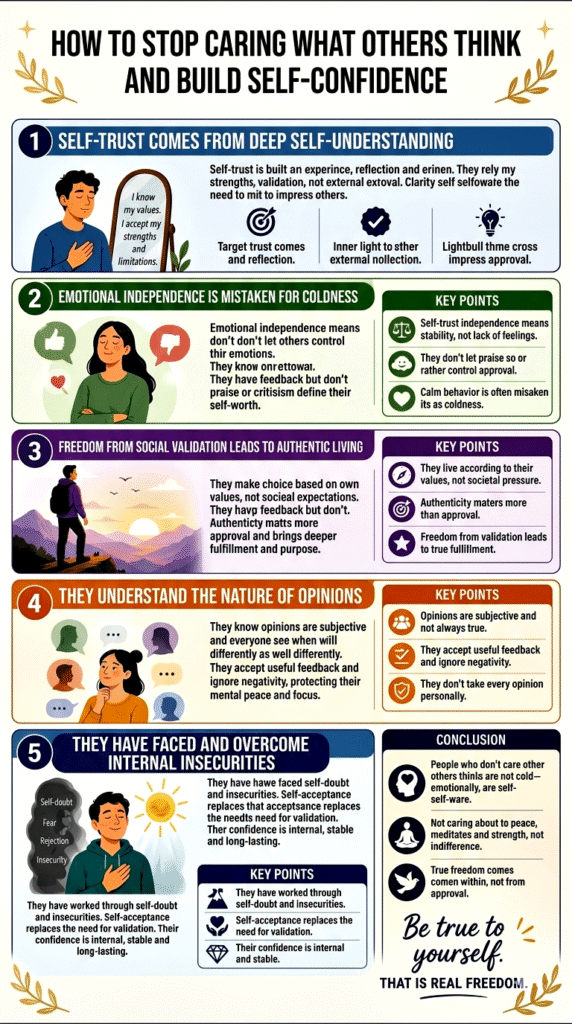
“People who genuinely don’t care what others think are not cold — they have reached a level of self-trust most people spend a lifetime chasing.”
1. Self-Trust Comes From Deep Self-Understanding
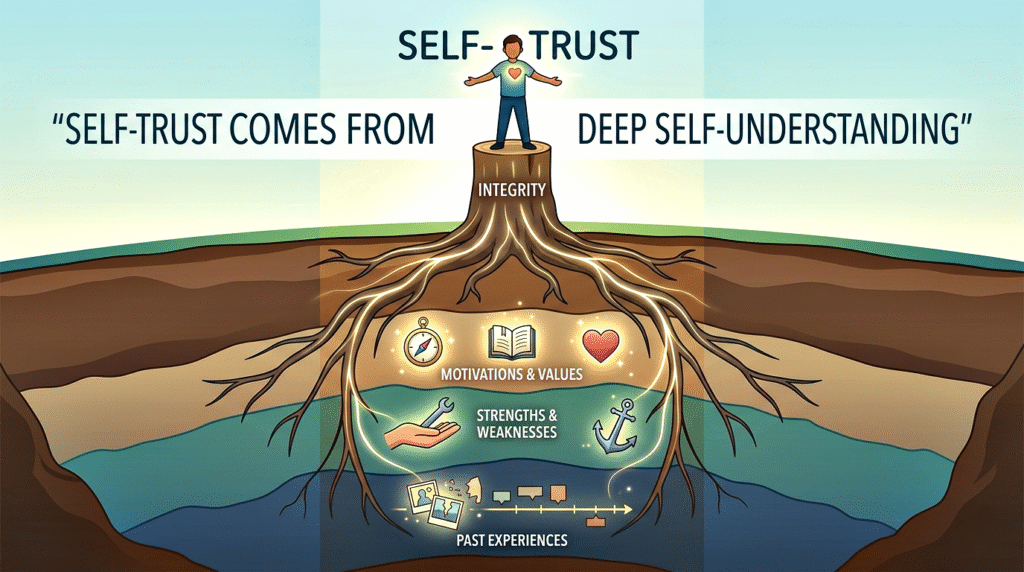
At the core of not caring what others think lies a powerful foundation: self-trust. This doesn’t develop overnight. It is built through years of experiences, mistakes, self-reflection, and learning. People who reach this stage are not indifferent or emotionally distant—they are simply clear about who they are.
Most people rely heavily on external validation to guide their decisions. They seek approval from others before feeling confident. But individuals with strong self-trust have already done the inner work. They understand their values, strengths, and limitations.
Because of this, they don’t need constant reassurance. Their confidence comes from within, not from external approval. This is often misunderstood as arrogance, but in reality, it’s clarity and self-awareness.
Key Points:
- Self-trust is built through experience and reflection, not instantly.
- They rely on inner validation rather than external approval.
- Clarity about oneself reduces the need to impress others.
2. Emotional Independence Is Mistaken for Coldness
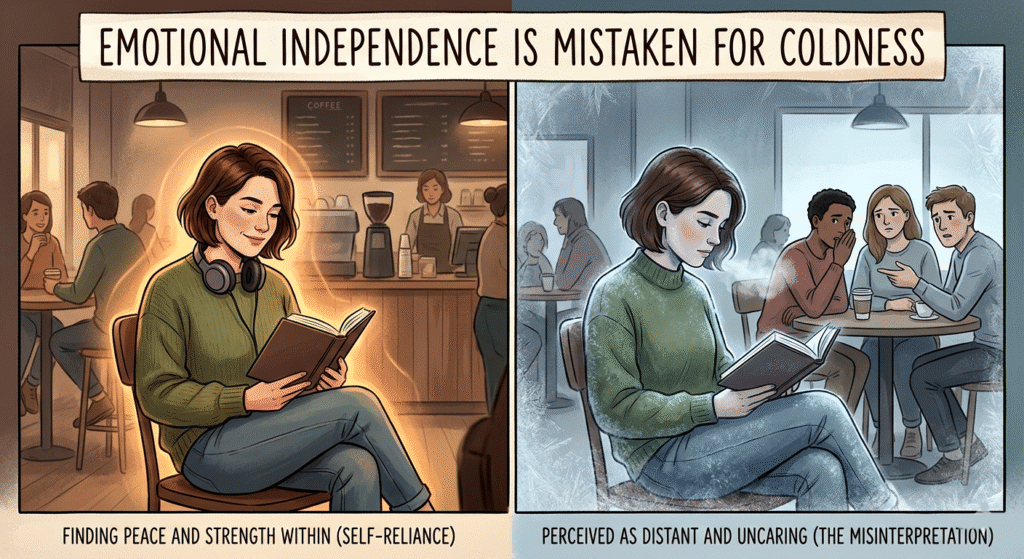
People who don’t react strongly to opinions are often seen as “cold.” But emotional independence simply means they don’t let others control their emotions.
Those who depend on validation experience emotional highs and lows based on others’ opinions. In contrast, emotionally independent individuals stay balanced. They value feedback but don’t let it define their self-worth.
Their calm nature is often misunderstood. They care, but in a healthier and more stable way.
Key Points:
- Emotional independence means stability, not lack of feelings.
- They don’t let praise or criticism control their mood.
- Calm behaviour is often mistaken for coldness.
3. Freedom From Social Validation Leads to Authentic Living

Not caring about others’ opinions allows people to live authentically. They make choices based on their own values rather than societal expectations.
Many people shape their lives to fit in, which leads to dissatisfaction. But self-trusting individuals choose honesty over approval. They are comfortable being themselves, even if it means standing out.
This authenticity brings deeper satisfaction and purpose in life.
Key Points:
- They live according to their values, not societal pressure.
- Authenticity matters more than approval.
- Freedom from validation leads to true fulfilment.
4. They Understand the Nature of Opinions

People with self-trust understand that opinions are subjective. Everyone sees the world differently based on their own experiences and beliefs.
They know it’s impossible to please everyone. Instead of taking everything personally, they filter feedback wisely—accepting what helps and ignoring what doesn’t.
This understanding protects their mental peace and focus.
Key Points:
- Opinions are subjective and not always true.
- They accept useful feedback and ignore negativity.
- They don’t take every opinion personally.
5. They Have Faced and Overcome Internal Insecurities

Reaching this level of self-trust usually means overcoming inner doubts and insecurities. These individuals have faced their fears and worked through them.
Instead of seeking validation, they built self-acceptance. Their confidence comes from within, making it stable and long-lasting.
They don’t need to prove themselves to anyone—they already trust who they are.
Key Points:
- They have worked through self-doubt and insecurities.
- Self-acceptance replaces the need for validation.
- Their confidence is internal and stable.
Conclusion
People who don’t care what others think are not cold—they are self-aware, emotionally strong, and internally secure. They have learned to trust themselves in a world full of opinions.
They don’t ignore people—they simply refuse to let others control their identity or decisions. This level of self-trust is rare and powerful.
Key Points:
- Not caring about opinions reflects strength, not indifference.
- Self-trust leads to peace and confidence.
- True freedom comes from within, not from approval.