
How Forgiveness Strengthens Emotional Intelligence
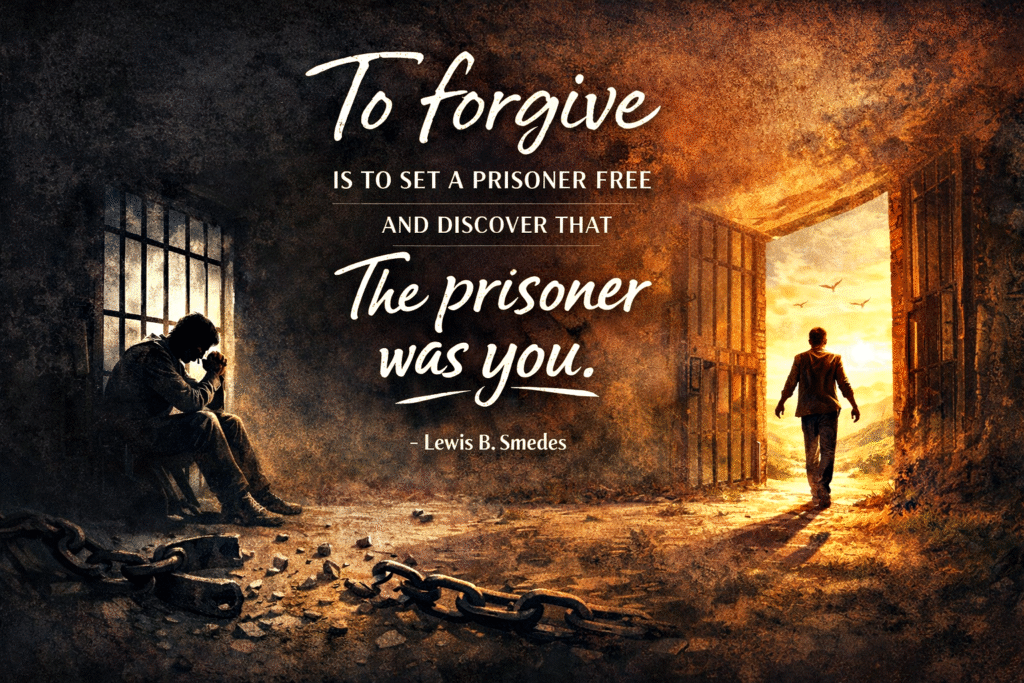
“To forgive is to set a prisoner free and discover that the prisoner was you.”
— Lewis B. Smedes
This powerful quote captures one of the deepest psychological and spiritual truths about human relationships. Forgiveness is often misunderstood. Many people think forgiving someone means excusing their behavior, ignoring the pain, or pretending nothing happened. But true forgiveness is something much deeper — it is an act of self-liberation. When you forgive, you are not just releasing someone else from blame; you are releasing yourself from emotional captivity.
Below are five detailed points that explain the deeper meaning of this quote.
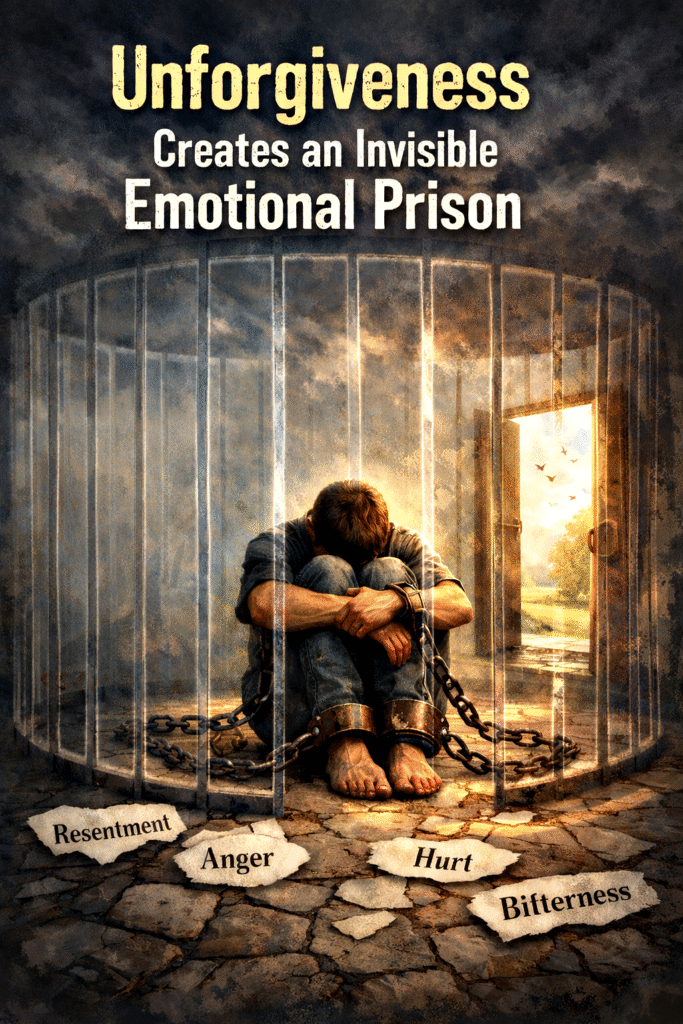
1. Unforgiveness Creates an Invisible Emotional Prison
When someone hurts you, the emotional wound can be intense. Betrayal, disrespect, rejection, dishonesty, or injustice — these experiences leave marks on the heart and mind. Initially, anger feels justified. Pain feels natural. And holding onto resentment may even feel empowering.
But over time, something subtle happens.
The hurt begins to replay in your mind. You think about what they said. You replay the moment. You imagine what you should have said. You fantasize about justice or revenge. Slowly, the incident becomes more than just a memory — it becomes a mental habit.
That is the prison.
You may believe the other person is the one who deserves punishment. But the truth is, they may be sleeping peacefully while you are losing sleep. They may have moved on while you are still mentally reliving the incident.
Unforgiveness ties your emotional state to the past. It keeps you connected to someone who hurt you. It consumes mental energy, drains emotional strength, and affects your physical well-being. Studies in psychology have shown that chronic anger and resentment can increase stress hormones, elevate blood pressure, and weaken the immune system.
You think you are holding onto the anger.
But in reality, the anger is holding onto you.
The prison has no visible bars — but it restricts your peace, joy, and freedom.
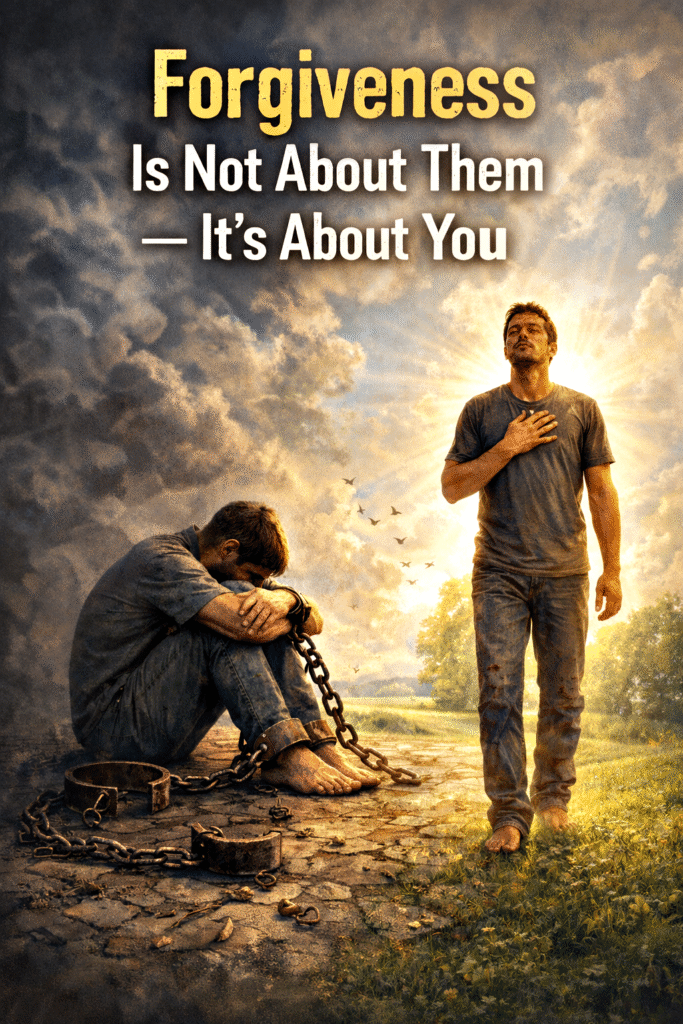
2. Forgiveness Is Not About Them — It’s About You
One of the biggest misconceptions about forgiveness is that it benefits the offender more than the victim. That is not true.
Forgiveness is primarily an internal decision.
It does not require the other person to apologise.
It does not require reconciliation.
It does not mean you must allow them back into your life.
It does not mean you trust them again.
Forgiveness is simply the decision to release resentment.
When you forgive, you are saying:
“I choose peace over bitterness.”
“I refuse to let this pain control my future.”
“I will not allow this experience to define me.”
This shift is powerful.
The moment you stop wishing harm upon someone, the moment you stop replaying the story, the moment you stop feeding the resentment — you reclaim emotional control.
Forgiveness is not surrender.
It is strength.
It takes more courage to let go than to hold a grudge. Holding a grudge is passive. Letting go is intentional. It requires self-awareness and emotional maturity.
When you forgive, you step out of victimhood and into empowerment. You move from reaction to response. You stop giving someone free rent in your mind.
And that is freedom.
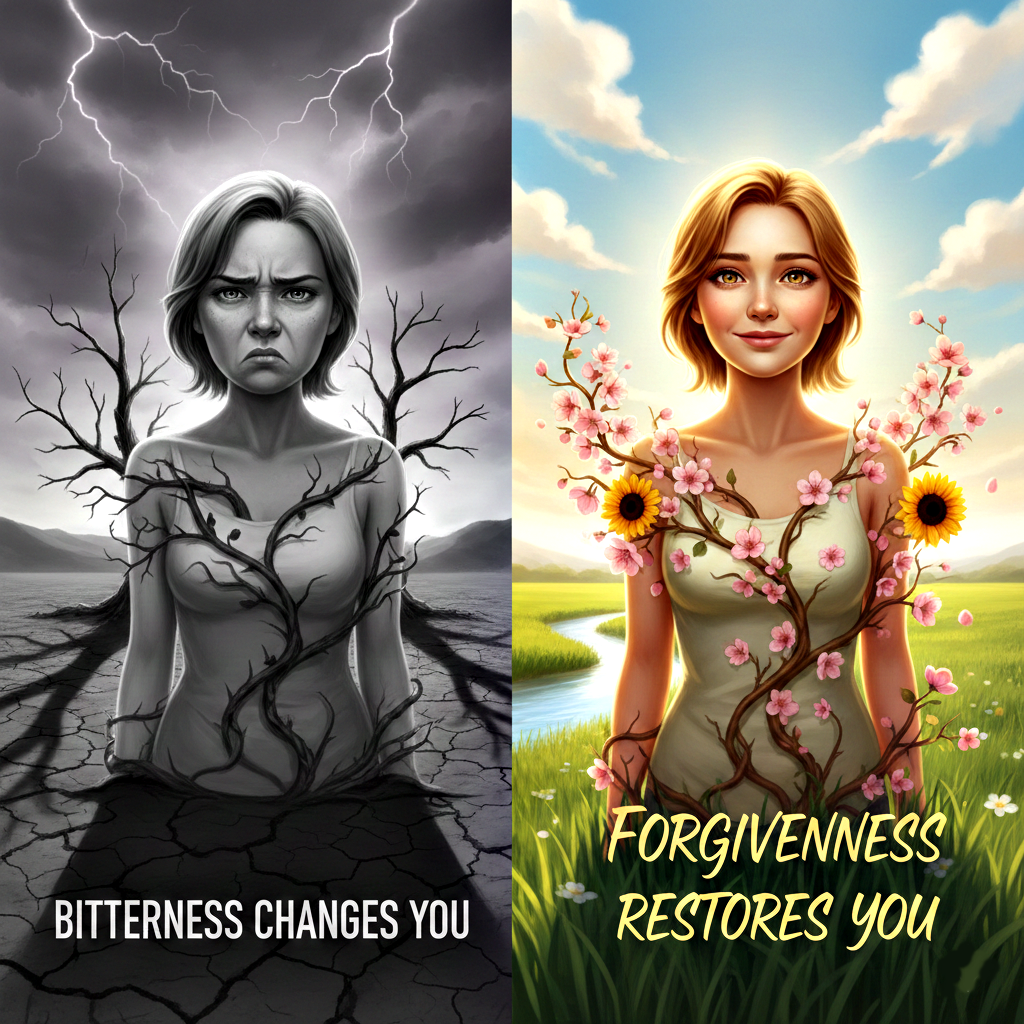
3. Bitterness Changes You — Forgiveness Restores You
Resentment does not stay isolated in one area of your life. It spreads.
Unresolved anger can affect:
- Your relationships
- Your mood
- Your ability to trust
- Your self-esteem
- Your outlook on life
When you hold onto past pain, you may become more suspicious. More defensive. Less open. Less joyful. You may project past wounds onto new relationships. You may assume people will hurt you again.
In this way, the original hurt multiplies.
The person who hurt you once ends up hurting you repeatedly — not because they are still acting, but because the memory keeps acting inside you.
Forgiveness interrupts this cycle.
It allows emotional healing to begin. It reduces stress. It restores clarity. It softens the heart. It rebuilds inner stability.
Forgiveness does not erase the memory. It transforms the emotional charge attached to it.
The event remains part of your story — but it no longer controls your emotional state.
This is why the quote says you discover the prisoner was you.
The moment you forgive, you realize:
You were the one carrying the weight.
You were the one reliving the pain.
You were the one confined by resentment.
And now, you are free.
4. Forgiveness Is a Process, Not a Single Decision

Many people think forgiveness is a one-time event. But often, it is a process.
Deep wounds cannot always be released instantly. Sometimes you forgive in layers.
You may:
- Decide intellectually to forgive.
- Still feel emotional pain.
- Forgive again when memories resurface.
- Gradually feel the emotional intensity decrease.
This is normal.
Forgiveness does not mean denying pain. In fact, true forgiveness requires acknowledging the hurt honestly. You cannot release what you refuse to face.
First comes awareness.
Then comes acceptance.
Then comes the decision to let go.
Then comes healing over time.
Forgiveness also requires self-compassion. Sometimes, you must forgive yourself — for trusting too much, for not speaking up, for staying too long, for making mistakes.
Self-forgiveness is often the hardest form of forgiveness.
But it is also the most liberating.
When you forgive yourself, you stop replaying guilt. You stop punishing yourself mentally. You allow yourself to grow instead of staying trapped in regret.
And once again, the prisoner is released.
5. Forgiveness Is a Gift You Give to Your Future

The most powerful aspect of forgiveness is that it protects your future.
When you hold onto resentment, you carry the past into every new opportunity. You filter new experiences through old pain.
But when you forgive, you create space.
Space for peace.
Space for growth.
Space for healthier relationships.
Space for emotional clarity.
Forgiveness does not change the past.
It changes your relationship with the past.
It allows you to say:
“That happened. It hurt. But it will not define who I become.”
In this way, forgiveness is not just about emotional relief — it is about identity. It shapes who you are becoming.
People who practice forgiveness often display:
- Greater emotional intelligence
- Better stress management
- Healthier relationships
- Stronger resilience
- Deeper inner peace
Forgiveness is not weakness.
It is wisdom.
It is understanding that your energy is too valuable to be spent on bitterness.
It is realizing that peace is more powerful than revenge.
It is choosing freedom over fixation.
Final Reflection
The beauty of this quote lies in its surprising truth.
At first glance, you assume the prisoner is the person who wronged you. But with reflection, you realize something profound:
The chains were around your own heart.
Anger restricted your peace.
Resentment consumed your thoughts.
Bitterness shaped your mood.
Revenge fantasies drained your energy.
And forgiveness — simple, quiet, internal forgiveness — breaks those chains.
Not for them.
For you.
When you forgive, you are not rewriting the past. You are rewriting your emotional future.
You are choosing liberation.
You are choosing strength.
You are choosing growth.
And in that moment, you discover something life-changing:
The prison door was never locked from the outside.
You were holding the key all along.