
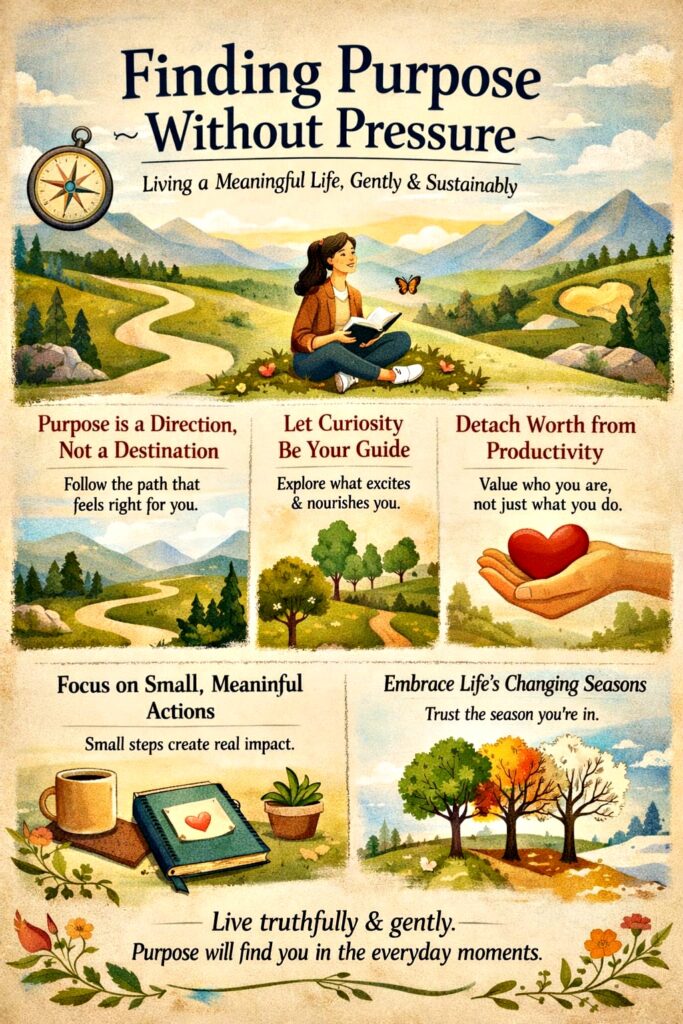
Living with purpose
Despite the fact that many people desire purpose, they actually experience pressure—pressure to be successful, meaningful, productive, and impressive. However, the real purpose is more muted. It does not feel like anxiety but rather alignment. How to find and live your life with purpose without making it a burden is outlined in the following five straightforward and grounded points. It has nothing to do with pursuing a “big destiny.” It’s about living truthfully, gently, and sustainably.
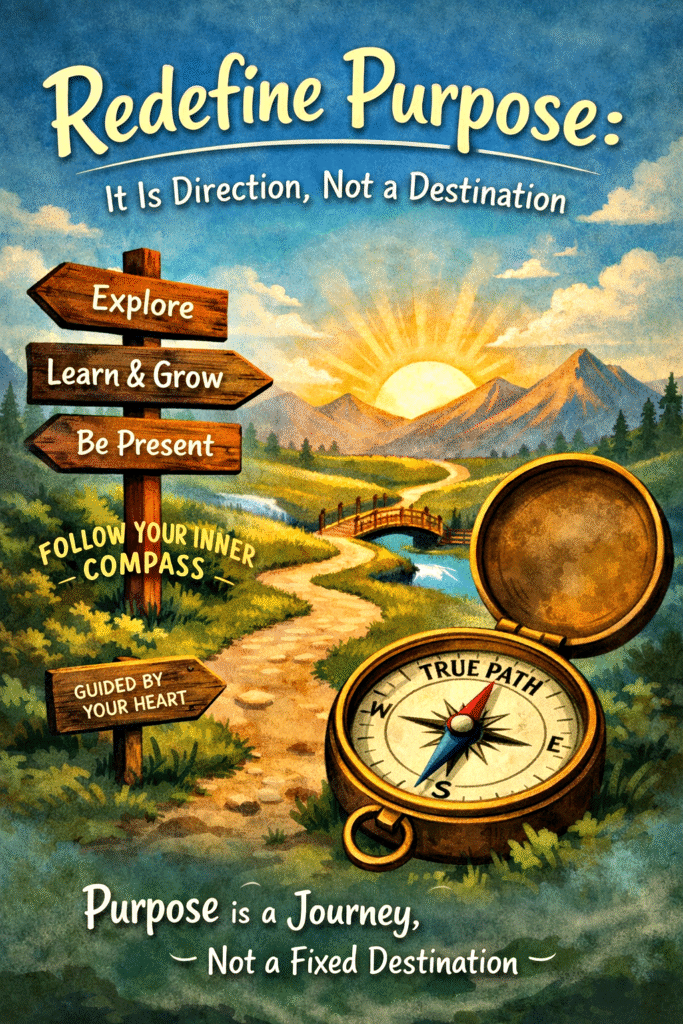
1. Redefine Purpose: It Is Direction, Not a Destination
One of the biggest reasons purpose feels stressful is that we misunderstand what it is. We treat purpose like a final achievement—something we must discover, lock in, and then defend for the rest of our lives. This mindset creates pressure because it assumes there is one correct path and that choosing wrongly means failure.
In reality, purpose is not a fixed destination; it is a direction.
Think of purpose like a compass rather than a finish line. A compass doesn’t tell you exactly where you’ll end up; it simply helps you move in a direction that feels true to you right now. That direction can—and will—change as you grow.
When you stop asking, “What is my one true purpose?” and start asking, “What direction feels meaningful at this stage of my life?” the pressure dissolves. You permit yourself to evolve.
Purpose can be:
- Learning to take care of your mental health
- Being present for your family
- Developing a skill that excites you
- Contributing kindness in small, everyday ways
None of these need to be permanent or dramatic. They just need to be honest.
Living with purpose doesn’t mean your life has to look important from the outside. It means it feels internally aligned. And alignment is something you check in with—not something you conquer once and for all.
When purpose becomes a direction, not a destination, you stop running. You start walking. And walking is sustainable.
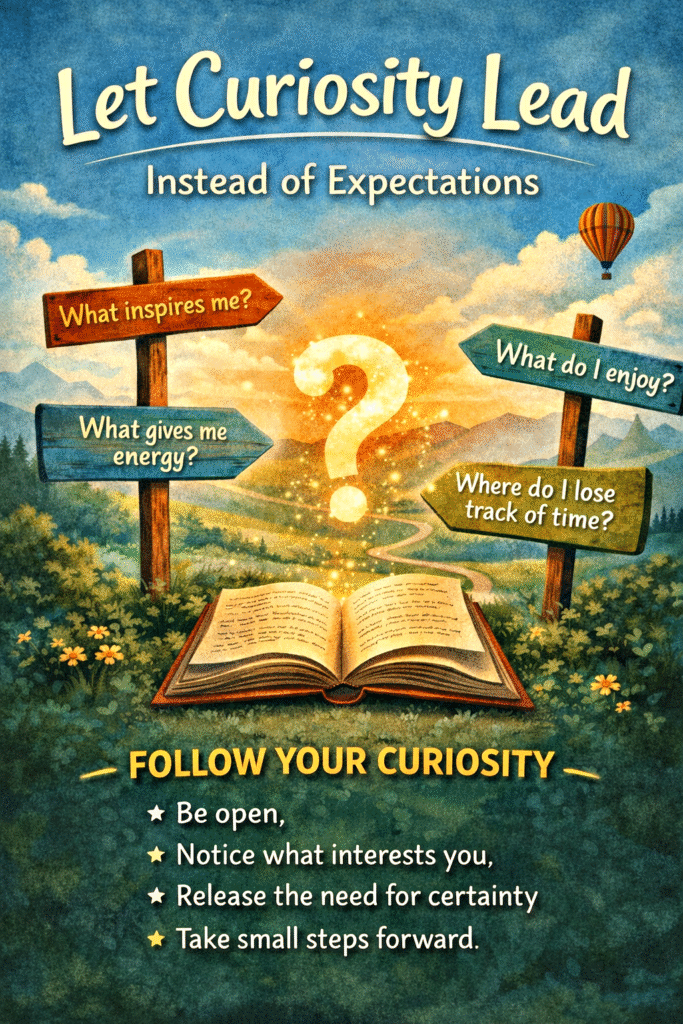
2. Let Curiosity Lead Instead of Expectations
Pressure enters our lives when we try to live according to expectations—our own or others’. Society constantly tells us what a “purposeful life” should look like: a great career, financial success, recognition, impact at scale. Even self-help culture sometimes turns purpose into another competition.
A pressure-free path begins when you replace expectation with curiosity.
Curiosity is gentle. It asks questions instead of demanding answers. It says:
- “What interests me lately?”
- “What gives me energy?”
- “What do I naturally lose track of time doing?”
- “What problems do I care about, even when no one is watching?”
When you follow curiosity, you don’t need to justify your choices. You’re not committing to anything forever. You’re simply exploring.
Many people discover their purpose not by planning it, but by paying attention:
- They notice what drains them and what nourishes them
- They notice which conversations feel alive and which feel heavy
- They notice which activities make them feel more like themselves
Purpose emerges quietly from these observations.
The key is to stop forcing clarity. You don’t need a five-year plan to live meaningfully. You just need to be awake to your inner responses.
Curiosity allows you to take small steps without pressure. And small steps, taken consistently, create a life that feels purposeful without feeling heavy.
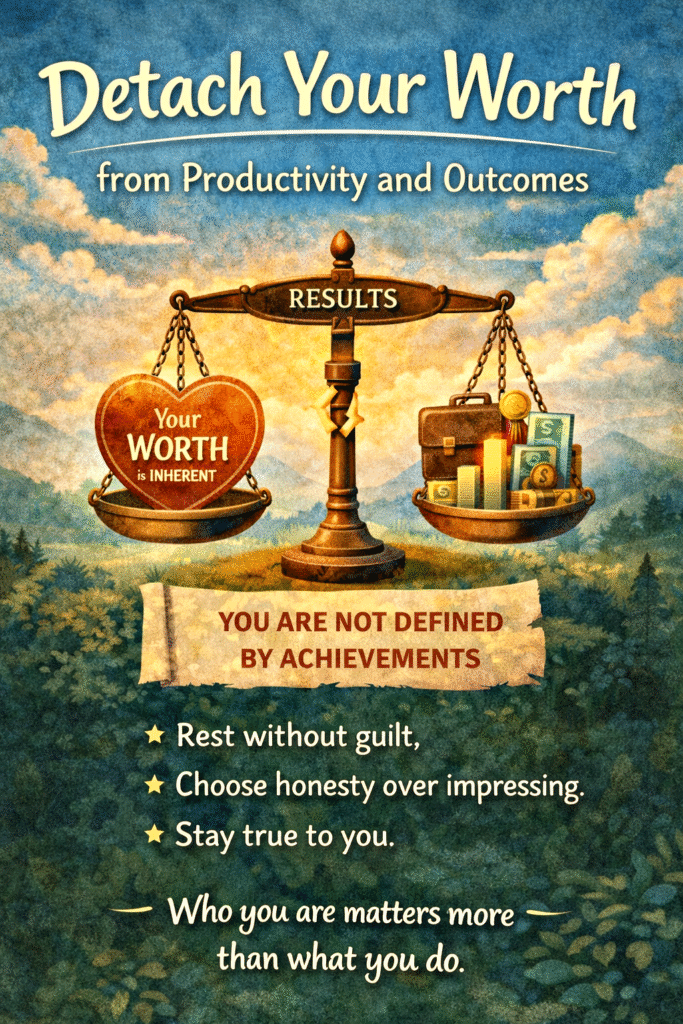
3. Detach Your Worth from Productivity and Outcomes
One of the deepest sources of pressure is the belief that your value depends on what you achieve. When purpose becomes tied to results—income, status, praise—it turns into a performance. And performances are exhausting.
To live with purpose peacefully, you must separate who you are from what you produce.
Your worth is inherent. It is not earned through success, busyness, or usefulness. Once you truly accept this, purpose stops being a test you must pass and becomes an expression of who you already are.
Instead of asking:
- “Is this impressive?”
- “Will this make me successful?”
- “Will people approve?”
Ask:
- “Does this feel honest to me?”
- “Does this align with my values?”
- “Would I still do this if no one noticed?”
Purpose that is rooted in values rather than outcomes feels light. For example:
- If your value is compassion, your purpose may show up in listening deeply
- If your value is growth, your purpose may be learning and improving
- If your value is integrity, your purpose may be living truthfully
None of these require constant achievement. They only require presence and intention.
When you detach purpose from productivity, rest becomes part of purpose. Saying no becomes part of purpose. Changing direction becomes part of purpose.
And most importantly, you stop feeling like you’re falling behind in your own life.
4. Focus on Small, Meaningful Actions—Not Grand Life Missions
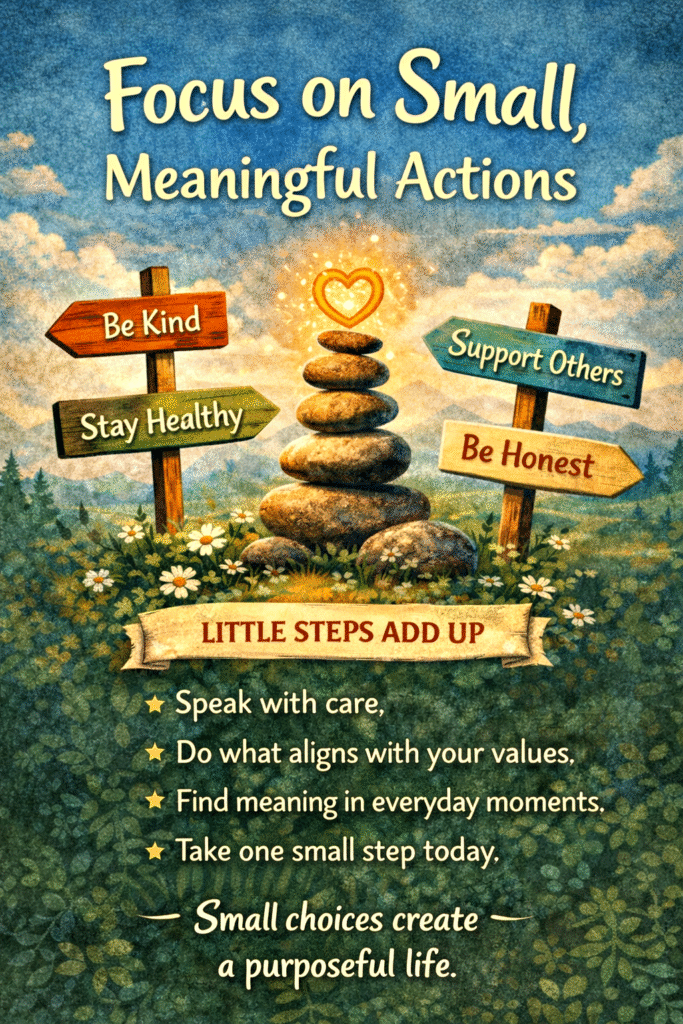
A common myth is that purpose must be big and life-defining. This myth creates pressure because not everyone wants—or needs—to change the world dramatically.
In truth, purpose is built through small, repeated actions that reflect what matters to you.
Purpose lives in:
- How you speak to people
- How you show up in difficult moments
- How you treat yourself when you fail
- How you use your time on ordinary days
These small actions are more powerful than grand plans because they are livable.
When you focus on daily meaning instead of lifelong missions, pressure disappears. You no longer feel the weight of “figuring everything out.” Instead, you ask a simpler question:
“What is one small thing I can do today that feels aligned with who I want to be?”
That might be:
- Writing one honest page
- Helping one person
- Taking care of your health
- Saying no to something that drains you
Over time, these small choices compound. Without realizing it, you build a life that feels purposeful—without ever forcing it.
Purpose is not found in a single moment of clarity. It is created through consistent, conscious living.
5. Allow Your Purpose to Change—and Trust the Season You’re In
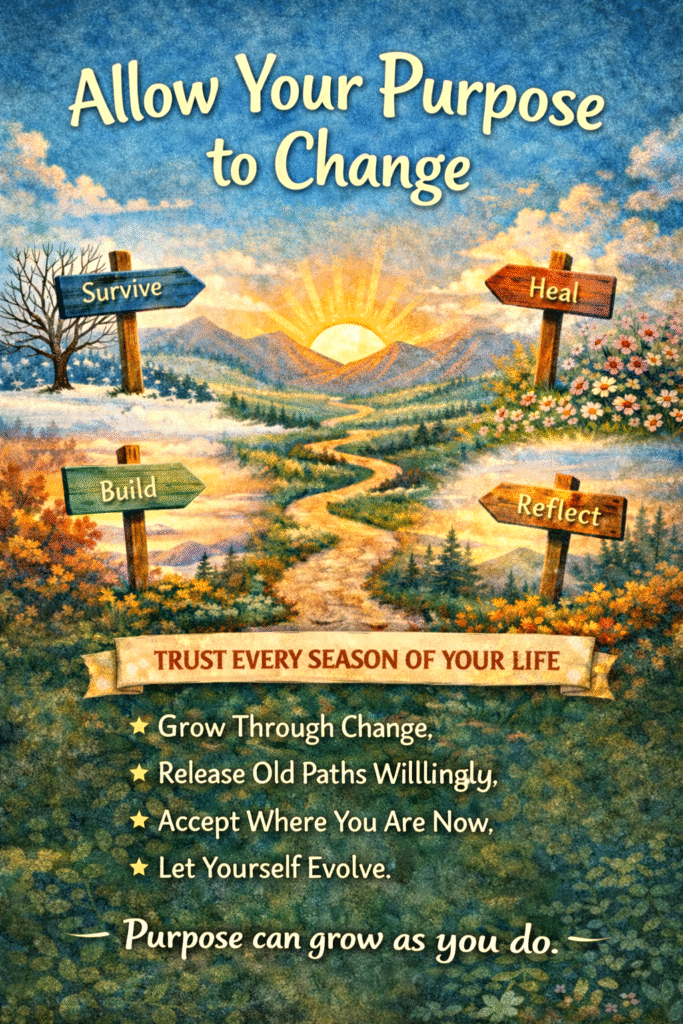
Perhaps the most important point of all: your purpose can change.
Many people feel pressure because they believe that changing direction means they were wrong before. But growth doesn’t work that way. You are not betraying your purpose when you evolve—you are honouring it.
Different seasons of life call for different purposes:
- One season may be about survival
- Another about healing
- Another about building
- Another about giving back
- Another about rest and reflection
All of these are valid.
When you trust the season you’re in, you stop comparing your life to others’. You stop rushing. You stop judging yourself for not being “further ahead.”
Purpose without pressure comes from acceptance—accepting where you are, who you are, and what you need right now.
You don’t need to force clarity. You don’t need to have everything figured out. Life unfolds when you show up honestly, listen inwardly, and move gently forward.
Closing Thought
A purposeful life is not a loud life. It is not a rushed life. It is not a perfect life.
It is a present life.
When you stop chasing purpose and start living truthfully—one day, one choice, one value at a time—purpose stops feeling like pressure and starts feeling like home.