
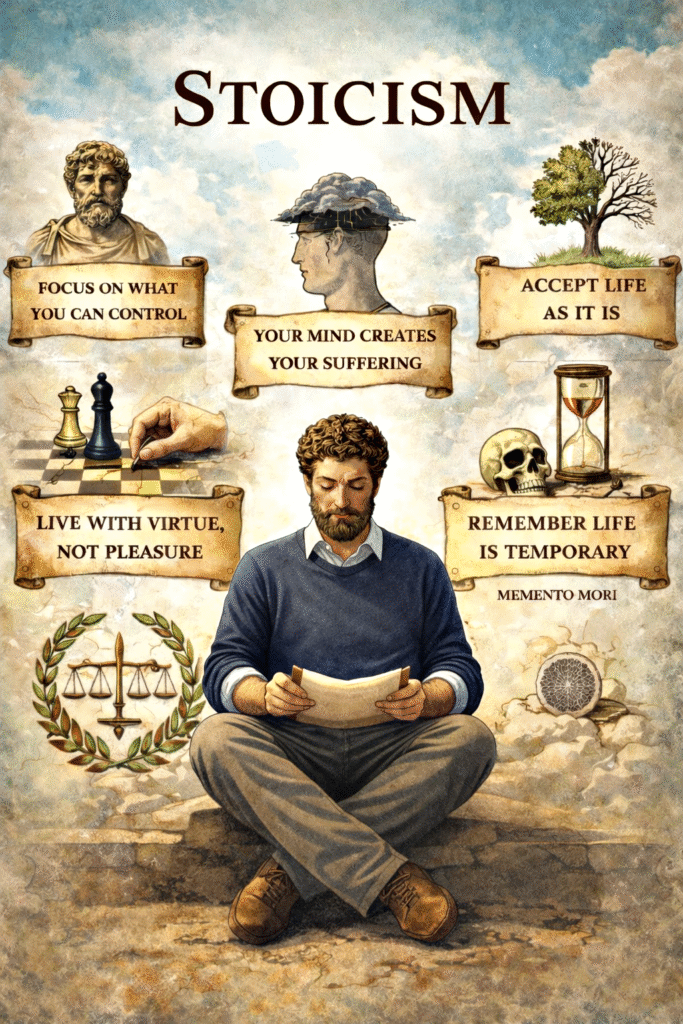
The Stoic Mindset Explained in 5 Clear Points
Stoicism is an ancient philosophy that teaches people how to live a calm, meaningful, and strong life, no matter what happens around them. It began in ancient Greece around 300 BCE and was later developed by Roman thinkers like Marcus Aurelius, Seneca, and Epictetus. Even though it is very old, Stoicism is extremely relevant today because it focuses on emotional strength, self-control, clarity of thinking, and inner peace in a chaotic world.
Below are five simple points that explain Stoicism clearly and deeply, using everyday language. Together, these five ideas form the heart of Stoic philosophy.
1. Focus Only on What You Can Control
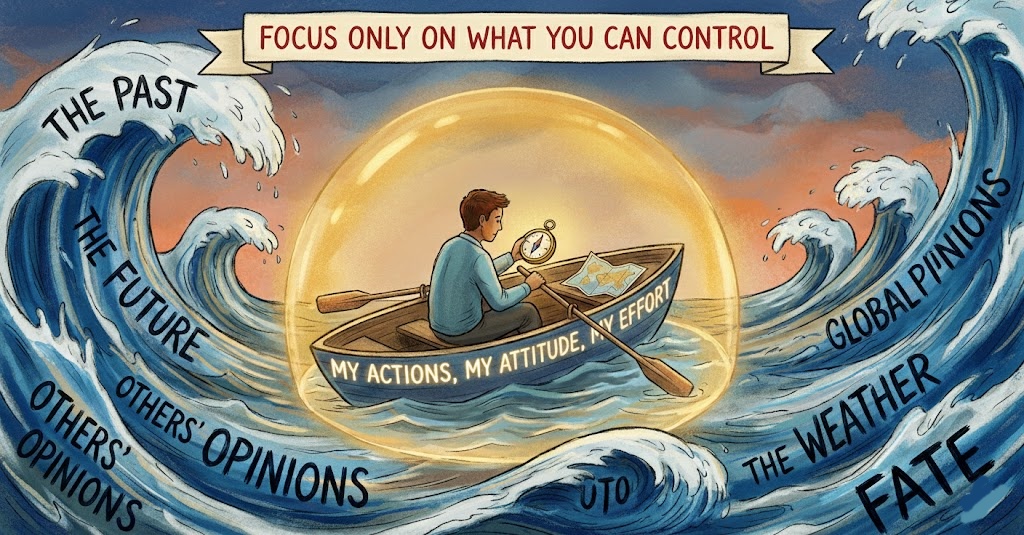
One of the most important teachings of Stoicism is the idea that some things are within our control, and some things are not. According to Stoics, peace of mind comes from clearly understanding this difference.
What is in your control?
- Your thoughts
- Your opinions
- Your choices
- Your actions
- Your attitude
- How you respond to situations
What is not in your control?
- Other people’s behavior
- Other people’s opinions
- The past
- Natural events (weather, illness, accidents)
- Outcomes that depend on many factors
Most human suffering comes from trying to control things that cannot be controlled. For example, worrying about what others think of you, getting angry because someone treated you unfairly, or stressing about the future. Stoicism teaches that these reactions are unnecessary because they waste mental energy on things outside your power.
Instead of saying:
“Why is this happening to me?”
A Stoic mindset asks:
“What part of this is in my control, and what is not?”
If someone insults you, you cannot control their words—but you can control how you respond. You can choose calm instead of anger, dignity instead of revenge, silence instead of argument.
This idea does not make a person passive or weak. In fact, it makes a person strong because energy is focused only where it truly matters. When you stop fighting reality, your mind becomes lighter, clearer, and more stable.
2. Your Mind Creates Your Suffering, Not Events Themselves
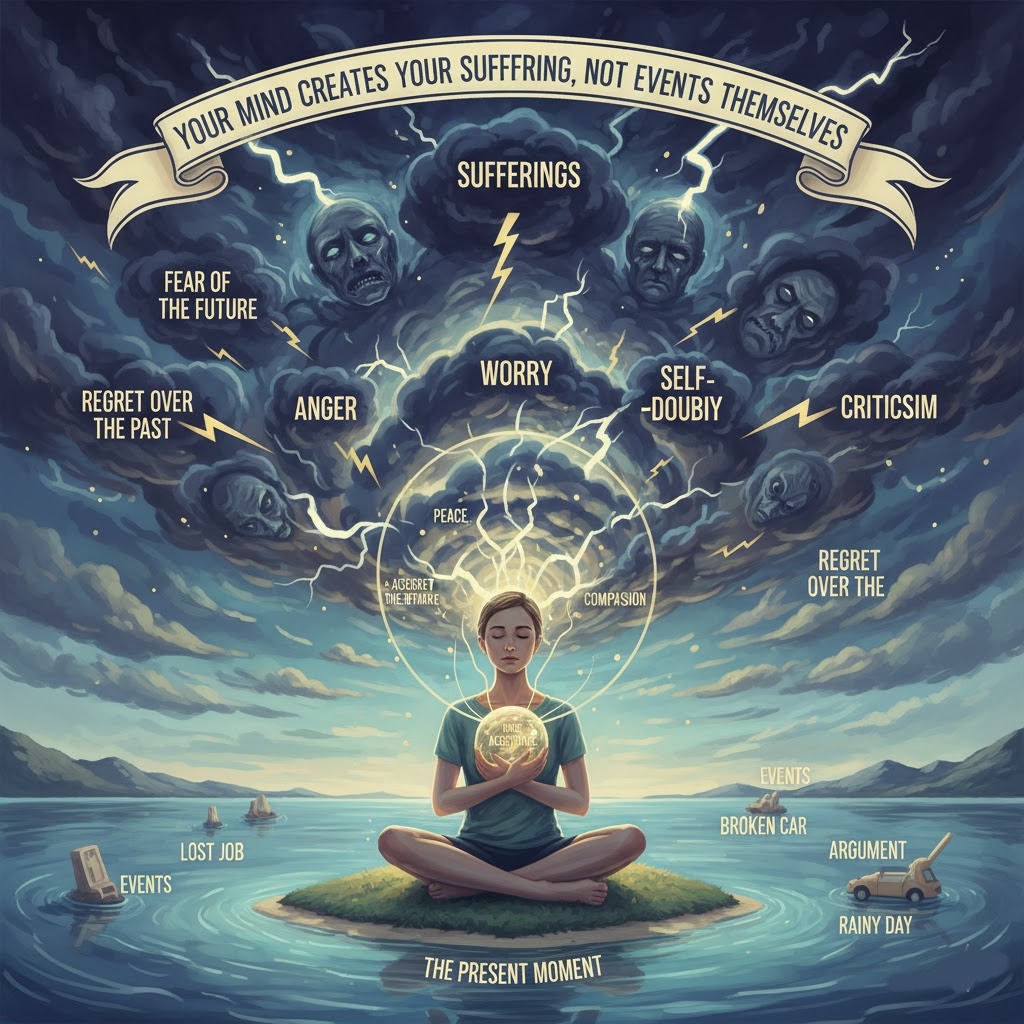
Stoicism teaches that events themselves are neutral. They are neither good nor bad by nature. What makes them feel good or bad is our interpretation of them.
This idea may sound surprising at first, but it is very powerful.
For example:
- Losing a job can feel like a disaster—but it can also be seen as a new beginning.
- Criticism can feel painful—but it can also be feedback for growth.
- Failure can feel humiliating—but it can also be a lesson.
The Stoic philosopher Epictetus said:
“Men are disturbed not by things, but by the views which they take of them.”
This means that two people can face the same situation and react completely differently. One person collapses emotionally, while another remains calm and thoughtful. The difference is not the event—it is the mindset.
Stoicism trains you to pause before reacting and ask:
- Is this situation really as bad as my mind is making it?
- Am I adding unnecessary drama to this moment?
- Can I look at this more calmly and rationally?
By changing how you think, you change how you feel.
This does not mean suppressing emotions or pretending pain does not exist. Stoicism does not say, “Do not feel.” It says, “Do not let emotions control you blindly.” Feelings are natural, but they should not become the ruler of your actions.
Over time, this practice builds emotional resilience. Life still has ups and downs, but your inner state becomes more stable and less reactive.
3. Accept Life as It Is, Not as You Wish It to Be

A core Stoic principle is acceptance of reality. This does not mean giving up or becoming lazy. It means understanding that fighting reality only creates suffering.
Many people say:
- “This should not have happened.”
- “Life is unfair.”
- “Things should be different.”
Stoicism responds:
“It has already happened. Now what will you do?”
Reality does not care about our preferences. When we resist what has already occurred, we create mental pain on top of physical or emotional pain. Stoicism teaches acceptance without complaint and action without despair.
Acceptance means:
- Accepting people as they are, not as you want them to be.
- Accepting life’s difficulties without bitterness.
- Accepting that loss, ageing, and death are part of life.
This attitude is sometimes called “amor fati”, a Latin phrase meaning “love your fate.” Not just tolerate it—learn from it, grow from it, and use it.
When something difficult happens, a Stoic mindset asks:
- What can this teach me?
- How can this make me stronger?
- How can I act with dignity right now?
Acceptance does not remove pain, but it removes resistance, which is often worse than pain itself. When you stop arguing with reality, you free mental energy for wisdom and purposeful action.
4. Live with Virtue, Not Pleasure as Your Goal

Stoicism teaches that the highest good in life is virtue, not pleasure, fame, money, or status.
Virtue means:
- Wisdom
- Courage
- Justice
- Self-control
According to Stoics, external things like wealth, success, or comfort are not bad, but they are not the source of true happiness. They can be lost at any moment. If your happiness depends on them, your peace will always be fragile.
A Stoic asks:
- Am I acting honestly?
- Am I being fair?
- Am I controlling my impulses?
- Am I doing what is right, even when it is hard?
When you live with virtue, your self-respect grows. Even if the world treats you unfairly, you can still say:
“I acted with integrity.”
This creates a deep sense of inner peace. You stop measuring your worth by external rewards and start measuring it by your character.
Stoicism teaches that a good life is not an easy life—it is a meaningful one. Doing the right thing may not always bring comfort, but it brings dignity, strength, and self-trust.
5. Remember That Life Is Temporary (Memento Mori)
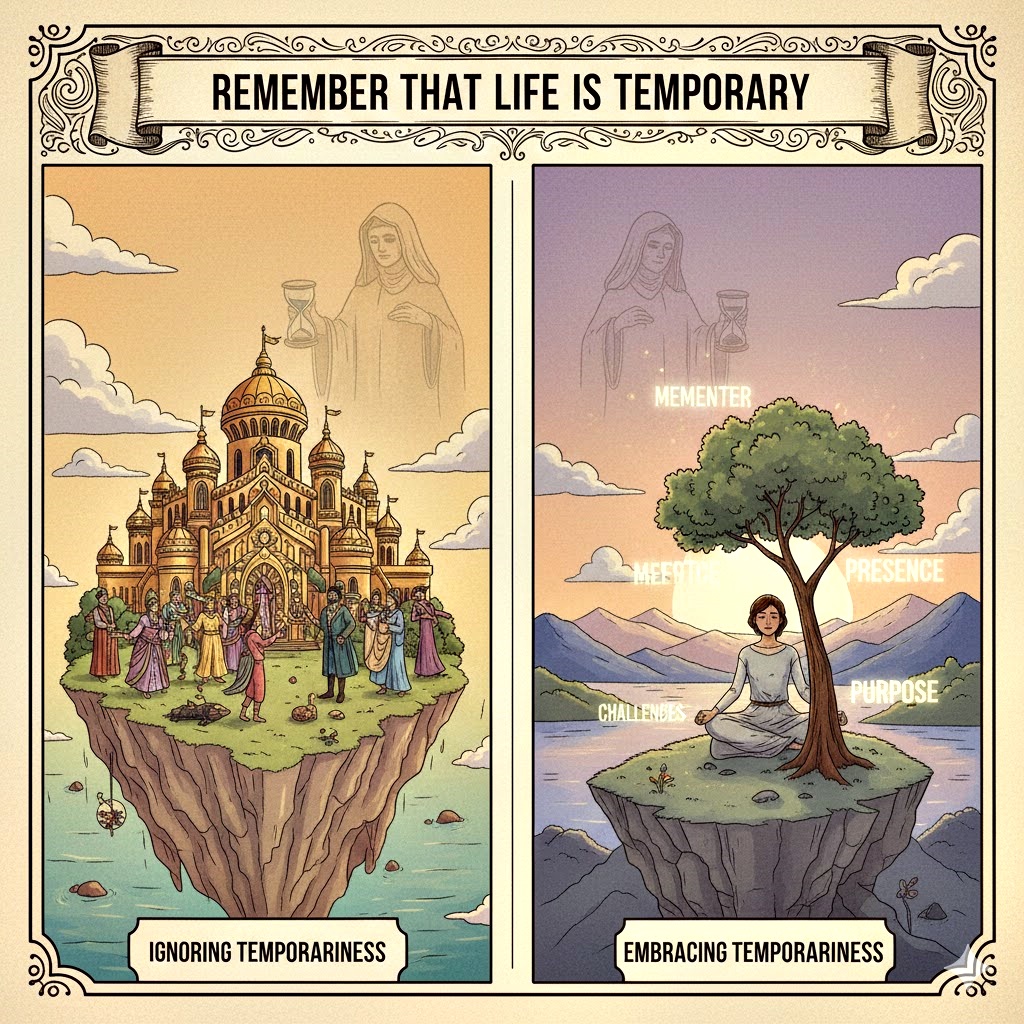
One of the most powerful Stoic ideas is “memento mori”, which means “remember you must die.”
At first, this idea sounds dark or frightening, but Stoics saw it as a source of clarity and gratitude.
Remembering that life is temporary helps you:
- Stop wasting time on trivial worries
- Appreciate the present moment
- Let go of unnecessary ego
- Focus on what truly matters
When you remember that your time is limited, you stop postponing important things like:
- Living honestly
- Loving deeply
- Acting courageously
- Speaking truthfully
Stoicism does not encourage fear of death. Instead, it teaches acceptance of it as a natural part of life. Death gives life urgency and meaning.
Marcus Aurelius wrote:
“You could leave life right now. Let that determine what you do and say and think.”
This awareness does not make life depressing—it makes it precious. Small annoyances lose their power. Grudges seem pointless. Gratitude becomes natural.
By keeping death in mind, Stoics learn how to live better, not worse.
Conclusion: Why Stoicism Matters Today
Stoicism is not about suppressing emotions, becoming cold, or withdrawing from life. It is about mental discipline, emotional strength, and living wisely.
In a world full of noise, pressure, comparison, and uncertainty, Stoicism offers:
- Calm in chaos
- Strength in difficulty
- Clarity in confusion
- Purpose beyond pleasure
By focusing on what you can control, managing your thoughts, accepting reality, living with virtue, and remembering life’s impermanence, Stoicism helps you build a strong inner foundation.
You may not control the world—but you can control how you meet it. And that is the heart of Stoicism.