
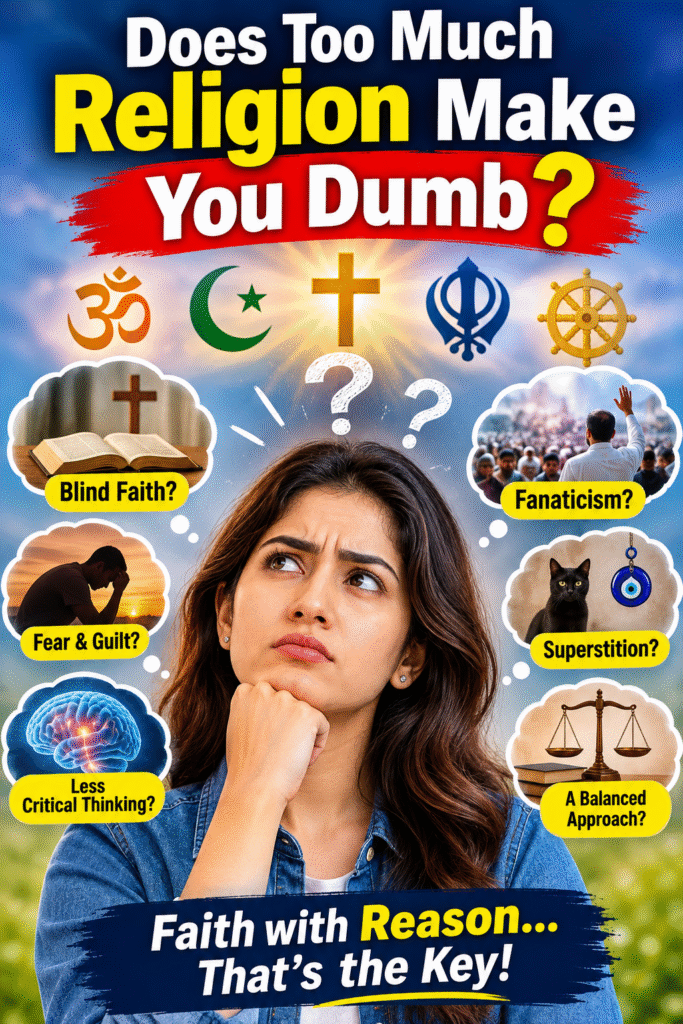
Does Too Much Religion Affect Your Ability to Think?
Religion has played an important role in human civilization for thousands of years. It has given people hope, moral values, emotional strength, a sense of belonging, and answers to difficult questions about life. For many people, religious beliefs are an important source of peace and guidance.
However, an interesting question arises: Can too much involvement in religion affect our ability to think independently, question things, and make rational decisions?
The answer is not that religion makes people unintelligent. Rather, when religious beliefs become extreme, unquestionable, or blind, they can discourage critical thinking and independent reasoning. The problem is not faith itself but the inability to question, examine, and accept different perspectives.
Let’s understand this through some important psychological and social observations.
1. Blind Faith Can Weaken Critical Thinking
- Faith can provide comfort, but blind faith can sometimes prevent people from examining whether something is true.
- When someone accepts every religious statement without questioning it, they may stop looking for logical explanations.
- Critical thinking requires us to examine evidence, compare different opinions, and ask questions.
- However, people with rigid beliefs may consider questioning their religious teachings disrespectful or wrong.
- Gradually, they may become comfortable accepting information simply because an authority figure has said it.
Key Point: Faith becomes problematic when believing replaces thinking and questioning is treated as a crime.
2. It Can Make People Less Open to Different Opinions

- Religion often provides a particular way of understanding life, morality, and the world.
- Problems arise when people begin believing that their religious interpretation is the only correct one.
- They may reject people who follow different religions or have different philosophies.
- Instead of listening to another person’s arguments, they may immediately dismiss them.
- This attitude prevents intellectual growth because learning often begins when we are willing to consider unfamiliar ideas.
Key Point: An intelligent mind is willing to listen to different perspectives, even when they challenge its existing beliefs.
3. It Can Encourage Emotional Decisions Instead of Logical Ones

- Religious beliefs are often connected with deep emotions such as fear, love, guilt, hope, and devotion.
- Emotions are natural, but excessive emotional attachment can sometimes influence judgment.
- For example, a person may support a religious leader even when there is evidence of wrongdoing.
- They may defend questionable practices because accepting the truth could hurt their emotional connection with their beliefs.
- When emotions become stronger than evidence, people may find it difficult to make objective decisions.
Key Point: When emotional attachment becomes stronger than rational judgment, people may defend what they believe rather than examine what is true.
4. It Can Make People Dependent on Religious Authorities
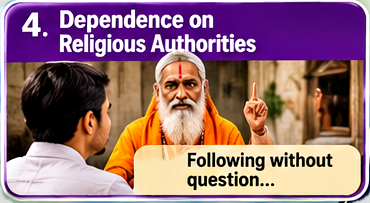
- Religious leaders can provide guidance, but they are human beings and can make mistakes.
- Some people begin treating religious authorities as unquestionable sources of truth.
- They may follow instructions without understanding the reasons behind them.
- In extreme situations, dishonest leaders can exploit this trust for money, influence, power, or personal benefits.
- People who are unwilling to question authority may become vulnerable to manipulation.
Key Point: Respecting a religious leader is different from surrendering your ability to think independently.
5. It Can Create Fear and Guilt
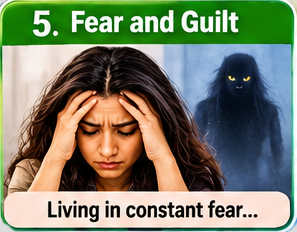
- Some religious teachings are interpreted in ways that make people constantly afraid of punishment, sin, or divine disapproval.
- People may start feeling guilty even about ordinary thoughts, questions, or personal choices.
- Instead of enjoying life and making responsible decisions, they may spend excessive time worrying about whether their actions are religiously acceptable.
- Fear can also discourage people from exploring new ideas, scientific explanations, or different lifestyles.
- Healthy spirituality should ideally provide inner peace rather than continuous psychological pressure.
Key Point: Religion should help people become better human beings, not keep them trapped in unnecessary fear and guilt.
6. It Can Encourage Superstition Over Scientific Understanding
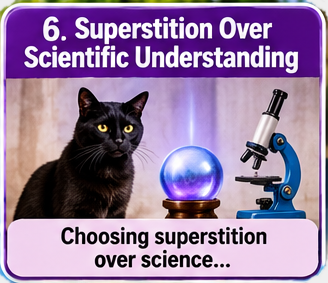
- Science encourages people to investigate natural phenomena through observation, experiments, and evidence.
- Superstition, on the other hand, often depends on assumptions, fear, and unsupported beliefs.
- When religious interpretations are accepted without examination, some people may prefer supernatural explanations even when scientific evidence is available.
- For example, they might depend entirely on rituals or religious remedies while ignoring practical solutions to everyday problems.
- It is important to understand that religious faith and scientific thinking are not necessarily enemies. Many religious people respect science and scientific discoveries.
Key Point: Believing in spirituality does not require rejecting science, evidence, or rational explanations.
7. It Can Create a Feeling of Superiority
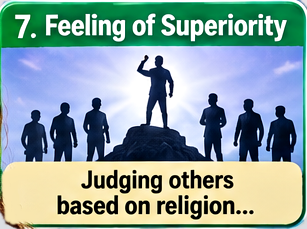
- Excessive religious identification can sometimes make people believe that their community is morally or spiritually superior to others.
- They may judge others based on religion rather than their character and behaviour.
- People who follow different beliefs may be treated as inferior, misguided, or less worthy of respect.
- This attitude can create prejudice, discrimination, and unnecessary social divisions.
- True intelligence involves understanding that a person’s character cannot be judged simply by their religious identity.
Key Point: Being religious does not automatically make someone a better human being, just as following a different belief does not make someone inferior.
8. It Can Reduce Personal Responsibility

- Some people become so dependent on religious explanations that they stop taking complete responsibility for their decisions.
- They may attribute every success or failure entirely to destiny, divine intervention, or supernatural forces.
- While faith can help people remain hopeful during difficult situations, it should not replace personal effort.
- For example, instead of improving their skills, solving a problem, or correcting a mistake, someone might simply wait for a miracle.
- A balanced approach recognises that circumstances are not always under our control, but our actions and efforts still matter.
Key Point: Faith may give you hope, but personal responsibility and practical action are necessary to improve your life.
9. It Can Make People Vulnerable to Religious Exploitation

- Some dishonest individuals use religious emotions to influence and control others.
- They may promise miracles, financial prosperity, supernatural protection, or solutions to personal problems in exchange for money or unquestioning obedience.
- People who are emotionally vulnerable or unwilling to question religious claims may become easy targets.
- Such exploitation can damage people’s finances, relationships, and mental well-being.
- A sensible person should examine extraordinary claims carefully, regardless of who makes them.
Key Point: Never allow someone to use your faith as a tool to control your mind, emotions, or money.
10. A Balanced Religious Approach Can Make You a Better Person

- Religion is not necessarily harmful. It can teach valuable lessons about kindness, honesty, compassion, forgiveness, and helping others.
- It can give people emotional support during difficult periods of life.
- It can encourage discipline, gratitude, patience, and a sense of purpose.
- The important thing is to follow positive values without becoming intolerant or blindly obedient.
- A person can be deeply religious and still be scientific, logical, curious, and open-minded.
- The real measure of a person’s wisdom should be their behaviour, understanding, and treatment of others rather than the intensity of their religious practices.
Key Point: The best approach is to combine faith with reason, spirituality with humanity, and religious values with independent thinking.
Conclusion: Does Too Much Religion Make You Dumb?
Not necessarily. Religion itself does not make a person unintelligent, but excessive attachment to unquestionable beliefs can weaken the habit of critical thinking.
The real problem begins when people stop asking questions, reject scientific evidence, blindly follow authorities, and judge others simply because they have different beliefs.
A truly intelligent person does not have to abandon religion to become rational. They simply need to understand that faith and intelligence can coexist.
You can visit a temple, mosque, church, or any other place of worship and still believe in science. You can respect religious traditions without accepting every practice blindly. You can have faith in God while questioning the actions of people who claim to represent God.
Remember:
Religion should guide your life, not control your mind. Faith should give you strength, not take away your ability to think.
Ultimately, the real sign of intelligence is not how religious you are, but how wisely, independently, and compassionately you think and behave.