
Why Obedience Is the First Step to Great Leadership
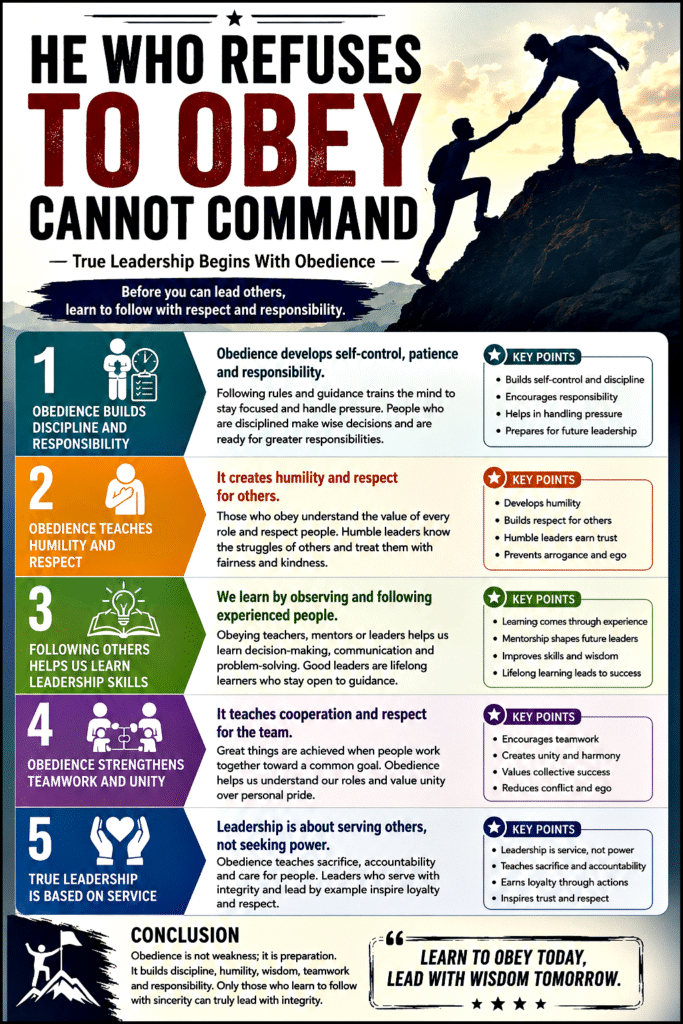
The quote “He who refuses to obey cannot command” carries a deep meaning about leadership, discipline, and personal growth. Many people desire authority and power, but very few understand that true leadership begins with learning how to follow. A person who cannot respect rules, guidance, or responsibility will often struggle to lead others effectively.
Obedience does not mean weakness or blind submission. Instead, it teaches discipline, humility, patience, and teamwork. Great leaders are usually those who have once learned under teachers, mentors, parents, or experienced individuals. They understand both the challenges of following and the responsibilities of leading.
Below are five important points that explain this idea in a simple and meaningful way.
1. Obedience Builds Discipline and Responsibility

The first step toward becoming a good leader is learning discipline. When a person obeys rules, instructions, or guidance, they develop self-control and responsibility. Discipline helps people stay focused, organised, and committed to their duties.
For example, in the military, soldiers spend years following orders before becoming officers. This process teaches them punctuality, responsibility, and mental strength. Because they once followed commands themselves, they later understood how to guide others properly.
The same principle applies in schools, workplaces, and families. Students who respect teachers and employees who follow workplace rules often become more capable leaders in the future. Obedience trains people to complete tasks sincerely and handle pressure calmly.
Key Points
- Obedience develops discipline and self-control.
- Responsible people become effective leaders.
- Discipline helps leaders make wise decisions.
- Following rules prepares people for greater responsibilities.
2. Obedience Teaches Humility and Respect
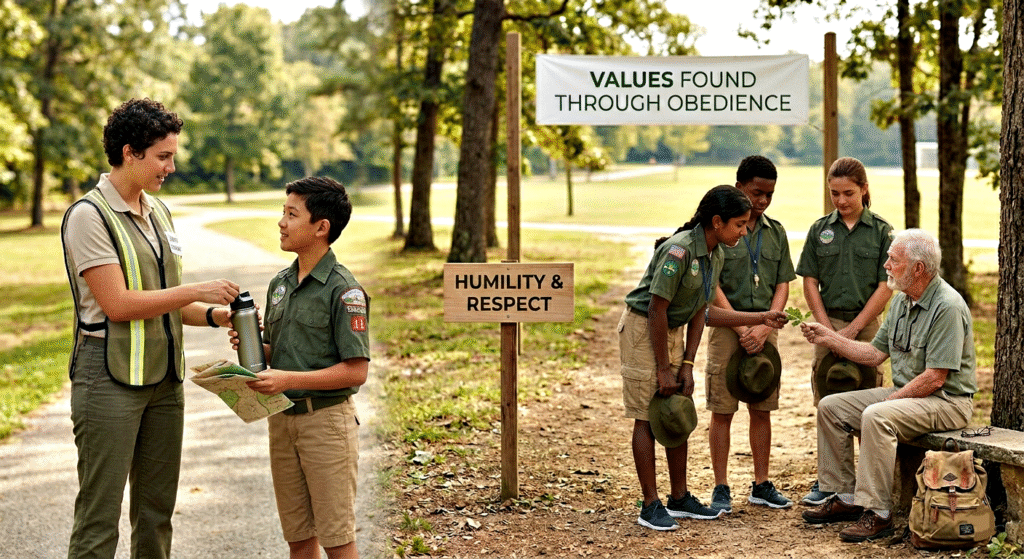
A person who has never obeyed others may become arrogant when given authority. Obedience teaches humility because it reminds individuals that everyone has something to learn. It also helps people respect the efforts and struggles of others.
Great leaders are usually humble because they remember the time when they were learners or followers themselves. They understand the difficulties faced by workers, students, or team members because they have once experienced the same situations.
For example, a manager who once worked as an ordinary employee is often more understanding toward staff members. They know the pressure of deadlines and hard work, so they treat others with fairness and kindness.
On the other hand, leaders who refuse to obey or learn from others may become proud and controlling. They may think leadership is only about giving orders, not understanding people. Such behaviour creates fear instead of trust.
Humility also allows leaders to continue learning. A humble leader accepts mistakes, listens to feedback, and improves themselves constantly. But an arrogant person usually rejects advice and struggles to grow.
Key Points
- Obedience teaches humility and respect.
- Humble leaders understand the struggles of others.
- Respectful leadership creates trust and loyalty.
- Arrogance weakens true leadership.
3. Following Others Helps People Learn Leadership Skills

Leadership is not something people learn overnight. It develops through experience, observation, and guidance. People gain these skills by first following experienced teachers, mentors, coaches, or leaders.
When individuals obey and learn from others, they observe how decisions are made, how problems are solved, and how people are managed. This becomes valuable preparation for future leadership roles.
For example, an apprentice learns from a skilled craftsman before becoming an expert. Similarly, athletes listen to coaches before becoming team captains. Even successful business owners often started their journey by working under someone else.
A person who refuses to obey misses these important learning opportunities. They may ignore advice, reject training, or avoid guidance, which limits their growth. Good leaders are lifelong learners who understand that wisdom comes from experience.
Key Points
- Leadership skills are learned through experience.
- Good leaders are willing to learn from others.
- Following guidance improves wisdom and communication.
- Mentorship helps shape future leaders.
4. Obedience Strengthens Teamwork and Unity

Leadership is not only about individual success. A true leader must know how to work with people and unite them toward a common goal. Obedience teaches cooperation, teamwork, and respect for structure.
In every successful group—whether it is a family, sports team, company, or nation—people must understand their roles. If everyone refuses to listen or cooperate, confusion and conflict will arise.
For example, in sports, players must follow the coach’s strategy for the team to succeed. If every player only follows personal ideas, the team will fail. The same applies in workplaces where employees and managers must cooperate to achieve goals.
Leaders who once learned obedience understand the importance of teamwork. They know that success depends on unity rather than personal ego. Such leaders encourage cooperation and value the opinions of others.
Key Points
- Obedience teaches cooperation and teamwork.
- Unity is necessary for success.
- Good leaders value teamwork over ego.
- Respect for roles creates harmony in groups.
5. True Leadership Is Based on Service

The deepest meaning of this quote is that leadership is about service, not power. A person who refuses to obey may seek authority only for personal gain, but true leaders understand responsibility and sacrifice.
Obedience teaches people the importance of duty and accountability. Leaders must care for the people they guide and sometimes place others’ needs before their own comfort.
For example, a good teacher does not simply control students. They guide, encourage, and support them. Similarly, successful leaders earn respect because they lead by example and genuinely care about others.
Key Points
- True leadership is about serving others.
- Obedience teaches accountability and sacrifice.
- Leaders earn respect through actions and character.
- Service-based leadership inspires loyalty and trust.
Conclusion
The quote “He who refuses to obey cannot command” teaches an important lesson about life and leadership. Before a person can guide others, they must first learn discipline, humility, respect, teamwork, and responsibility. Obedience is not a sign of weakness—it is a process that prepares people for greater roles in life.
Great leaders are not simply those who give orders. They are people who once listened, learned, and served with sincerity. Because they experienced the role of a follower, they understand how to lead with wisdom and fairness.
In every field—whether education, business, sports, family, or society—successful leadership begins with the willingness to learn and obey. Only those who first understand how to follow responsibly can truly command others with integrity and respect.