You’re Not Lazy: The Real Reason You Procrastinate
Almost everyone puts things off. Procrastination is a deeply human behaviour that can manifest itself in a variety of ways, including delaying an important assignment, putting off exercise, avoiding difficult conversations, or putting off personal goals. When they procrastinate, people frequently describe themselves as “lazy,” but psychology reveals something very different.
Procrastination is not laziness—it is emotional avoidance.
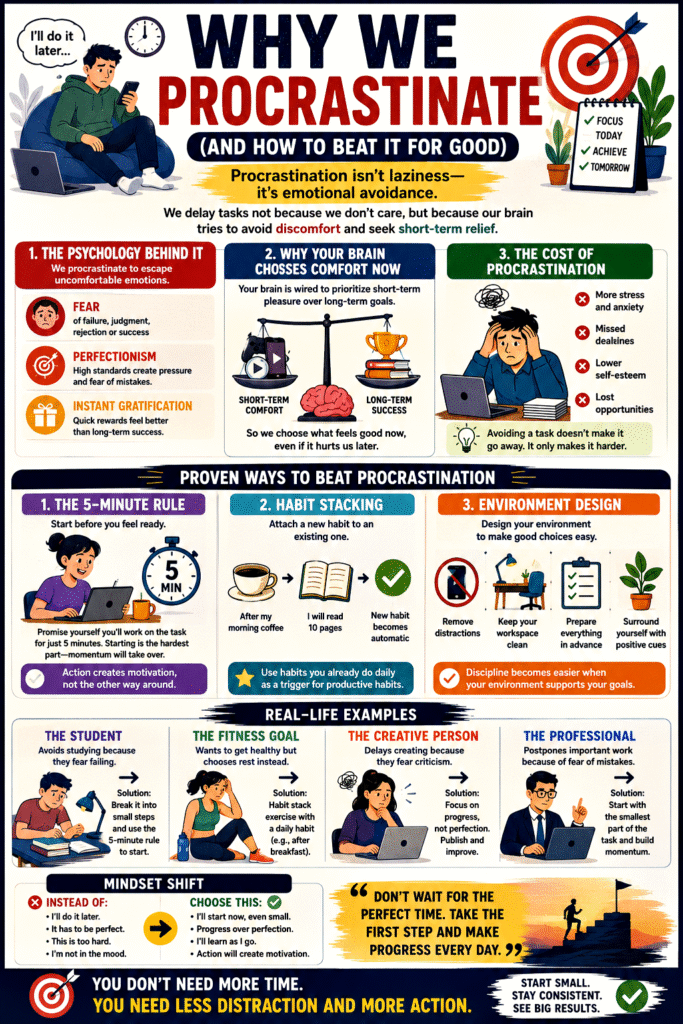
Procrastination, at its core, occurs when we attempt to avoid uncomfortable feelings such as fear, anxiety, self-doubt, boredom, or overwhelm. We seek temporary relief through distractions like social media, entertainment, or unnecessary activities rather than dealing with the task at hand. The first step toward overcoming procrastination permanently is to comprehend why it occurs. The psychology of procrastination, how the brain prioritises short-term comfort over long-term success, and practical strategies that can assist you in putting off action are the topics covered in this article.
1. The Psychology of Procrastination
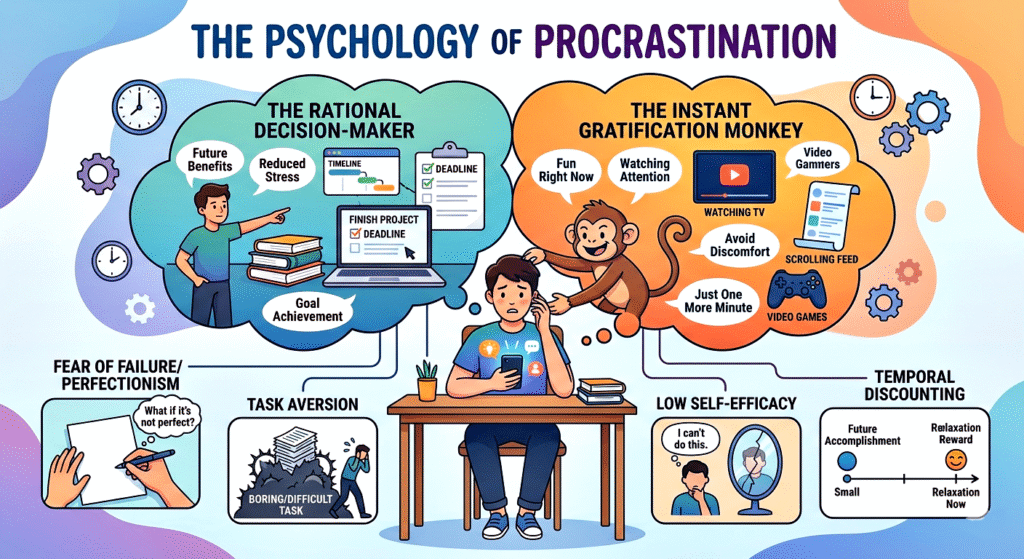
Many people believe procrastination is caused by poor time management. While time management matters, procrastination is actually more connected to emotions than productivity.
When a task feels:
- Difficult
- Stressful
- Uncertain
- Boring
- Overwhelming
your brain interprets it as a threat.
To protect you from discomfort, the brain encourages avoidance. This is why you suddenly feel the urge to:
- Check your phone
- Watch videos
- Clean your room
- Scroll social media
- Do less important tasks
These distractions provide immediate emotional relief.
Key Point:
Procrastination is not avoiding work—it is avoiding the negative emotions associated with the work.
For example:
- A student delays studying because they fear failing
- A writer delays starting because they fear criticism
- An employee delays a project because they fear making mistakes
The problem is not the task itself. The problem is the emotional discomfort connected to it.
2. Fear: The Hidden Driver Behind Delay
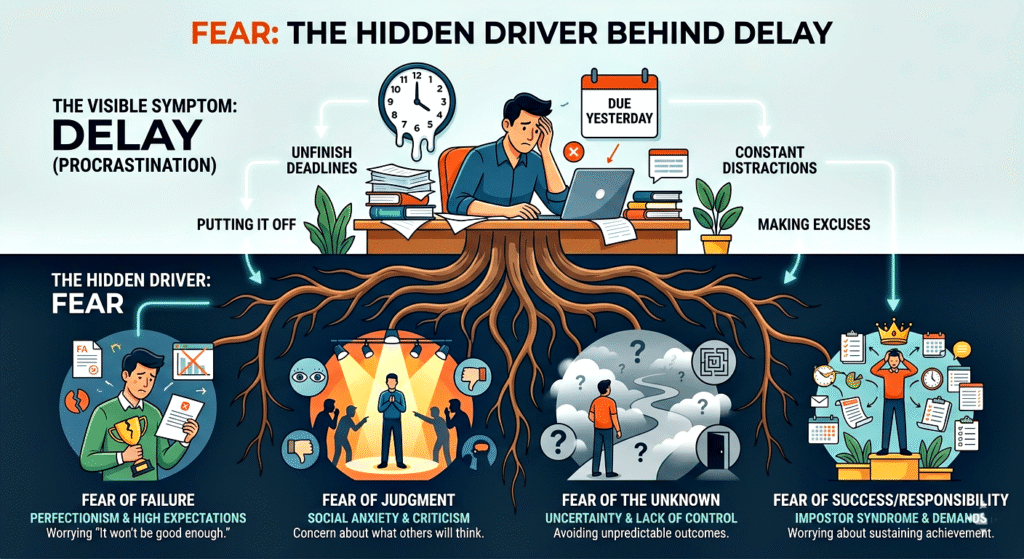
One of the biggest reasons people put things off is fear. People procrastinate because they fear:
• Failing
• Abjection
• Evaluation
• Not being adequate enough
• Achievement and increased responsibility Ironically, the likelihood of delaying a task increases with its importance.
For example:
• A person may avoid applying for their dream job because it hurts to be rejected.
• A student might put off studying because they would lose confidence if they failed.
• An entrepreneur may put off starting a business for fear of negative feedback.
The brain tries to keep its self-esteem up by staying away from situations where it could fail.
The Main Idea: Avoidance leads to procrastination, and avoidance leads to fear. Sadly, delaying tasks only serves to exacerbate anxiety over time.
You continue to feel guilty and stressed as a result of the unfinished work.
3. Perfectionism: Why “Doing It Perfectly” Stops You From Starting
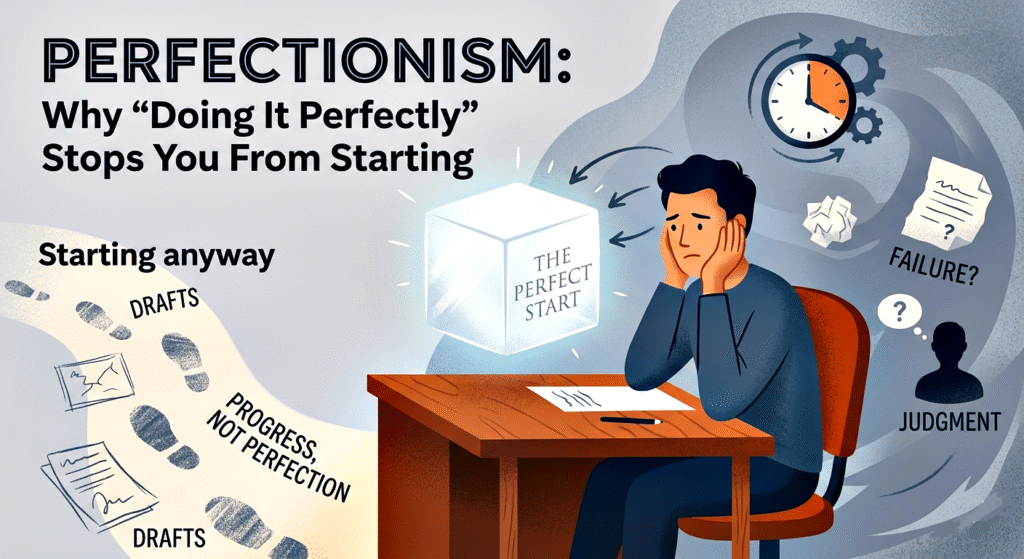
Perfectionism is another major reason people procrastinate.
Perfectionists often believe:
- Their work must be flawless
- Mistakes are unacceptable
- If they cannot do it perfectly, they should not do it at all
This mindset creates pressure so intense that starting becomes emotionally exhausting.
For example:
- A student spends hours planning instead of writing
- A creator endlessly edits content without publishing it
- A person delays learning a new skill because they fear being bad at it initially
Perfectionism creates unrealistic expectations, which leads to paralysis.
Key Point:
Perfectionism often disguises itself as high standards, but in reality, it frequently becomes fear of imperfection.
Successful people understand that progress matters more than perfection.
4. Why the Brain Chooses Short-Term Comfort
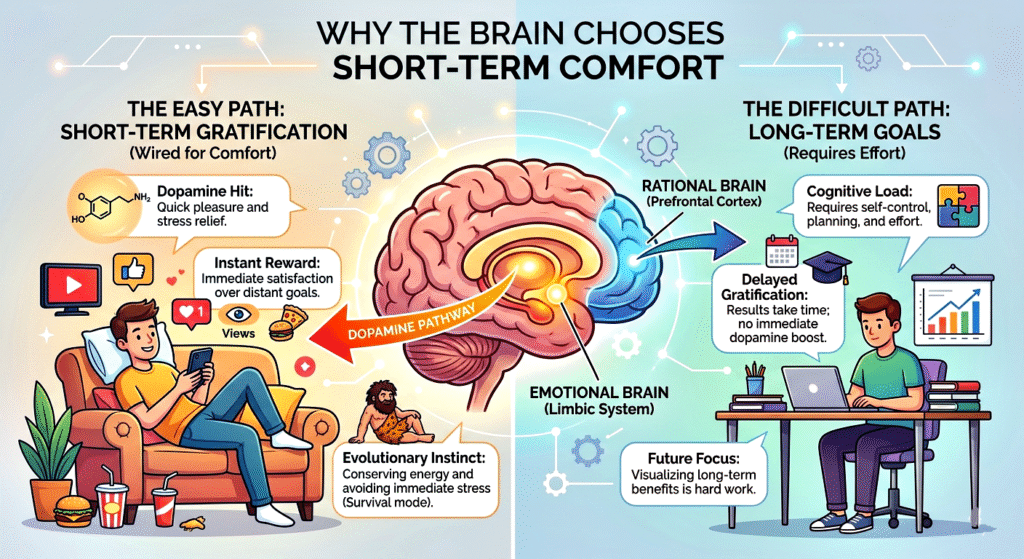
Human brains are naturally wired to seek immediate rewards.
This behavior comes from evolution. Thousands of years ago, survival depended on conserving energy and avoiding unnecessary risks. As a result, the brain still prefers:
- Pleasure over discomfort
- Easy rewards over difficult effort
- Immediate satisfaction over delayed success
This is why:
- Watching one video feels easier than studying
- Scrolling social media feels better than exercising
- Sleeping longer feels more comfortable than waking up early
The brain prioritizes short-term emotional comfort, even when it harms long-term goals.
Psychologists call this instant gratification.
Key Point:
Your brain is designed to prioritize comfort now, not success later.
The challenge is learning how to override this natural tendency.
5. The Emotional Cost of Procrastination
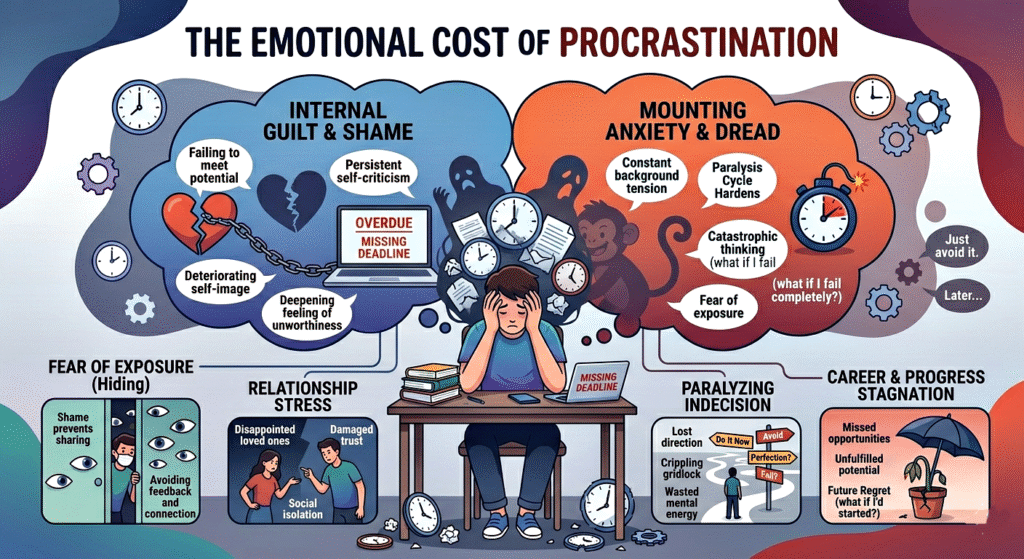
While procrastination offers temporary relief, it creates long-term emotional damage.
People who procrastinate often experience:
- Stress
- Guilt
- Anxiety
- Low self-esteem
- Loss of confidence
This creates a painful cycle:
- You avoid the task
- You feel temporary relief
- Deadlines get closer
- Anxiety increases
- You feel guilty
- You avoid the task even more
Over time, procrastination can make people feel trapped and incapable, even when they are highly intelligent or talented.
Key Point:
Procrastination reduces self-trust because you repeatedly break promises to yourself.
6. The 5-Minute Rule: Start Before You Feel Ready
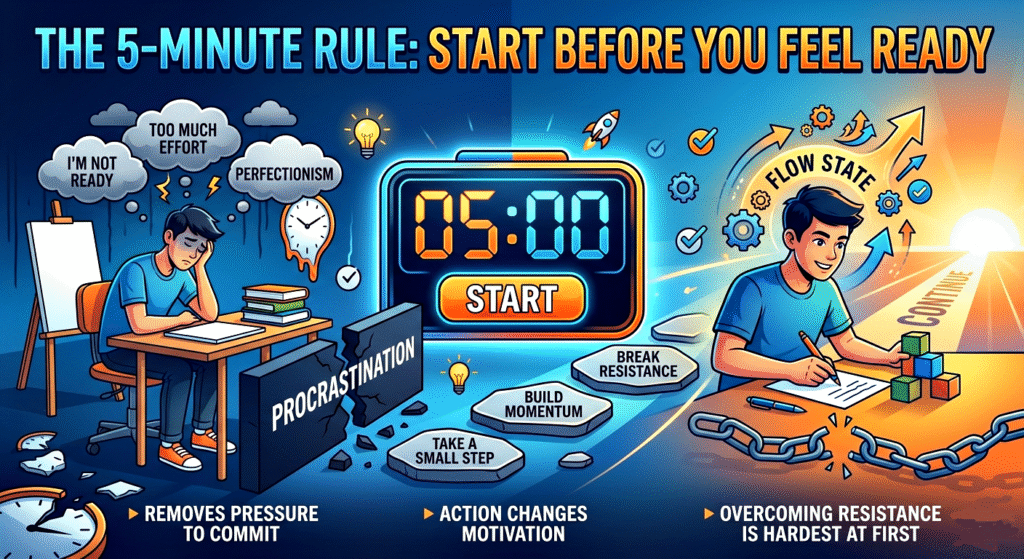
One of the most effective ways to beat procrastination is the 5-minute rule.
The idea is simple:
Commit to working on a task for just five minutes.
Why does this work?
Because starting is usually the hardest part.
When you tell yourself:
- “I’ll study for five minutes”
- “I’ll clean for five minutes”
- “I’ll write for five minutes”
the task feels less overwhelming.
Once you begin, momentum often carries you forward.
Key Point:
Action creates motivation—not the other way around.
Most people wait to feel motivated before starting. In reality, motivation usually appears after taking action.
7. Habit Stacking: Make Productivity Automatic
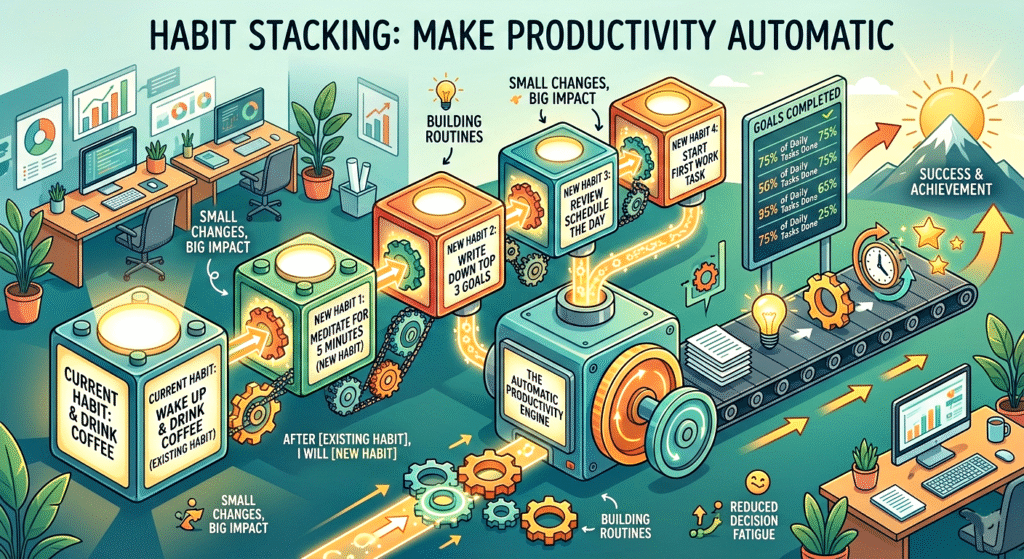
Another powerful strategy is habit stacking.
Habit stacking means attaching a new habit to an existing one.
For example:
- After brushing your teeth → read 5 pages
- After morning coffee → plan your day
- After dinner → study for 20 minutes
This works because the brain already recognizes the existing habit. Adding a new behavior becomes easier and more automatic.
Key Point:
The easier a habit is to repeat, the more likely it becomes permanent.
Small, consistent actions are more effective than occasional bursts of motivation.
8. Environment Design: Make Good Choices Easier
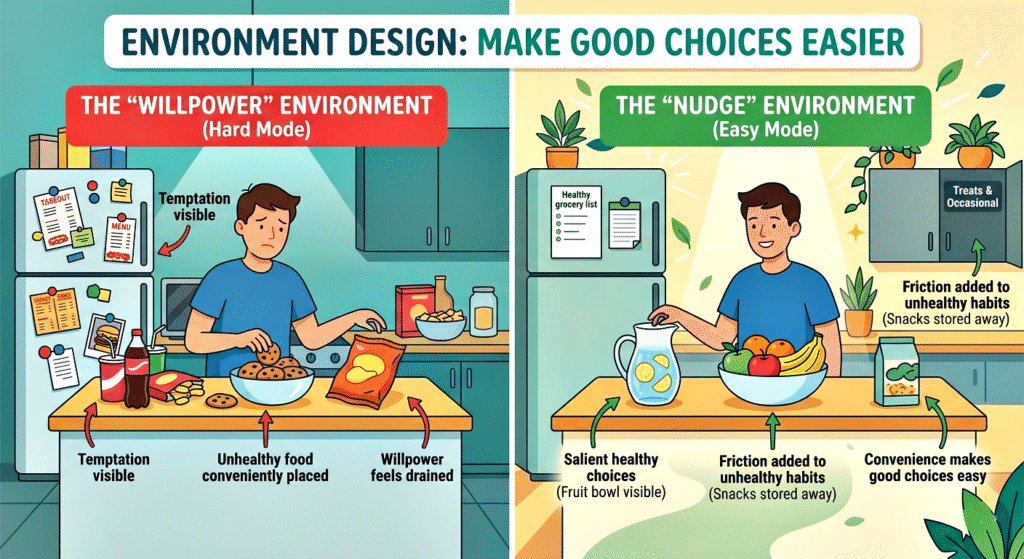
Your environment strongly influences your behavior.
Many people rely only on willpower, but environment matters more than motivation.
For example:
- If your phone is beside you, distraction becomes easy
- If junk food is visible, unhealthy eating becomes tempting
- If your workspace is cluttered, focus becomes difficult
Changing your environment can reduce procrastination dramatically.
Practical examples:
- Keep your phone in another room while working
- Use website blockers during study time
- Prepare your workspace before starting
- Keep healthy habits visible and accessible
Key Point:
Discipline becomes easier when your environment supports your goals.
9. Real-Life Examples Everyone Can Relate To
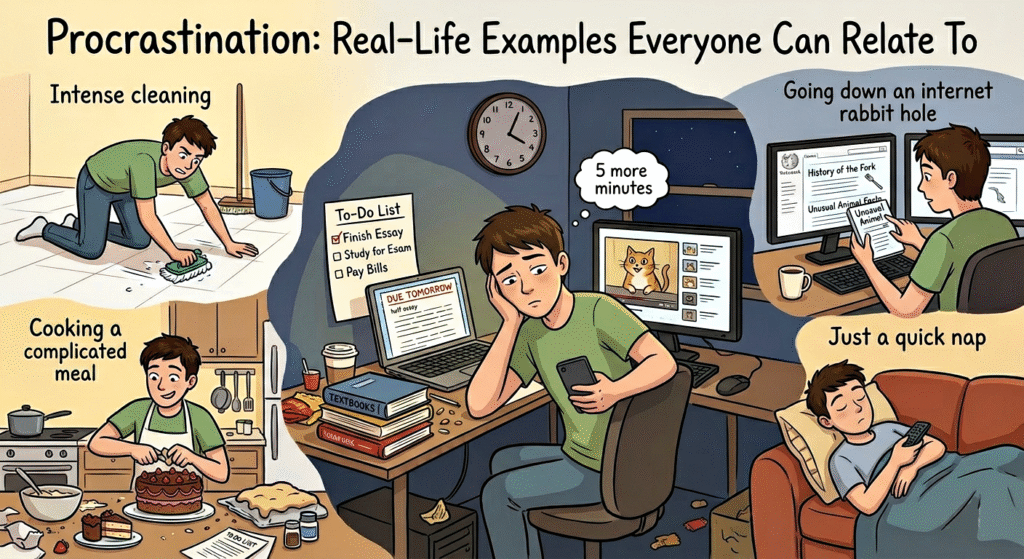
Procrastination affects people in everyday life:
The Student
A student delays studying because the subject feels difficult. Instead of starting, they watch videos online. As exams get closer, stress increases.
The Fitness Goal
Someone wants to get healthier but delays exercise daily because resting feels easier in the moment.
The Creative Person
A writer or artist delays publishing work because they fear criticism or rejection.
The Professional
An employee postpones an important project because they fear making mistakes.
In every case, procrastination is not caused by laziness—it is caused by emotional discomfort.
10. How to Beat Procrastination for Good
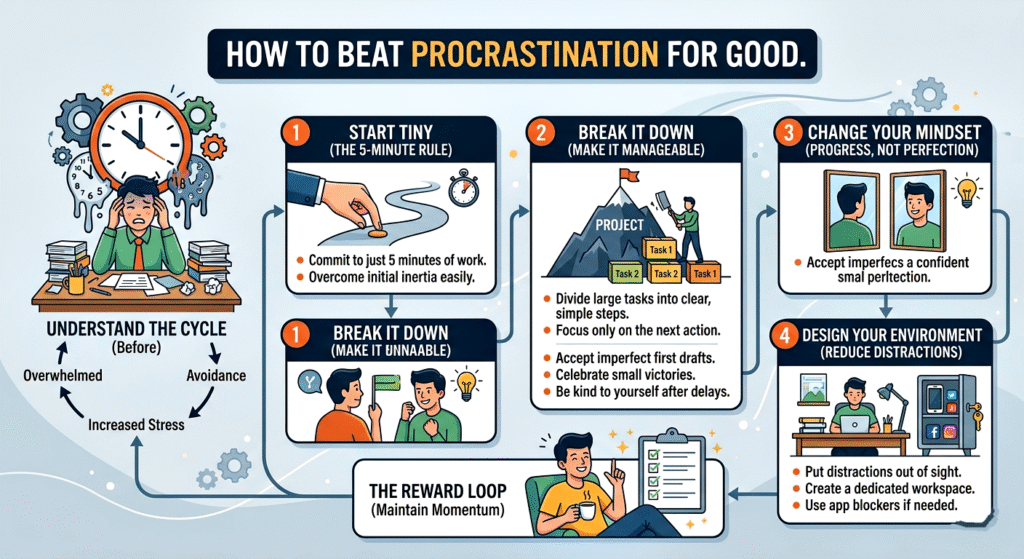
Overcoming procrastination requires changing both mindset and behavior.
Here are practical long-term strategies:
i. Break Tasks Into Small Steps
Large tasks feel overwhelming. Smaller tasks feel manageable.
Instead of:
- “Write the entire report”
Try:
- “Write the introduction”
ii. Focus on Progress, Not Perfection
Done is better than perfect.
iii. Build Consistent Routines
Routines reduce decision fatigue and make action automatic.
iv. Accept Discomfort
Growth often feels uncomfortable. Learn to work despite discomfort instead of waiting for perfect conditions.
v. Celebrate Small Wins
Every completed task builds momentum and confidence.
Conclusion: Procrastination Is Emotional, Not Personal
Procrastination does not mean you are lazy, weak, or incapable. It means your brain is trying to avoid discomfort.
The good news is that procrastination can be overcome.
By understanding the psychology behind fear, perfectionism, and instant gratification, you can stop fighting yourself and start building systems that support action.
Remember:
- You do not need to feel motivated to begin
- Small actions create momentum
- Progress matters more than perfection
The most important step is not doing everything perfectly—it is simply starting.
Because once you start, you are already ahead of the version of yourself that kept waiting for “the right time.”