
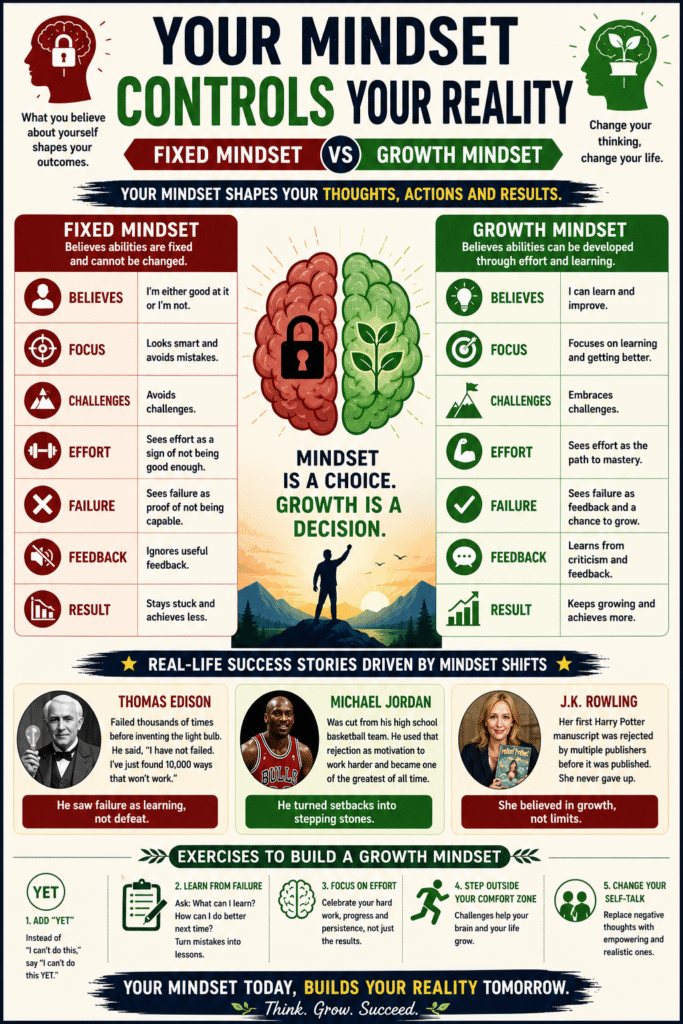
The Power of Mindset: Why Growth Thinking Leads to Success
The majority of the external factors in your life are less important than what you believe about yourself. Your mindset silently influences your decisions, actions, and, ultimately, outcomes—the way you interpret your capabilities, failures, and potential. Not because of their talent, but rather because of the way they think, two people can face the same situation and come away with completely different outcomes.
This idea is at the core of one of the most influential concepts in psychology: the difference between a fixed mindset and a growth mindset. Understanding this difference can transform how you approach challenges, handle failure, and pursue success.
1. Fixed Mindset vs Growth Mindset: The Fundamental Difference
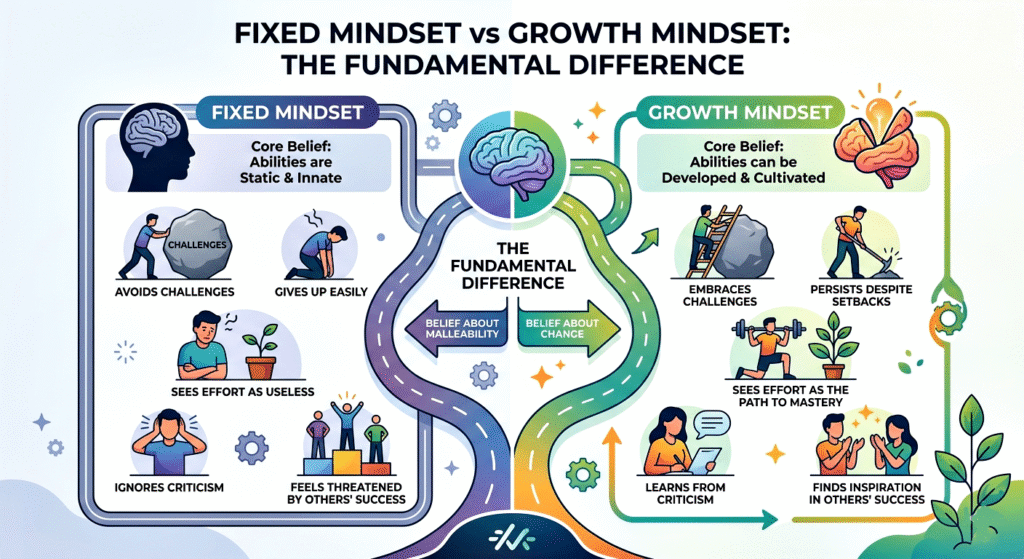
At its core, mindset is about what you believe regarding your abilities.
A fixed mindset assumes:
- Intelligence and talent are static
- You are either “good” or “bad” at something
- Effort is unnecessary if you are truly talented
A growth mindset, on the other hand, believes:
- Abilities can be developed with effort
- Skills improve through learning and practice
- Challenges are opportunities to grow
For example, a person with a fixed mindset might say:
“I’m not good at math, so there’s no point trying.”
While someone with a growth mindset would say:
“I’m not good at math yet, but I can improve with practice.”
This small shift in language reflects a massive difference in thinking—and outcomes.
2. How Your Mindset Shapes Your Reality
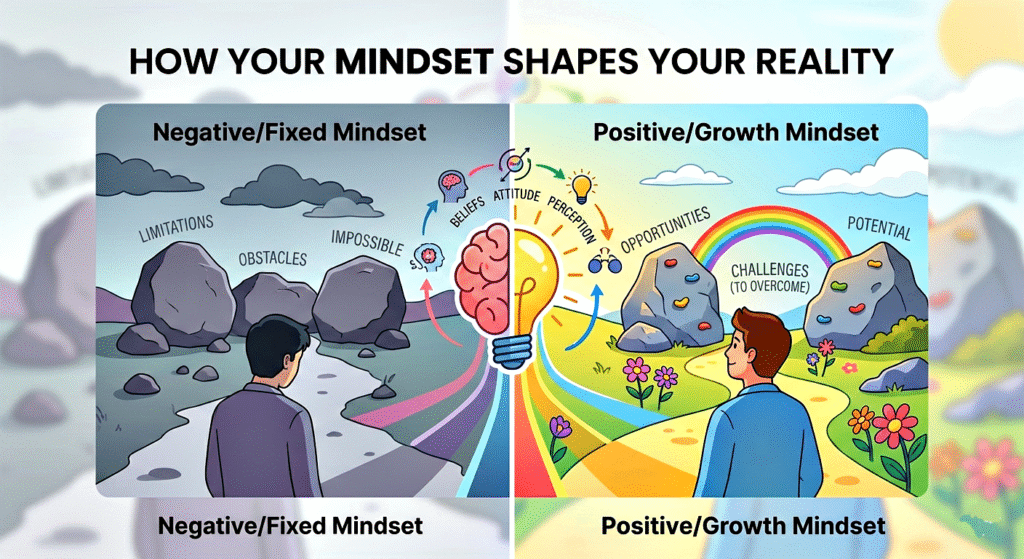
Human behavior is deeply influenced by internal beliefs. Your mindset affects:
- Decisions you make
- Risks you take (or avoid)
- Effort you invest
- How long you persist
If you believe your abilities are fixed, you are more likely to:
- Avoid challenges
- Give up quickly
- Fear judgment
But if you believe you can grow, you are more likely to:
- Try new things
- Embrace difficulty
- Stay consistent
Over time, these behaviors create different realities.
A student who believes they can improve studies more, practices more, and eventually performs better. Meanwhile, someone who believes they cannot improve may not even try.
Your mindset doesn’t just reflect your reality—it creates it.
3. How Failure Is Interpreted Differently
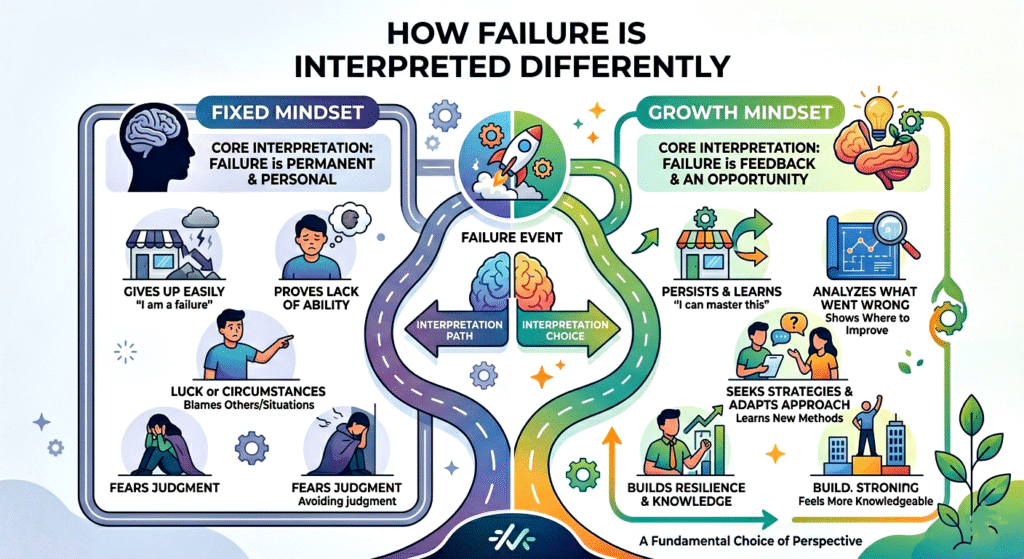
Failure is one of the biggest tests of mindset.
A fixed mindset sees failure as:
- Proof of lack of ability
- A threat to self-worth
- Something to avoid
This leads to thoughts like:
- “I failed, so I’m not good enough.”
- “People will judge me.”
As a result, such individuals often stop trying.
A growth mindset sees failure as:
- Feedback
- A learning opportunity
- A necessary part of improvement
This leads to thoughts like:
- “What can I learn from this?”
- “How can I do better next time?”
Instead of stopping, they adjust and continue.
This difference is critical. Success is rarely achieved without failure. Those who learn from failure move forward; those who fear it stay stuck.
4. Real-Life Success Stories Driven by Mindset Shifts
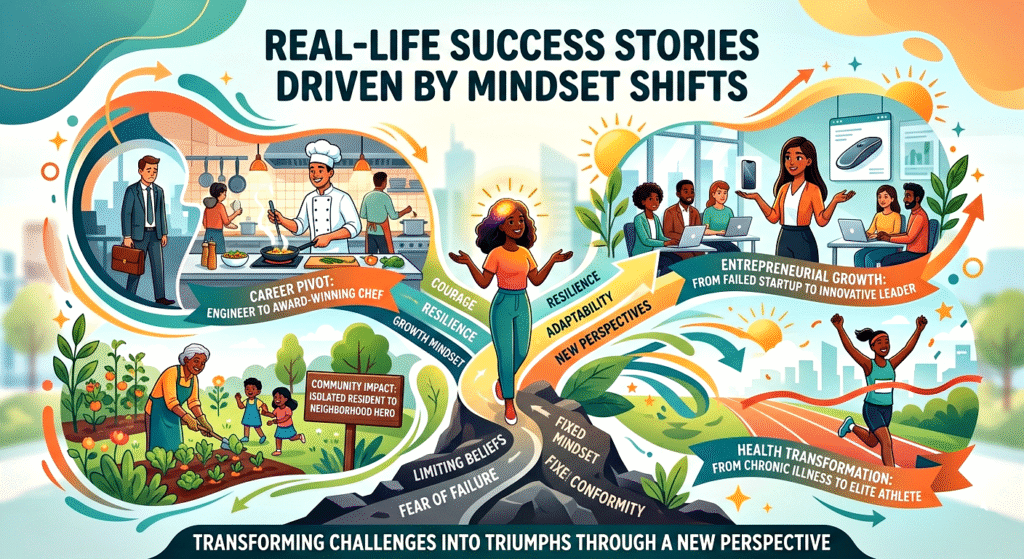
Many successful individuals didn’t start with extraordinary talent—they developed it over time through persistence and a growth mindset.
- Thomas Edison failed thousands of times before inventing the light bulb. He famously reframed failure as learning, saying he found many ways that didn’t work.
- Michael Jordan was cut from his high school basketball team. Instead of giving up, he used that setback as motivation to improve and became one of the greatest athletes in history.
- J.K. Rowling faced multiple rejections before publishing her first book. Her belief in growth and persistence changed her life completely.
These stories highlight a common pattern: success wasn’t immediate. It was built through resilience, learning, and belief in improvement.
5. Why People Get Stuck in a Fixed Mindset

If growth mindset is so powerful, why doesn’t everyone adopt it?
The answer lies in human behavior and conditioning.
Many people grow up hearing labels like:
- “You’re so smart”
- “You’re not good at this”
These labels create identity-based beliefs. Over time, people start avoiding situations where they might fail, because failure threatens their identity.
Additionally:
- Fear of judgment discourages risk-taking
- Comfort zones feel safe
- Society often rewards results, not effort
All of this reinforces a fixed mindset.
6. Exercises to Reframe Negative Thinking
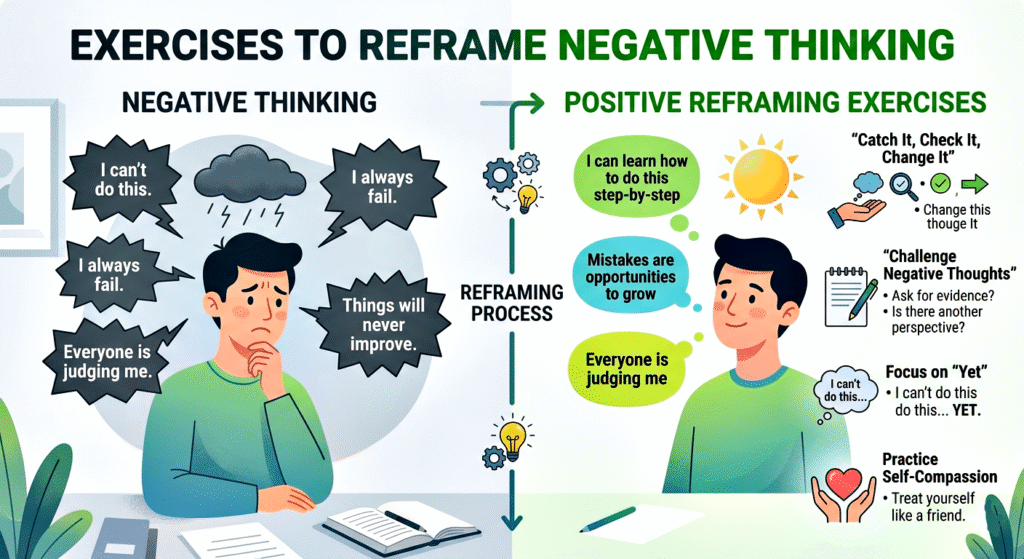
The good news is that mindset is not fixed—it can be changed.
Here are practical exercises to shift toward a growth mindset:
i. Add “Yet” to Your Thoughts
Instead of saying:
- “I can’t do this”
Say: - “I can’t do this yet”
This simple word opens the door to improvement.
ii. Reframe Failure as Feedback
After any setback, ask:
- What went wrong?
- What can I learn?
- What will I do differently next time?
This turns failure into a tool for growth.
iii. Focus on Effort, Not Just Results
Celebrate:
- Showing up
- Practicing
- Trying
Effort is within your control, results are not always.
iv. Challenge Your Comfort Zone
Do one thing daily that feels slightly uncomfortable:
- Speak up in a meeting
- Try a new skill
- Take on a difficult task
Growth happens outside comfort.
v. Change Your Self-Talk
Your inner voice matters.
Replace:
- “I’m not good enough”
With: - “I’m improving step by step”
Over time, this rewires your thinking.
7. The Long-Term Impact of a Growth Mindset
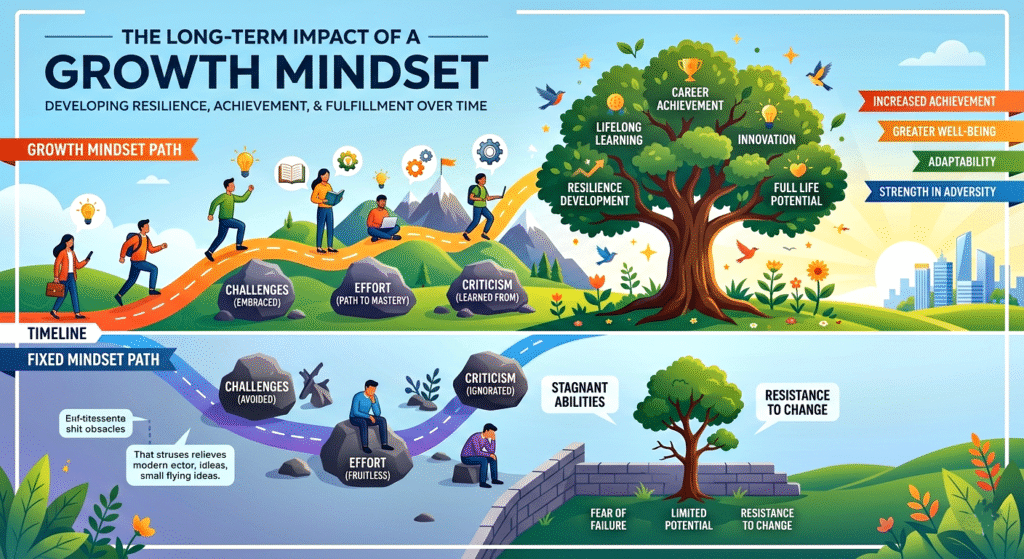
A growth mindset doesn’t just improve performance—it transforms your entire approach to life.
You become:
- More resilient
- More adaptable
- More confident
- More willing to take risks
Instead of being limited by your current abilities, you focus on your potential.
This creates a powerful cycle:
- You try → You learn → You improve → You succeed
Conclusion: Your Mindset Is Your Greatest Advantage
Your reality is not just shaped by your circumstances, but by how you interpret them.
A fixed mindset keeps you stuck, afraid of failure, and limited by self-doubt. A growth mindset pushes you forward, helping you learn, adapt, and improve continuously.
The most important shift you can make is this:
Stop asking, “Am I good enough?”
Start asking, “How can I get better?”
Because in the end, your success is not determined by where you start—but by how you choose to grow.