
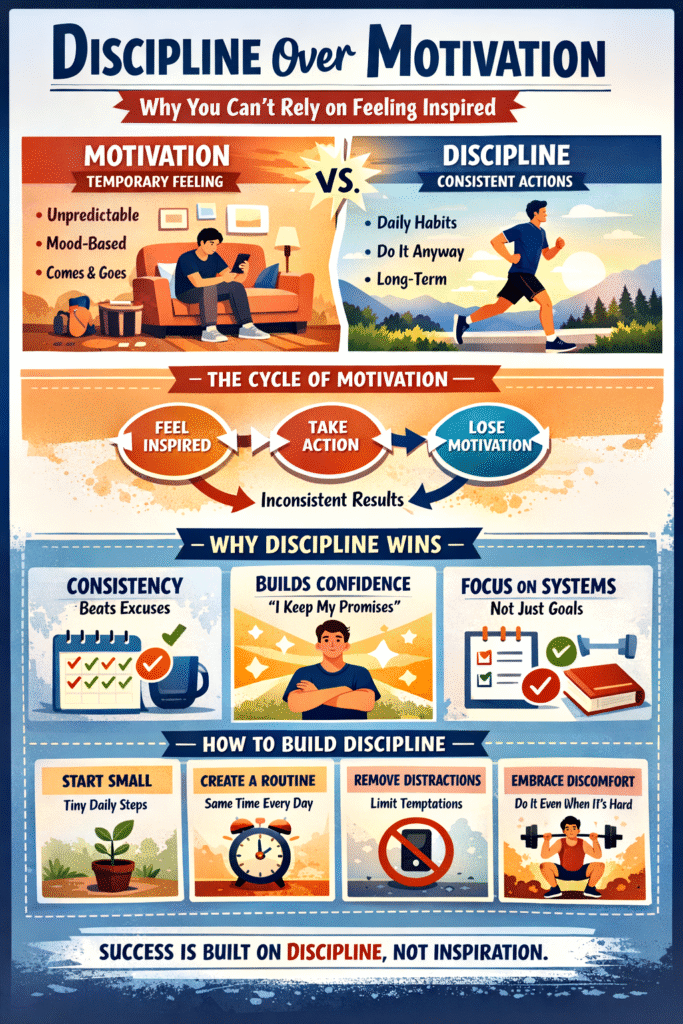
Discipline Over Motivation: Why You Can’t Rely on Feeling Inspired
In today’s fast-paced world, motivation is often glorified as the key to success. Social media is filled with inspirational quotes, powerful speeches, and success stories that seem to suggest one thing: you just need to feel motivated enough. But if you observe human behaviour closely, you’ll realise something important—motivation is unreliable. It comes and goes, fluctuates with mood, energy, and circumstances. Discipline, on the other hand, is what truly separates those who succeed from those who struggle.
This article explores why discipline is more powerful than motivation, how human behaviour supports this idea, and how you can build discipline to achieve long-term success.
1. The Nature of Motivation: Temporary and Emotion-Driven
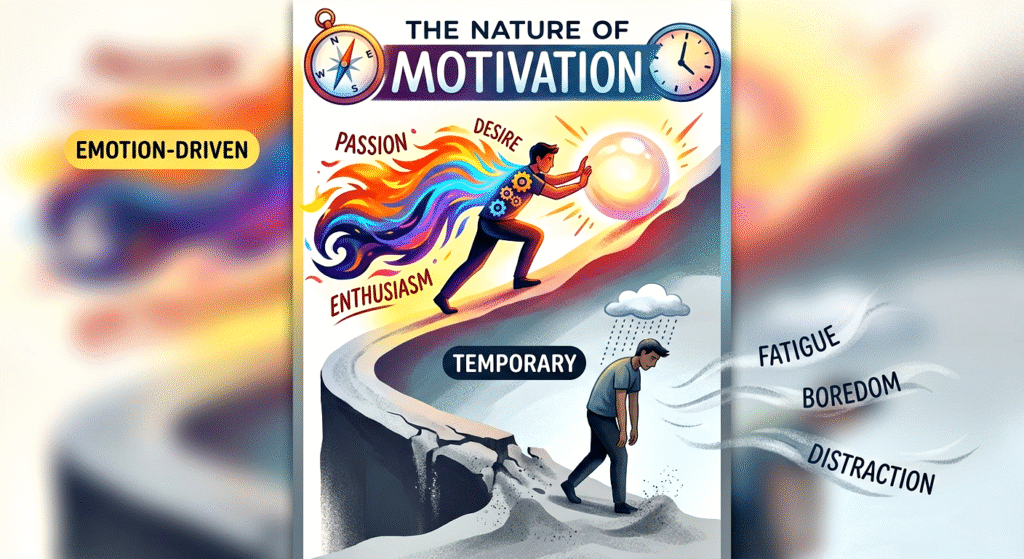
Motivation is an emotional state. It often arises from excitement, inspiration, or urgency. For example, you might feel highly motivated after watching a powerful video or setting a new goal. In that moment, everything feels possible.
However, motivation has a major flaw—it is temporary.
Human emotions are not constant. They are influenced by:
- Sleep quality
- Stress levels
- Environment
- External events
- Mental health
One day you feel energized and ready to conquer your goals. The next day, you feel tired, distracted, or overwhelmed. If your actions depend solely on motivation, your progress will be inconsistent.
This explains why many people start strong but fail to continue. A person might begin a fitness routine with great enthusiasm but quit after a few weeks—not because they lack ability, but because their motivation faded.
2. Discipline: The System That Works Without Feelings
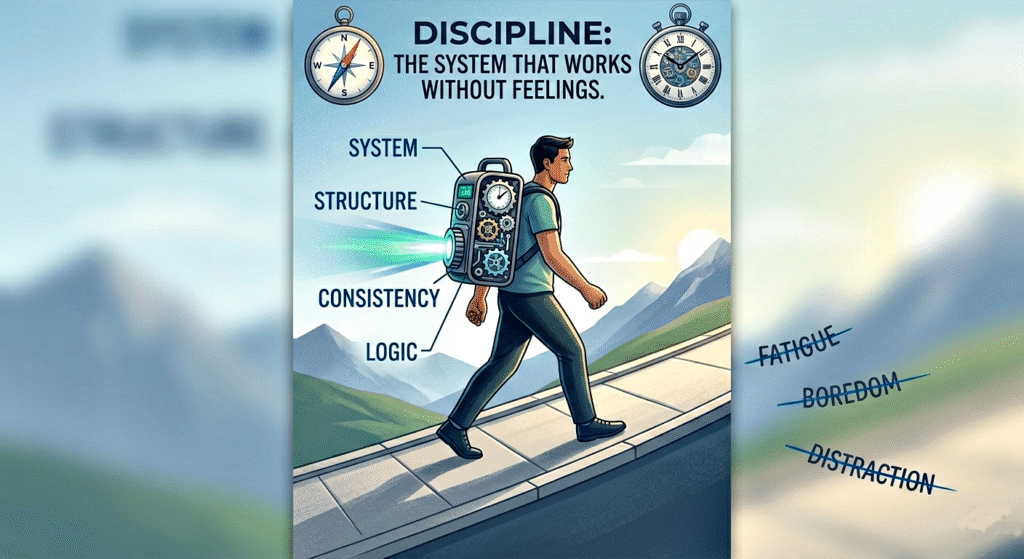
Discipline is fundamentally different from motivation. While motivation is emotion-based, discipline is behavior-based.
Discipline means:
- Taking action regardless of how you feel
- Following a routine even when you don’t feel like it
- Staying consistent in the absence of excitement
From a psychological perspective, discipline reduces the need for decision-making. Instead of asking, “Do I feel like doing this today?”, a disciplined person follows a pre-decided plan.
For example:
- A motivated person exercises when they feel inspired
- A disciplined person exercises because it’s part of their routine
This shift from emotional decision-making to structured behaviour is what creates consistency.
3. Why Humans Naturally Resist Discipline
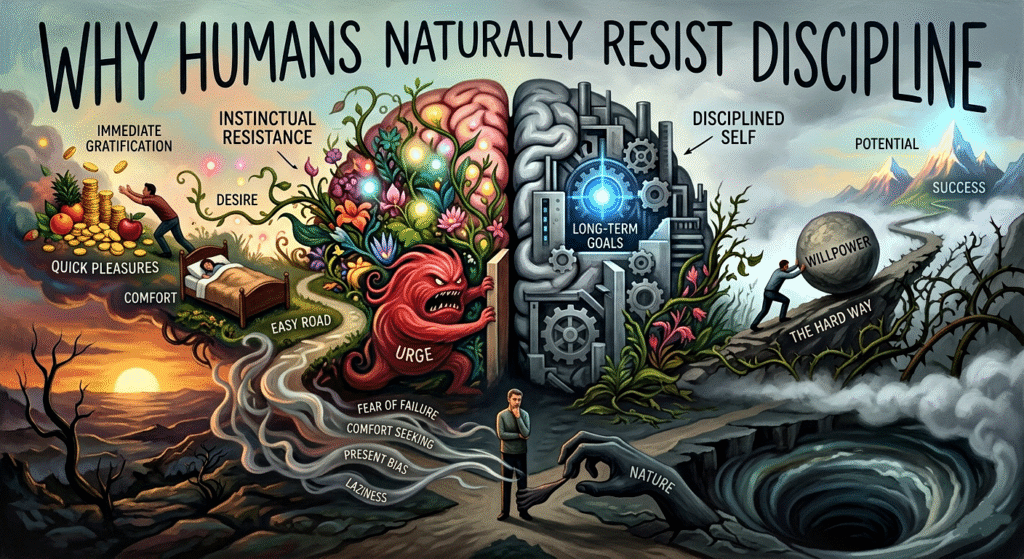
To understand why discipline is difficult, we need to look at human behaviour.
The human brain is wired for survival, not success. It naturally prefers:
- Comfort over discomfort
- Immediate rewards over delayed gratification
- Familiar habits over change
This is why:
- You feel like scrolling your phone instead of working
- You choose junk food over healthy meals
- You delay important tasks
These behaviours are not signs of weakness—they are natural tendencies. The brain seeks to conserve energy and avoid effort.
Discipline, therefore, is not natural. It is a trained behaviour.
It requires you to override your brain’s default preferences and choose long-term benefits over short-term comfort.
4. The Problem with Relying on Motivation Alone
When people rely only on motivation, they fall into a cycle:
- They feel inspired
- They take action
- Motivation fades
- They stop
- They feel guilty
- They wait for motivation again
This cycle leads to inconsistency and frustration.
For example, a student may study intensely for a few days when motivated but then stop completely. Over time, this pattern leads to poor results, not because of lack of intelligence, but because of lack of consistency.
Discipline breaks this cycle.
Instead of waiting for motivation, disciplined individuals act regardless of their emotional state. This creates steady progress over time.
5. Discipline Builds Identity and Confidence
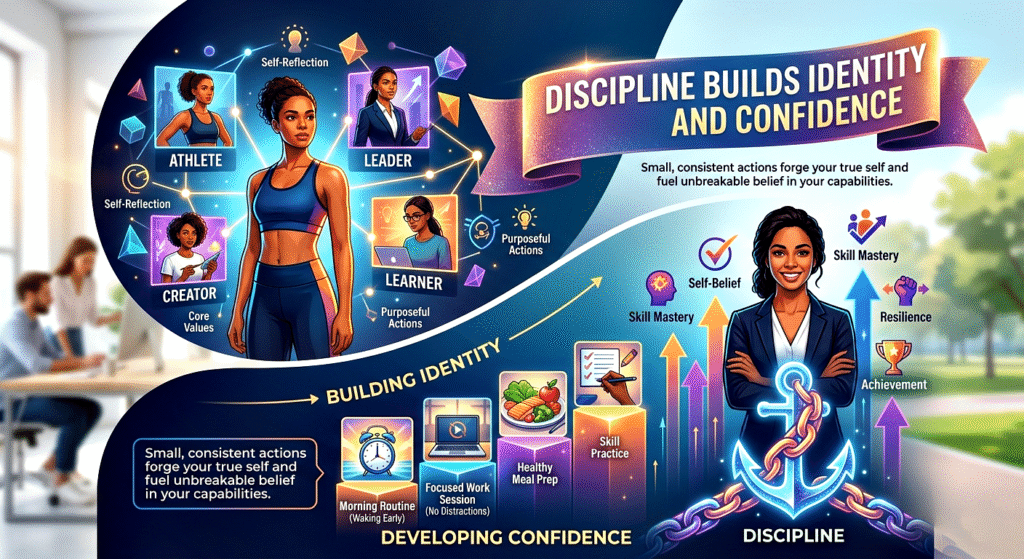
One of the most powerful effects of discipline is how it shapes your identity.
Every time you follow through on a commitment, you send a message to yourself:
- “I am someone who keeps promises.”
- “I am consistent.”
- “I can be trusted.”
This builds self-confidence.
In contrast, relying on motivation often leads to broken commitments. When you repeatedly fail to follow through, your self-belief weakens.
Discipline strengthens identity because it is rooted in action, not intention.
Over time, disciplined behaviour becomes part of who you are, not just something you do occasionally.
6. Systems Over Goals: The Discipline Mindset
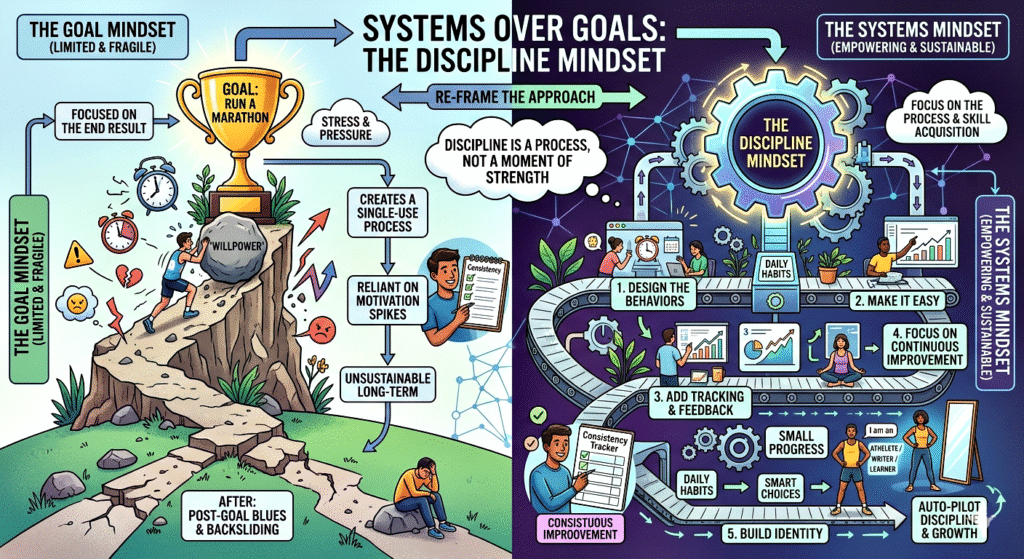
Motivated people focus on goals. Disciplined people focus on systems.
A goal is the result you want:
- Lose 10 kg
- Get good grades
- Build a successful career
A system is the process you follow daily:
- Exercising every morning
- Studying for 2 hours daily
- Working consistently on your skills
Goals are important for direction, but systems are what produce results.
Human behaviour supports this idea—small, repeated actions are more effective than occasional bursts of effort.
Discipline is what allows you to stick to systems even when motivation disappears.
7. How to Build Discipline in Real Life
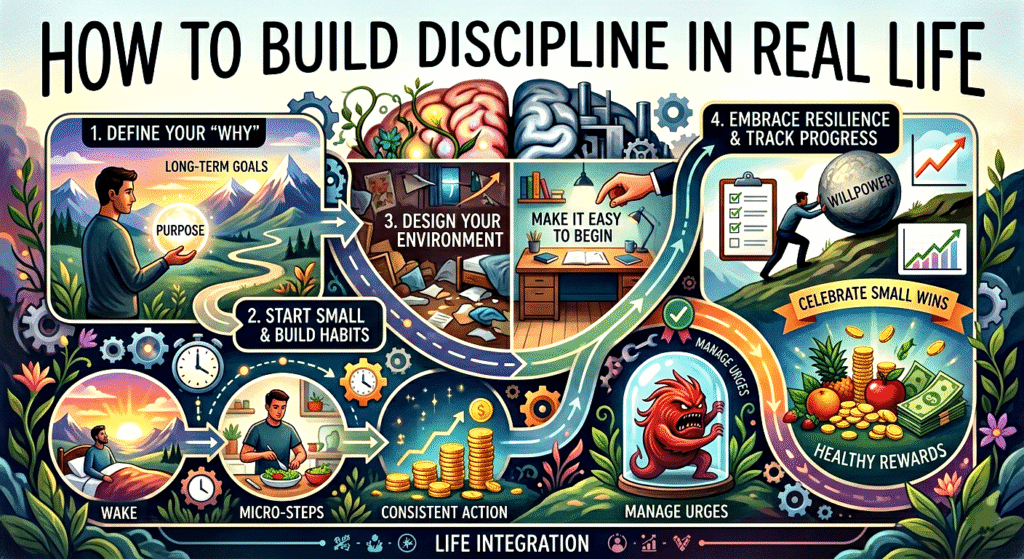
Discipline is not something you are born with. It is something you develop.
Here are practical ways to build it:
i. Start Small
Don’t aim for drastic changes. Begin with simple, manageable actions.
- 10 minutes of exercise
- 20 minutes of study
Small wins build momentum.
ii. Create a Routine
Fix a specific time for important tasks. When something becomes part of your routine, it requires less mental effort.
iii. Remove Distractions
Your environment shapes your behaviour.
- Keep your phone away while working
- Create a clean workspace
iv. Focus on Consistency, Not Perfection
You don’t need to be perfect. You just need to show up regularly.
v. Accept Discomfort
Discipline often feels uncomfortable. Instead of avoiding it, learn to accept it as part of growth.
8. What Successful People Do Differently
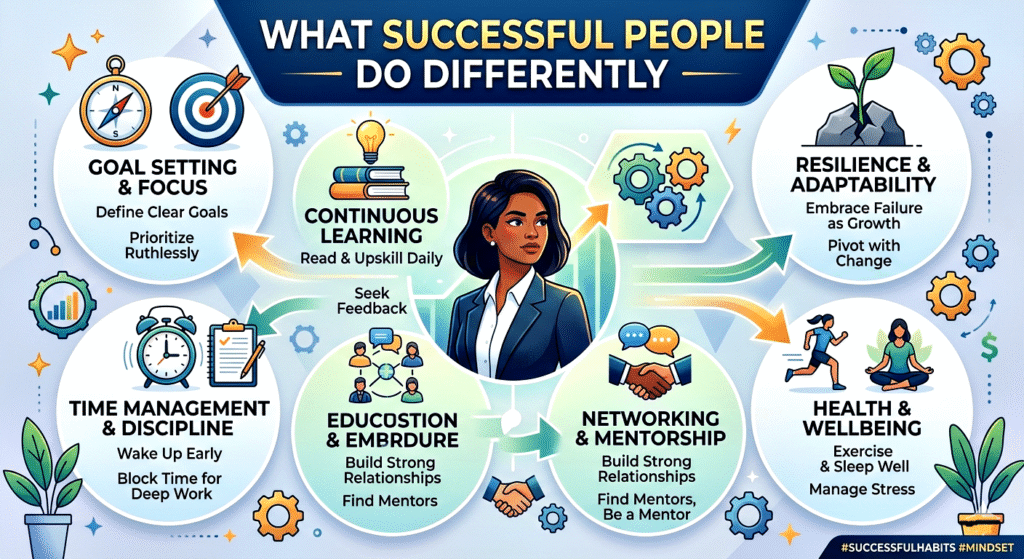
Successful individuals are not always more talented or more motivated. What sets them apart is their ability to stay consistent.
They:
- Work even when they don’t feel like it
- Stick to routines
- Prioritise long-term goals over short-term comfort
They understand that success is not built in moments of inspiration, but in daily habits.
Conclusion: Choose Discipline Over Motivation
Motivation can start your journey, but it cannot sustain it. It is unpredictable and short-lived.
Discipline, however, is reliable. It allows you to act even when you don’t feel inspired. It creates consistency, builds confidence, and leads to long-term success.
If you truly want to achieve your goals, stop waiting to feel motivated.
Instead, build discipline.
Because in the end, success is not about what you feel—it’s about what you do, consistently, every single day.