
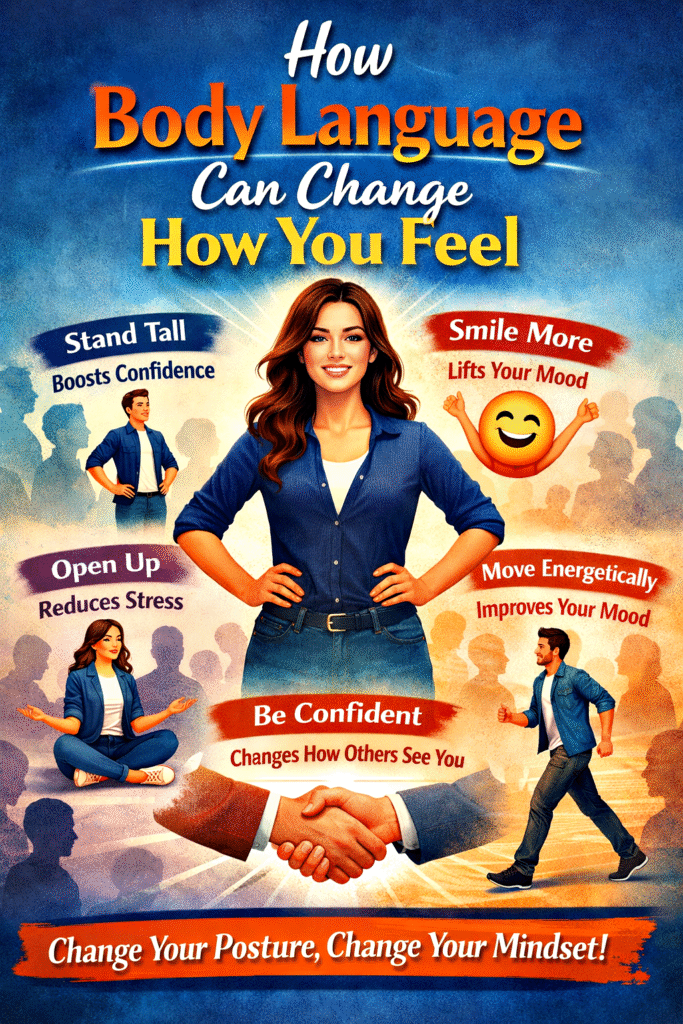
The Powerful Link Between Body Language and Your Emotions
Many people think that our emotions control our body language. For example, when we feel happy, we smile, when we feel sad, we look down, and when we feel confident, we stand tall. While this is true, there is another interesting truth: our body language can also influence how we feel inside.
In simple words, the way you sit, stand, walk, and even move your face can change your mood, confidence, and emotions. Scientists who study human behaviour in the field of Psychology have found that the mind and body are deeply connected. What your body does can affect what your mind feels.
Below are five simple ways your body language can change your feelings.
1. Standing Tall Can Make You Feel More Confident
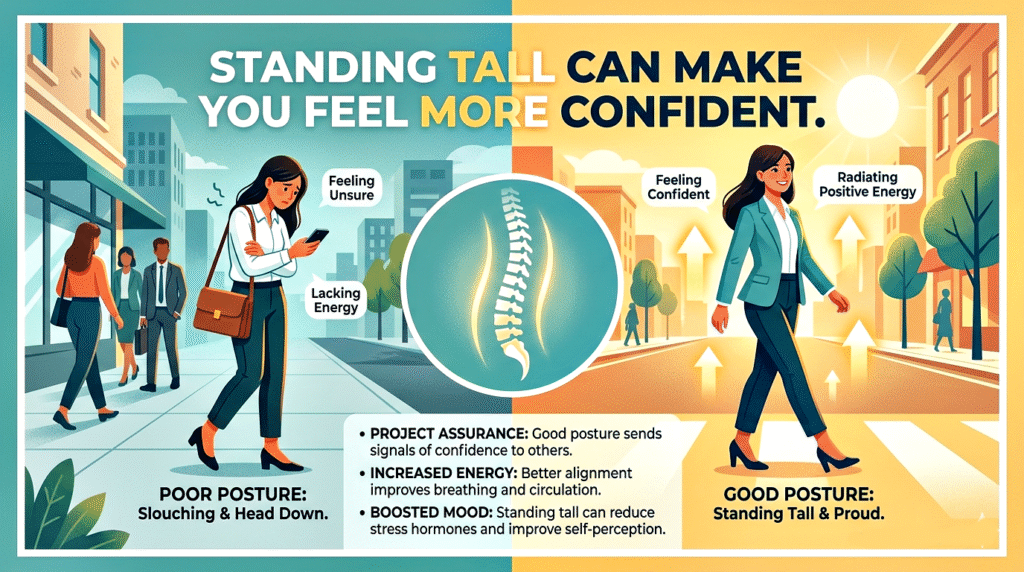
Our self-esteem is significantly influenced by our posture. Most of the time, a person’s body reveals how nervous or embarrassed they are. They may slouch their shoulders, look down, and try to make themselves smaller. This posture signals to the brain that the person is weak or uncomfortable.
But when you stand straight, keep your shoulders back, and lift your head, something interesting happens. Your brain starts seeing this position as a sign of strength and confidence.
Even if you do not feel confident at first, standing tall can slowly create that feeling.
Think about a person giving a speech. If they stand with their shoulders straight and look at the audience, they start to feel stronger and more in control. On the other hand, if they keep their head down and their shoulders bent forward, they may start feeling more nervous.
Your body is constantly sending signals to your brain. When your posture is strong and open, your brain receives the message that you are capable and safe.
That is why many coaches and trainers advise people to “act confident until you feel confident.” Changing your posture can actually help your mind catch up with that feeling.
2. Smiling Can Actually Improve Your Mood
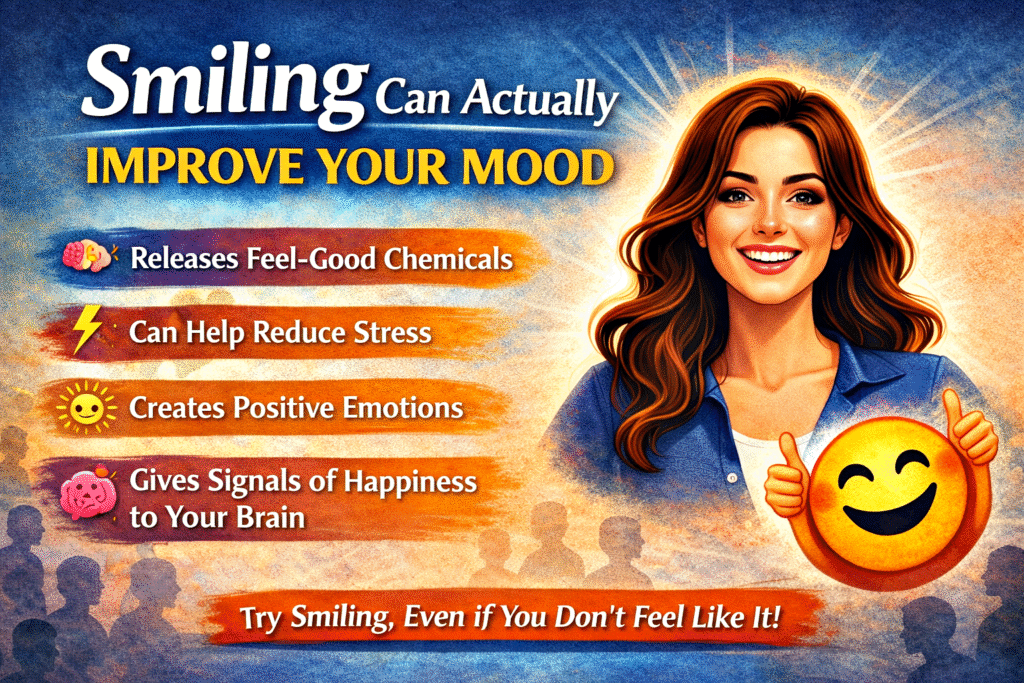
The majority of people believe that we smile out of joy. Smiling, on the other hand, can also make us feel happy, which is a surprising fact.
This phenomenon is known as the facial feedback effect by psychologists. This indicates that your facial muscles communicate with your brain about how you’re feeling.
Your brain receives a signal that something positive is taking place whenever you smile, even if it is a small or deliberate smile. Your brain may release chemicals as a result that help you feel happier and more relaxed.
However, your brain may interpret facial expressions such as frowning, brow furrowing, or tightness as signs of stress or negativity.
This is why people sometimes feel better when they simply relax their face and smile a little, even during a stressful moment.
For example, imagine you are having a difficult day at work. If you sit with a tense face and tight jaw, your stress may increase. But if you relax your face and give a gentle smile, your mood may slowly improve.
Your facial expression is not only a result of your emotions—it can also create them.
3. Open Body Language Can Reduce Stress

Another important part of body language is whether your body looks open or closed.
Closed body language includes actions like:
- Crossing your arms tightly
- Looking down
- Hunching your shoulders
- Keeping your body small
These positions often appear when someone feels defensive, worried, or uncomfortable.
When you stay in these positions for a long time, your brain may think that you are in a stressful situation. This can increase feelings of anxiety.
Open body language is the opposite. It includes actions such as:
- Keeping your shoulders relaxed
- Letting your arms stay naturally at your sides
- Standing or sitting upright
- Maintaining comfortable eye contact
When your body is open, your brain receives signals that you are safe and relaxed.
For example, taking a deep breath while sitting upright with an open chest allows your lungs to expand more easily. This can calm your nervous system and reduce stress.
Many public speakers, athletes, and performers use open body language before important events because it helps them feel calmer and more confident.
Sometimes the body can lead the mind. By simply opening your posture, you can start to feel more relaxed.
4. The Way You Move Can Affect Your Emotions
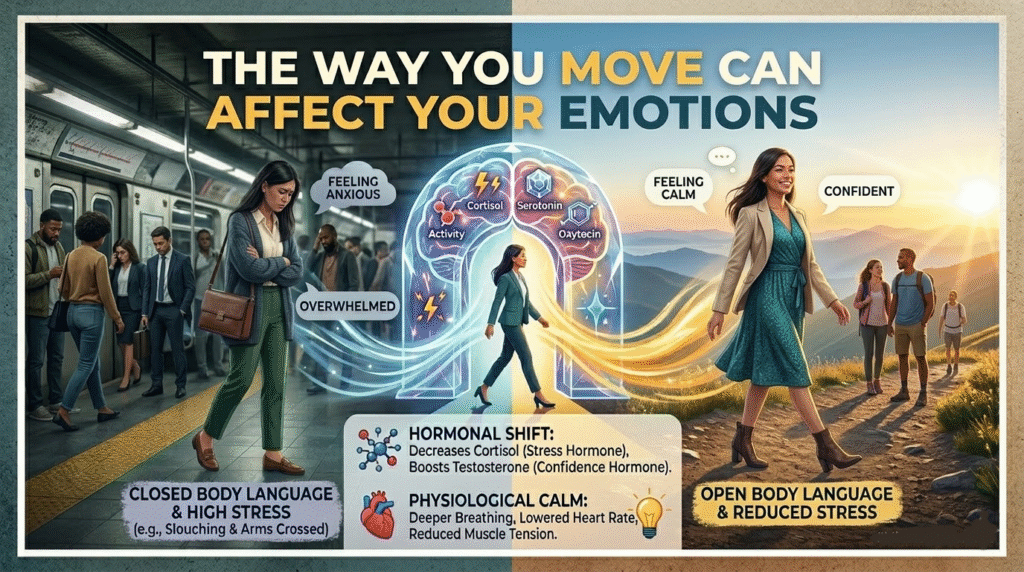
Body language is not only about how you stand or sit. The way you move also affects how you feel.
When people feel sad or discouraged, they often move slowly. Their steps may be heavy, their shoulders may drop, and their overall movement may look tired.
But when people move with energy, their mood often improves.
Studies in Psychology show that physical movement can influence emotional energy.
For example:
- Walking briskly can improve your mood.
- Stretching your body can release tension.
- Moving your arms while speaking can increase your confidence.
Even small changes can make a difference. If you walk with your head up and your shoulders relaxed, you may start to feel more positive and hopeful.
This is one reason exercise is often recommended for mental health. Movement helps break negative emotional patterns and gives the brain a new signal that life is active and energetic.
Actors often use this trick when they prepare for a role. If they want to play a confident character, they practice confident movements. After some time, those movements start affecting how they actually feel.
The body and mind constantly influence each other.
5. Your Body Language Affects How Others Treat You
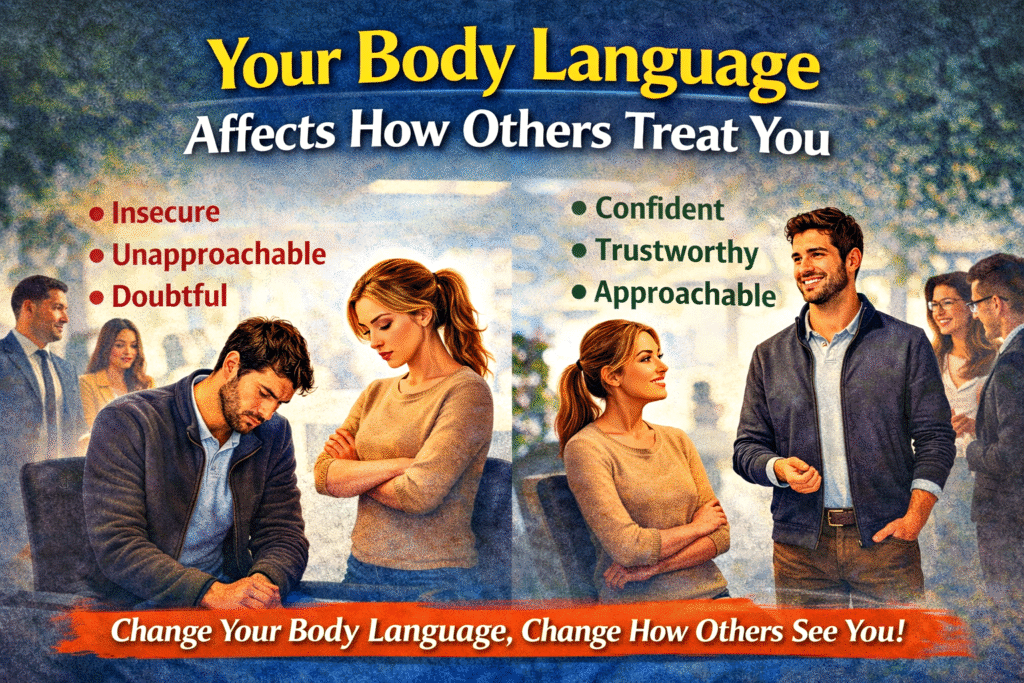
Body language does not only change how you feel—it also affects how other people react to you.
A large part of human communication happens without words. Experts in Psychology believe that facial expressions, posture, and gestures carry a lot of emotional meaning.
When you show confident body language, people may see you as:
- More capable
- More trustworthy
- More confident
- More approachable
Because of this, they may treat you with more respect and attention.
These positive reactions can improve how you feel about yourself.
For example, if a student sits upright in class, makes eye contact, and participates confidently, teachers are more likely to respond positively. That encouragement can make the student feel more confident and motivated.
The opposite can also happen. If someone constantly looks down, crosses their arms, and avoids eye contact, others may assume they are uninterested or unsure. This may reduce interaction and reinforce feelings of insecurity.
This creates a cycle: your body language influences other people, and their reactions influence your emotions.
Conclusion
The connection between the body and mind is very powerful. While emotions certainly affect our body language, the reverse is also true. The way we use our bodies can shape how we feel.
Standing tall can increase confidence. Smiling can improve mood. An open posture can reduce stress. Energetic movement can lift emotional energy. Confident body language can also change how people respond to us.
The best part is that these changes are simple and within our control. Sometimes, when we want to change our mood or feel stronger, we do not need to wait for emotions to change first. We can start by changing our posture, facial expression, or movement.
In many situations, the easiest way to improve how you feel is simply to adjust the way you carry yourself. Small physical changes can lead to big emotional improvements.