
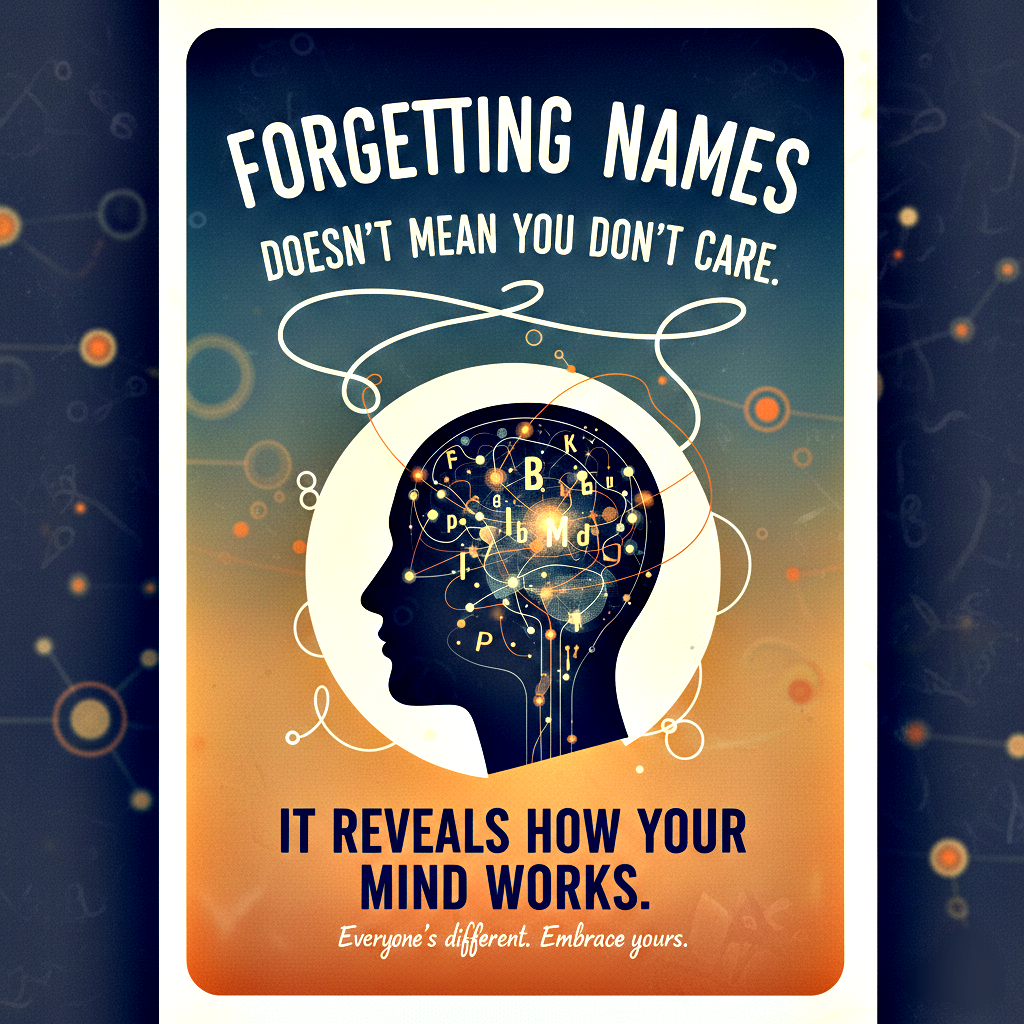
“If you forget people’s names shortly after meeting them, you probably display these 7 traits.”
1. Your Mind Is Often Preoccupied With Thoughts

One of the most common reasons people forget names quickly is mental preoccupation. When you meet someone new, remembering their name requires attention in the exact moment the introduction happens. But if your mind is already busy thinking about work, responsibilities, personal worries, or even what you should say next, the brain never properly records the name in memory.
This does not indicate carelessness or disrespect. In fact, highly thoughtful or analytical individuals often experience this more. Their brains constantly process ideas, possibilities, and concerns. Because of this internal activity, small details like names may slip away unless consciously reinforced.
Interestingly, psychology shows that attention is the gateway to memory. If attention is weak at the moment of introduction, memory formation becomes weak as well. So forgetting names may simply reveal that you are someone who:
- Thinks deeply
- Reflects constantly
- Carries many responsibilities mentally
Rather than a flaw, this trait often belongs to serious thinkers and planners.
2. You Focus More on Meaningful Connection Than Labels

Some people remember faces, emotions, and conversations better than names. This usually means they prioritise human connection over social formality.
Names are social identifiers, but meaningful people focus on:
- The person’s personality
- Their tone of voice
- Shared ideas or emotions
- The overall interaction
Because the brain gives priority to what feels emotionally significant, the name—being a neutral label—gets stored weakly or not at all.
This trait often appears in individuals who are:
- Empathetic
- Emotionally aware
- Relationship-oriented
Such people may forget a name but still remember:
- What the person was feeling
- What they talked about
- How the interaction made them feel
In real relationships, this depth matters far more than perfect name recall.
3. You Experience Mild Social Anxiety or Self-Consciousness

Forgetting names can sometimes signal subtle social tension. When meeting new people, the brain may shift into a mild self-protection mode, thinking:
- “What should I say?”
- “Do I look confident?”
- “Am I making a good impression?”
This inner monitoring consumes mental energy. As a result, the brain cannot properly encode the new name.
This doesn’t mean someone has severe anxiety. Often it simply shows:
- Sensitivity to social judgment
- Desire to be liked
- Care about first impressions
Paradoxically, people who care the most about others’ opinions are often the ones who forget names fastest—because they are too focused on behaving correctly.
4. Your Brain Is Wired for Big-Picture Thinking

Some individuals naturally think in patterns, ideas, and concepts rather than details. Psychologists sometimes describe this as abstract or big-picture cognition.
Such minds remember:
- Themes
- Insights
- Stories
- Emotional impressions
But struggle with:
- Names
- Dates
- Small factual details
This is common among:
- Creative thinkers
- Visionaries
- Philosophical personalities
- Strategic planners
Their memory favors meaning over mechanics. Forgetting names, in this sense, may simply reveal a brain tuned toward ideas rather than identifiers.
5. You Meet Many People or Process Too Much Information

Another practical explanation is cognitive overload. In modern life, we encounter:
- Dozens of new faces
- Endless conversations
- Constant digital information
The brain protects itself by filtering what seems least essential. Unfortunately, names often fall into the “low-priority” category unless repetition or emotional importance strengthens them.
This is especially true for:
- Busy professionals
- Leaders or managers
- Socially active individuals
- People exposed to many introductions daily
For them, forgetting names is less about memory weakness and more about information saturation.
6. You Live More in the Present Moment Than in Memory

Some people are deeply present-focused. During conversations, they immerse themselves fully in:
- Listening
- Observing expressions
- Responding authentically
Because their attention is on the current emotional experience, the technical step of memorizing a name may not occur.
Ironically, mindfulness—which is often praised—can sometimes reduce detail retention. The person is not thinking:
“Remember this name.”
They are thinking:
“Be here. Listen. Connect.”
This trait reflects:
- Genuine presence
- Authentic communication
- Emotional sincerity
So forgetting names may actually signal real engagement, not indifference.
7. Your Memory Relies on Association Rather Than Sound

Different brains store information in different ways. Some remember verbal sounds easily, while others depend on:
- Visual imagery
- Emotional context
- Repetition
- Meaningful association
If someone’s memory style is non-verbal, a name heard only once has little structure to attach to. Without association, it fades quickly.
However, the same person might perfectly remember:
- Where they met you
- What you discussed
- What you were wearing
- The emotion of the moment
This shows the memory system is not weak—just different.
Final Reflection
Forgetting people’s names shortly after meeting them is far more common—and far less negative—than society assumes. Instead of signalling rudeness or poor intelligence, it often reveals deeper psychological traits such as:
- A busy, thoughtful mind
- Emotional depth and empathy
- Mild social sensitivity
- Big-picture thinking
- Information overload from modern life
- Genuine presence in conversation
- A unique memory style based on association
In many cases, the very qualities that cause someone to forget names are the same qualities that make them kind, reflective, creative, and meaningful companions.
What truly matters in human relationships is not perfect recall of a label, but:
- Respect
- Attention
- Care
- Authentic connection
A person who forgets your name but remembers your story, feelings, and struggles may actually value you far more than someone who remembers the name but forgets the human being behind it.