
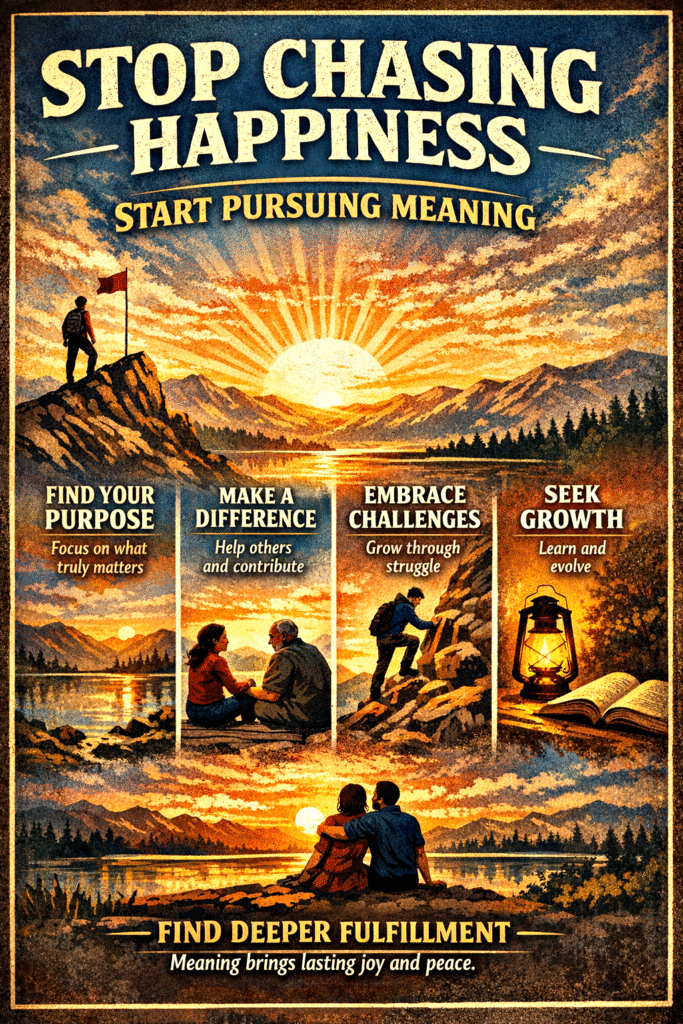
Life Improves When You Pursue Meaning Instead of Chasing Happiness
Many people spend years chasing happiness as if it were a destination waiting somewhere in the future. They imagine that once they earn more money, achieve success, find the perfect relationship, or remove all discomfort from their lives, happiness will finally arrive and stay forever. Yet real life rarely works this way. Happiness is often temporary, unpredictable, and dependent on circumstances that constantly change. In contrast, meaning offers something deeper, steadier, and more transformative. When a person stops obsessing over feeling happy all the time and instead begins pursuing meaning, life often becomes richer, calmer, and more fulfilling in lasting ways.
Below are five key reasons why life truly improves when you shift your focus from happiness to meaning.
1. Meaning Provides Stability, While Happiness Is Temporary
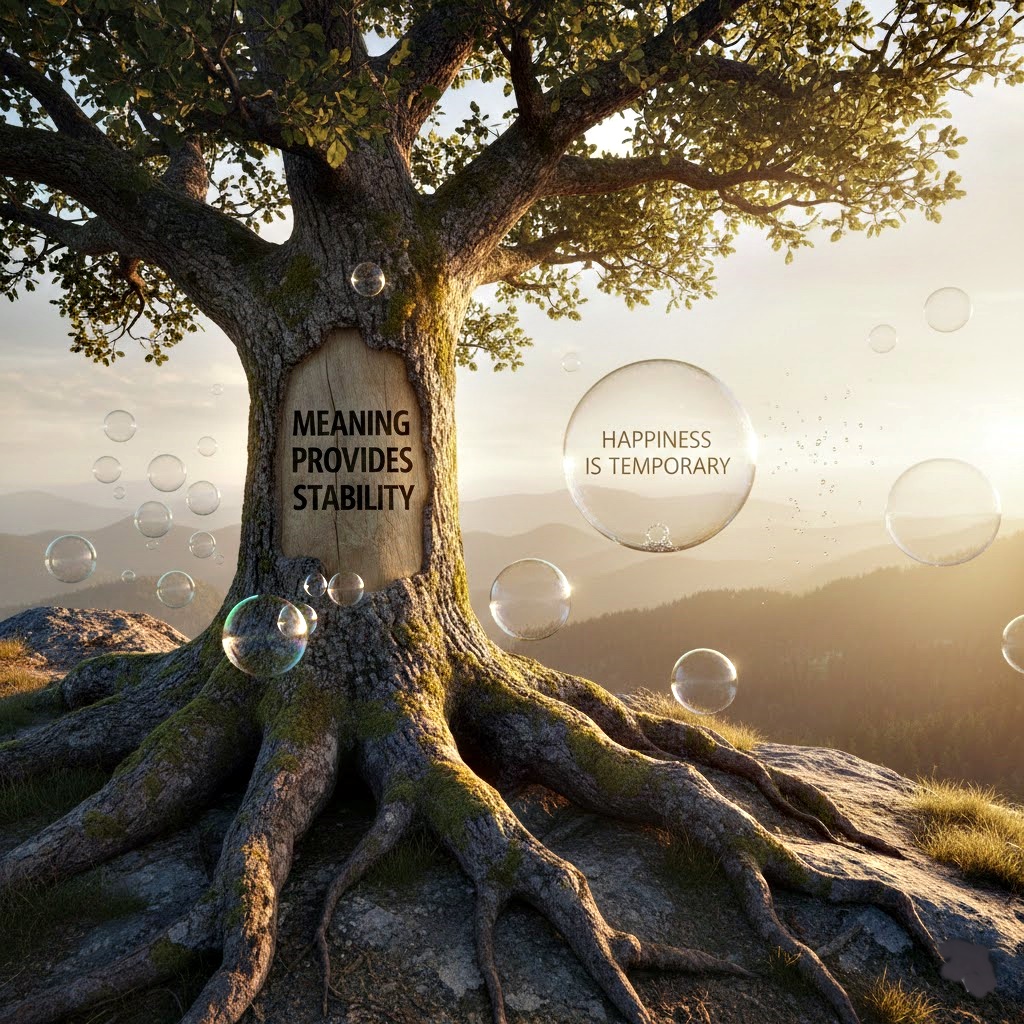
Happiness is naturally fleeting. A pleasant event, a compliment, a purchase, or a success can create a burst of joy, but the feeling fades quickly. Human psychology is wired for adaptation. What once felt exciting soon becomes normal, and the search for the next happy moment begins again. This endless cycle can quietly create frustration because the mind keeps expecting a permanent emotional high that never truly arrives.
Meaning works differently. Meaning is not a passing emotion; it is a sense that your life matters, that your actions have purpose, and that your efforts contribute to something beyond immediate pleasure. Even during difficult days, a meaningful life can still feel worthwhile. A parent caring for a child, a student working toward education, or a person helping others may feel tired or stressed, yet they still experience a quiet inner strength because their struggle has purpose.
When you pursue meaning, emotional ups and downs no longer control your sense of worth. You understand that sadness, effort, and uncertainty are natural parts of a meaningful journey rather than signs of failure. This realization creates emotional stability that the constant chase for happiness cannot provide.
2. Meaning Encourages Growth Through Difficulty

Chasing happiness often leads people to avoid discomfort. If the goal is to feel good all the time, then challenges, risks, and hard work appear undesirable. However, most personal growth happens precisely in those uncomfortable moments—when learning something new, facing fear, or continuing despite obstacles.
Meaning changes the relationship with difficulty. When actions are connected to purpose, hardship becomes more bearable and even valuable. A person training for a meaningful career, building a family, creating art, or serving society may endure years of effort. The struggle does not feel pointless because it contributes to something important.
Research in psychology frequently shows that people who perceive purpose in their lives demonstrate greater resilience, persistence, and long‑term satisfaction. They recover from setbacks more effectively because their motivation is deeper than temporary pleasure. Instead of asking, “Does this make me happy right now?” they ask, “Does this move my life in a meaningful direction?”
This shift transforms suffering from something purely negative into something that can shape character, wisdom, and strength. Life improves not because pain disappears, but because pain gains context and direction.
3. Meaning Builds Deeper Relationships and Connection

The pursuit of happiness can sometimes become self-focused. People may concentrate on personal comfort, personal success, and personal enjoyment. While self‑care is important, an excessive focus on individual happiness can unintentionally create loneliness. Human beings are social by nature, and lasting fulfillment often comes from connection, contribution, and shared purpose.
Meaning naturally expands attention beyond the self. When you pursue meaning, you begin to ask how your presence affects others—family, friends, community, or even future generations. Acts such as helping someone in need, listening with empathy, mentoring a younger person, or contributing to society create a sense of belonging that pure pleasure cannot match.
These meaningful interactions strengthen relationships because they are built on care rather than convenience. Even small gestures of kindness can produce a deep sense of fulfillment that lasts far longer than momentary entertainment or comfort. Over time, a life oriented toward meaning becomes rich with trust, gratitude, and emotional depth.
In this way, meaning does not just improve your internal world; it improves the quality of the relationships that shape your everyday experience.
4. Meaning Creates Long‑Term Fulfilment Instead of Short‑Term Pleasure

Modern culture often promotes quick happiness—instant entertainment, instant success, instant gratification. While these experiences can be enjoyable, they rarely satisfy the deeper human need for purpose. After the excitement fades, an emptiness can quietly return, leading to the feeling that something important is still missing.
Meaning addresses this deeper need. Long‑term projects, values, and commitments—such as learning, creating, building, serving, or growing spiritually—produce a quieter but far more enduring fulfillment. This type of fulfillment does not depend on constant excitement. Instead, it grows slowly through consistency and dedication.
For example, writing a book, mastering a skill, raising a child, or contributing to a meaningful cause may involve years of effort with little immediate reward. Yet looking back, these experiences often become the most treasured parts of life. They provide stories, memories, and a sense that time was spent in a worthwhile way.
When meaning becomes the priority, pleasure is no longer the main measure of success. Ironically, genuine happiness often appears as a byproduct of meaningful living. Instead of chasing joy directly, you create conditions where deeper satisfaction naturally emerges.
5. Meaning Gives Life Direction and Identity

Without meaning, life can feel scattered. Goals change frequently, motivation rises and falls, and decisions become confusing because there is no clear sense of what truly matters. Happiness alone cannot guide long-term choices because feelings shift from moment to moment.
Meaning acts like a compass. It clarifies values, priorities, and direction. When you know what matters most—whether it is creativity, service, knowledge, family, faith, or personal growth—daily decisions become easier. Even small actions feel connected to a larger story.
This sense of direction strengthens identity. You begin to see yourself not merely as someone seeking pleasure, but as someone living with purpose. Confidence grows because your life is anchored in values rather than moods. Over time, this clarity reduces anxiety and increases inner peace.
A meaningful life does not require fame, wealth, or perfection. It simply requires alignment between what you do each day and what you believe truly matters. That alignment creates a quiet but powerful improvement in overall well-being.
Conclusion
Happiness is beautiful, but it is not meant to be chased endlessly. It comes and goes like changing weather. Meaning, however, is something you can build intentionally through purpose, growth, relationships, commitment, and values. When you stop demanding constant happiness and start living meaningfully, life often becomes calmer, deeper, and more resilient.
You may still experience sadness, failure, or uncertainty—but these moments no longer define your entire existence. Instead, they become chapters in a larger story that feels worthwhile. And within that meaningful story, genuine happiness appears quietly, not as something forced, but as something naturally earned.
In the end, life improves not when every moment feels good, but when every moment feels meaningful.