
Why Painful Experiences Often Lead to the Greatest Growth
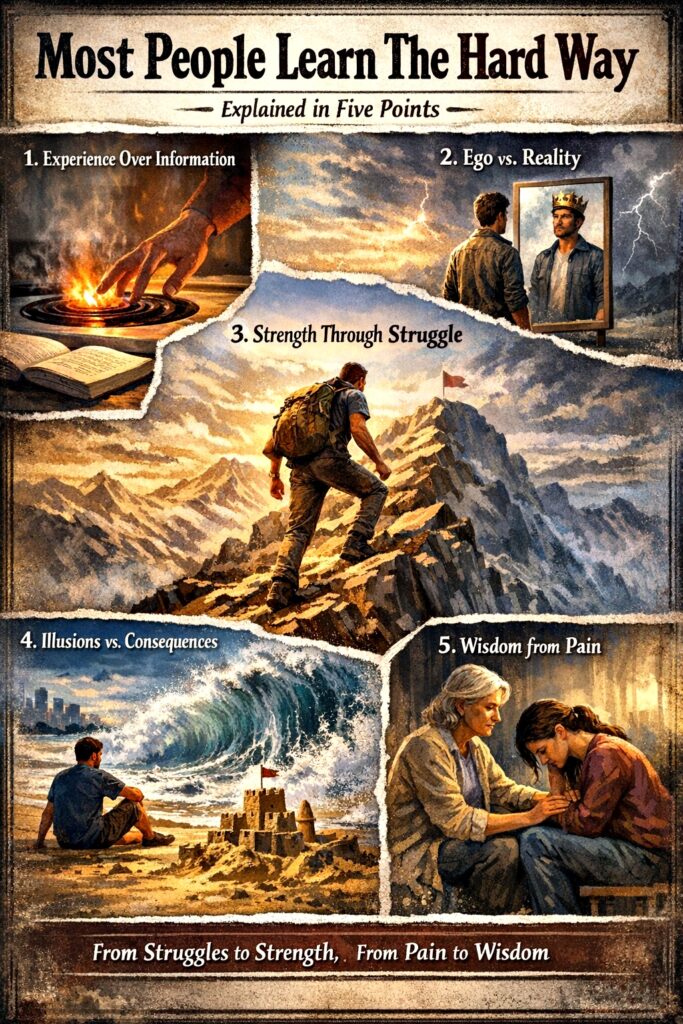
The statement “Most people learn the hard way” reflects a timeless truth about human nature and personal growth. It suggests that many individuals understand life’s lessons only after facing difficulty, pain, failure, or consequences. While advice, education, and observation can guide us, true understanding often comes through lived experience. Below are five detailed perspectives that explain why this happens and what it means for personal development.
1. Real Understanding Comes From Experience, Not Just Information

Human beings can read books, listen to advice, and observe others, yet this knowledge often remains theoretical until tested by reality. Someone may know that poor financial planning leads to debt, unhealthy habits lead to illness, or toxic relationships cause emotional pain—but the lesson rarely feels real until they personally experience the consequences.
Experience creates emotional memory, which is far stronger than intellectual knowledge. When a mistake leads to embarrassment, loss, or regret, the brain attaches emotion to the lesson, making it unforgettable. This is why children touching a hot surface once quickly learn not to repeat it, even if they were warned many times before.
Learning the hard way is therefore not just about suffering—it is about transforming abstract knowledge into lived wisdom. While easier learning paths exist, they often lack the depth required for lasting change.
2. Human Ego Resists Advice and Prefers Personal Proof

Another reason people learn the hard way is the ego’s natural resistance to being told what to do. Many individuals believe:
- “It won’t happen to me.”
- “I know better.”
- “My situation is different.”
This mindset leads people to ignore warnings until reality proves otherwise. The ego seeks independence and control, so accepting guidance can feel like weakness. As a result, people often choose trial and error over trust and humility.
Ironically, the painful outcome then becomes the very teacher they tried to avoid. Failure humbles the ego and opens the mind to reflection. Only after consequences appear do many people become willing to listen, learn, and change.
Thus, learning the hard way is closely tied to human pride and the journey toward humility.
3. Painful Lessons Create Stronger Character and Resilience
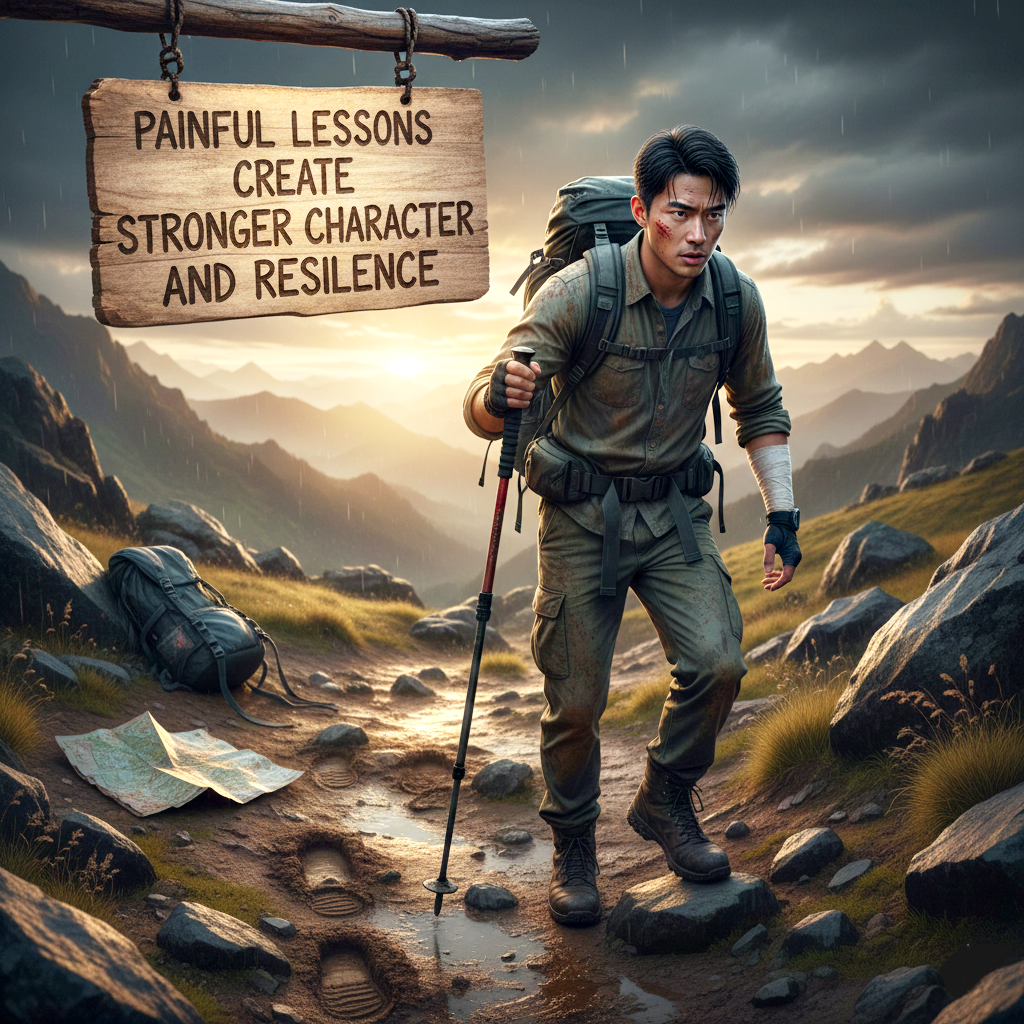
Although difficult, hard-earned lessons often produce deeper personal strength. Comfort rarely forces growth, but struggle demands adaptation. When people endure failure, heartbreak, rejection, or loss, they develop qualities such as:
- Patience
- Emotional maturity
- Problem-solving ability
- Courage
- Self-awareness
These traits cannot be fully taught—they must be forged through challenge. Someone who has faced financial hardship may become wiser with money. A person who has experienced betrayal may learn boundaries and self-respect. Failure in a career may reveal true passion and direction.
In this sense, learning the hard way is not merely punishment; it is often life’s method of shaping stronger individuals. The difficulty gives meaning to the lesson and permanence to the change.
4. Society Encourages Shortcuts, But Reality Teaches Consequences

Modern culture frequently promotes instant success, quick rewards, and easy solutions. Social media shows highlight reels of achievement without the struggle behind them. Advertisements promise fast results. Comparison creates the illusion that success should be effortless.
Because of this environment, many people underestimate:
- The time required for mastery
- The discipline behind achievement
- The risks of careless decisions
Reality eventually corrects these illusions. Poor preparation leads to failure. Lack of discipline leads to stagnation. Ignoring health leads to illness. Avoiding responsibility leads to regret.
These moments feel harsh, but they serve an important purpose: they reconnect people with truth. Learning the hard way becomes a confrontation between illusion and reality, forcing individuals to grow beyond fantasy into maturity.
5. Hard Lessons Often Become the Foundation of Wisdom and Compassion
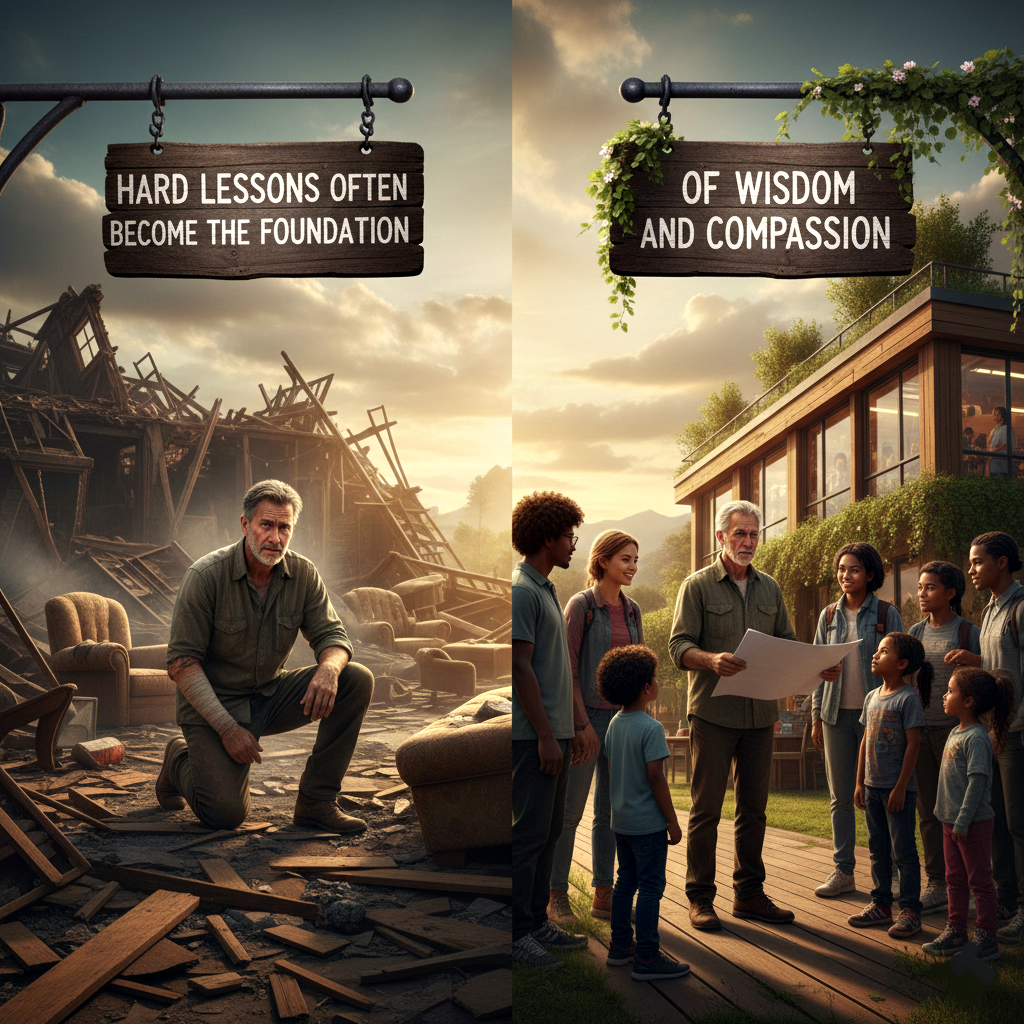
Perhaps the most meaningful aspect of learning the hard way is what comes after the struggle. People who have suffered and learned deeply often develop:
- Greater empathy for others’ pain
- Stronger gratitude for simple blessings
- Clearer priorities in life
- A desire to guide others
Someone who has experienced loneliness may become kinder. A person who has lost opportunities may value time more deeply. Failure can turn into purpose, where past pain becomes future guidance for others.
This transformation is where suffering gains meaning. The lesson is no longer just personal—it becomes wisdom that can help the world. Many great teachers, leaders, and thinkers gained insight not from comfort, but from hardship.
Thus, learning the hard way is often the beginning of wisdom, not merely the result of mistakes.
Conclusion
The phrase “Most people learn the hard way” captures an essential truth about human growth. Real understanding usually comes through experience rather than instruction, because emotion strengthens memory and change. The ego resists advice until consequences humble it. Painful lessons, though difficult, build resilience, maturity, and character. Society’s illusion of easy success is eventually corrected by reality’s firm consequences. And in the end, those who endure hardship often emerge with wisdom, empathy, and purpose.
While learning the hard way can be painful, it is also deeply transformative. It reminds us that mistakes are not merely failures—they are teachers in disguise. The goal of life is not to avoid every fall, but to rise from each one wiser than before.
In this light, the statement is not pessimistic but hopeful. It suggests that even when people struggle, growth is still possible, and every hard lesson carries the seed of a better future.